
They shared one goal, to protect their forest, because it is vital for spiritual lifeways, traditional foraging, and burial rituals.
IMAGES & WORDS BY ANDREW CALIFF
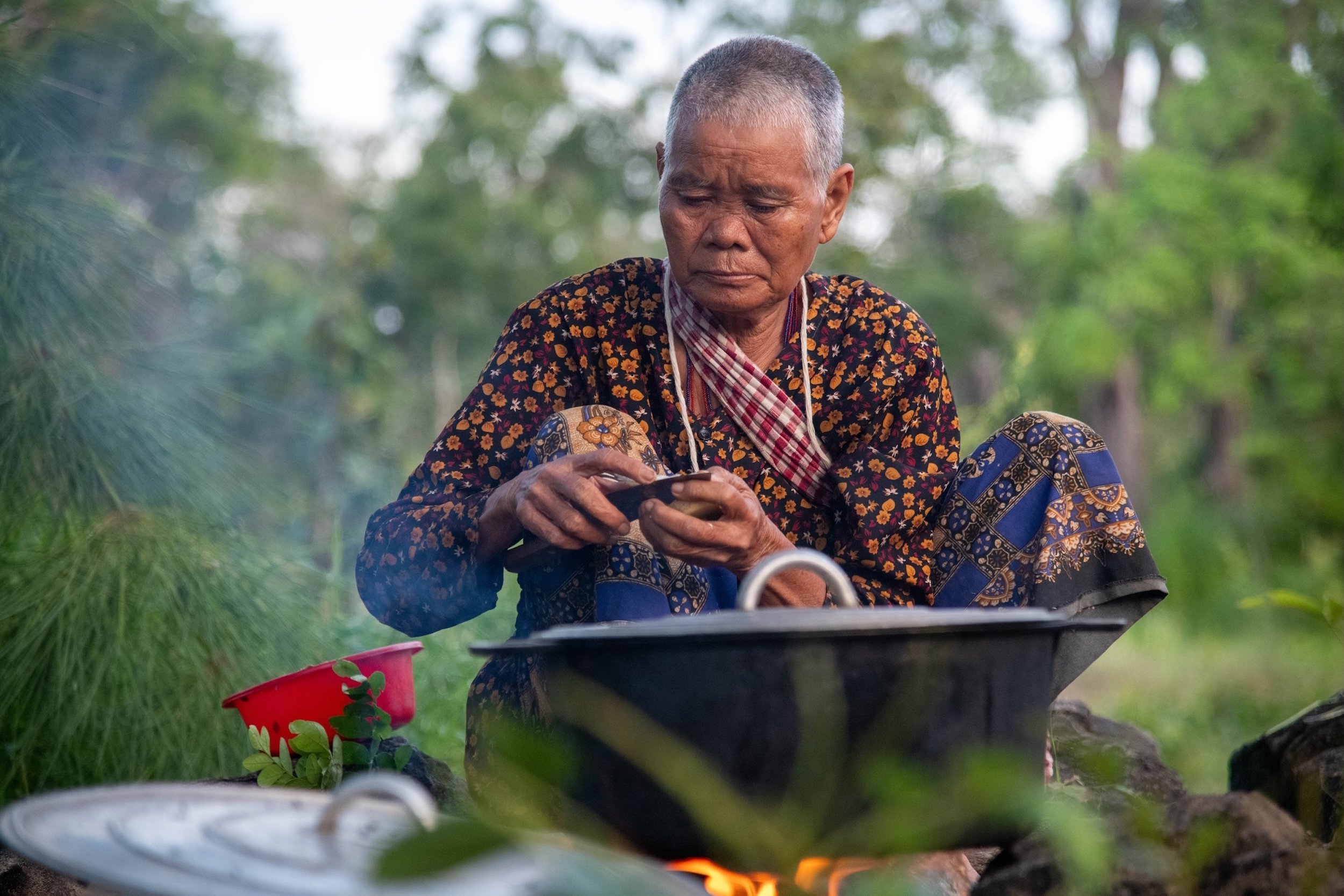
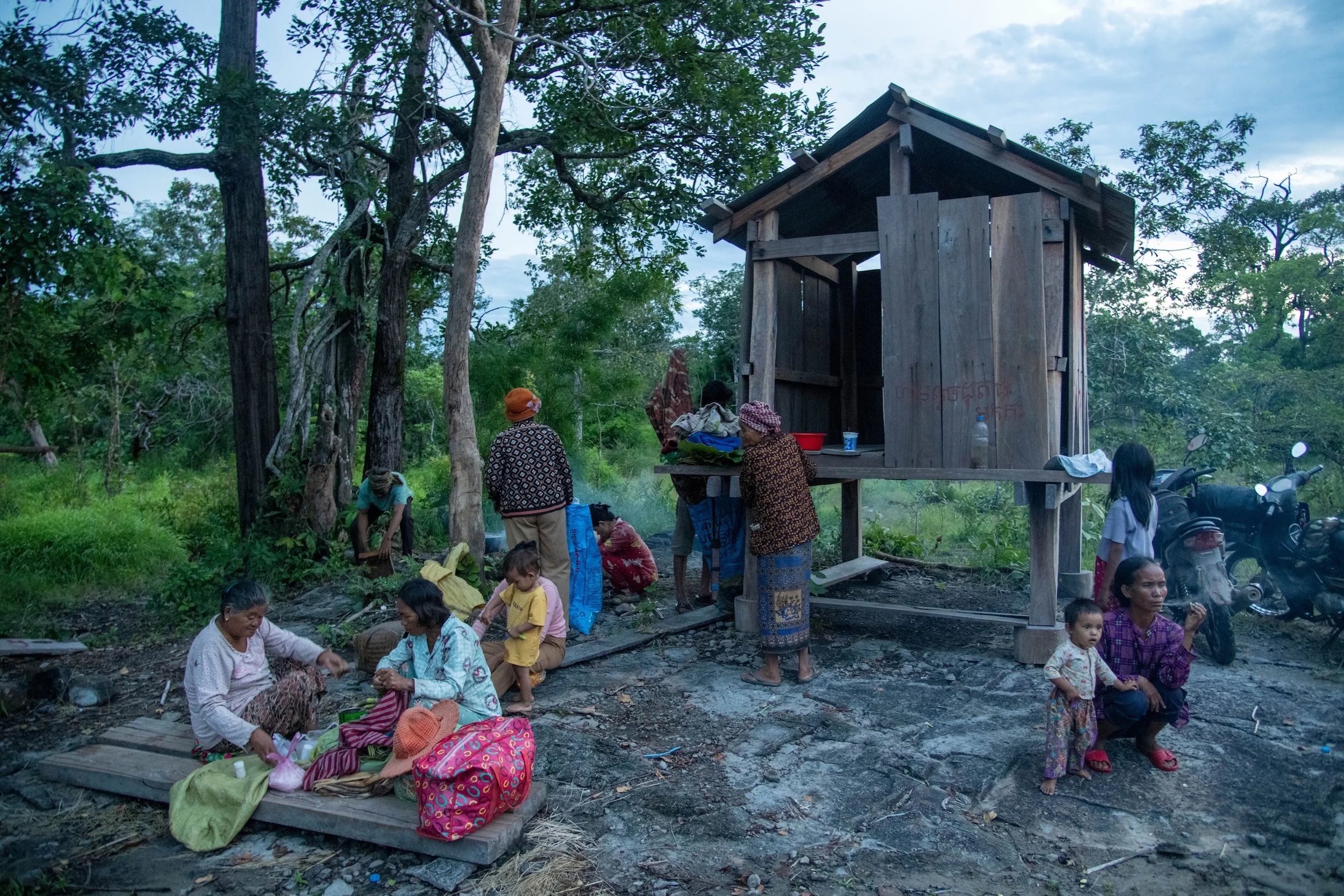
Before night fall, people start working on different tasks like preparing for the feast to welcome World Bank and government officials coming to see why the local community is protesting a social development project.
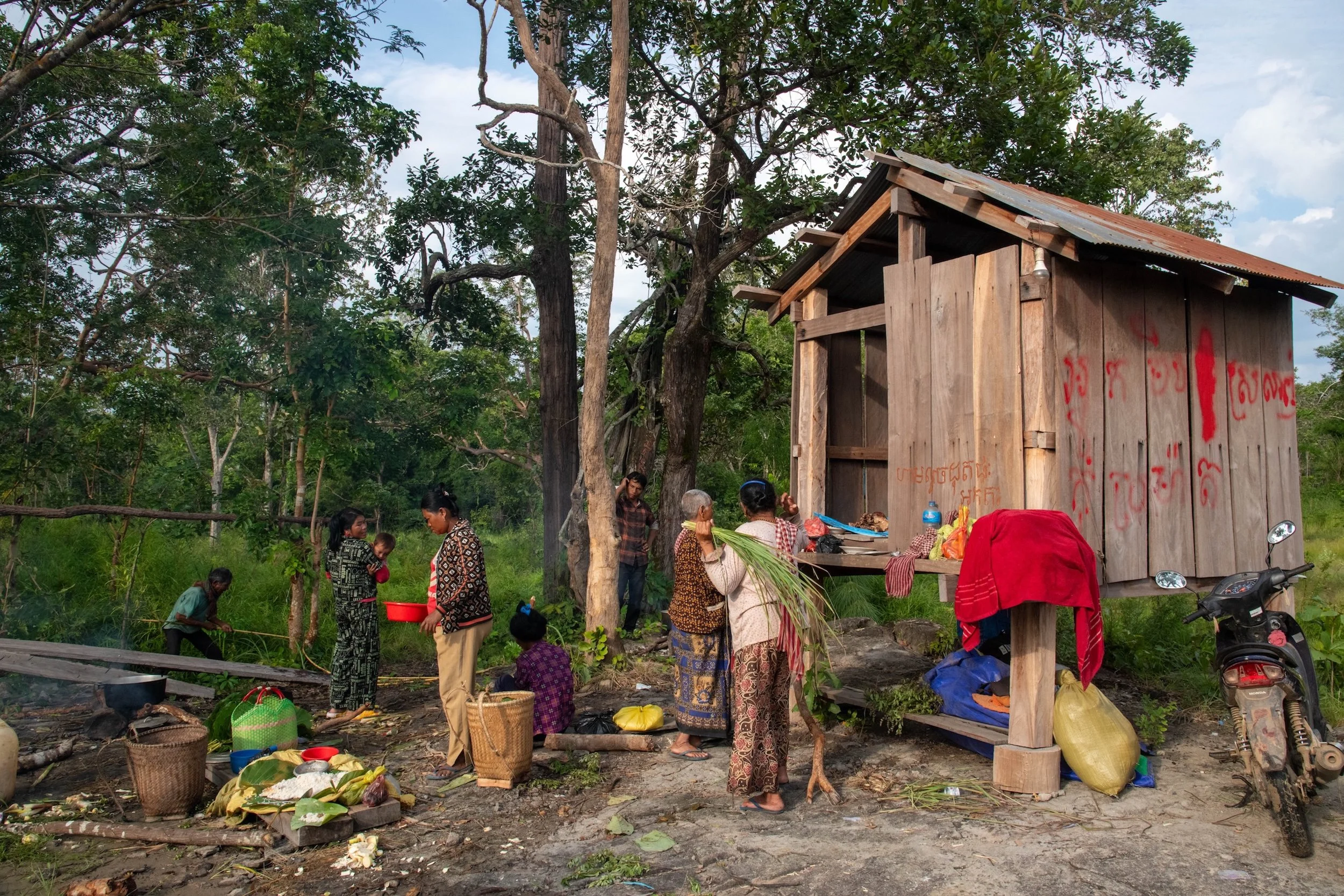
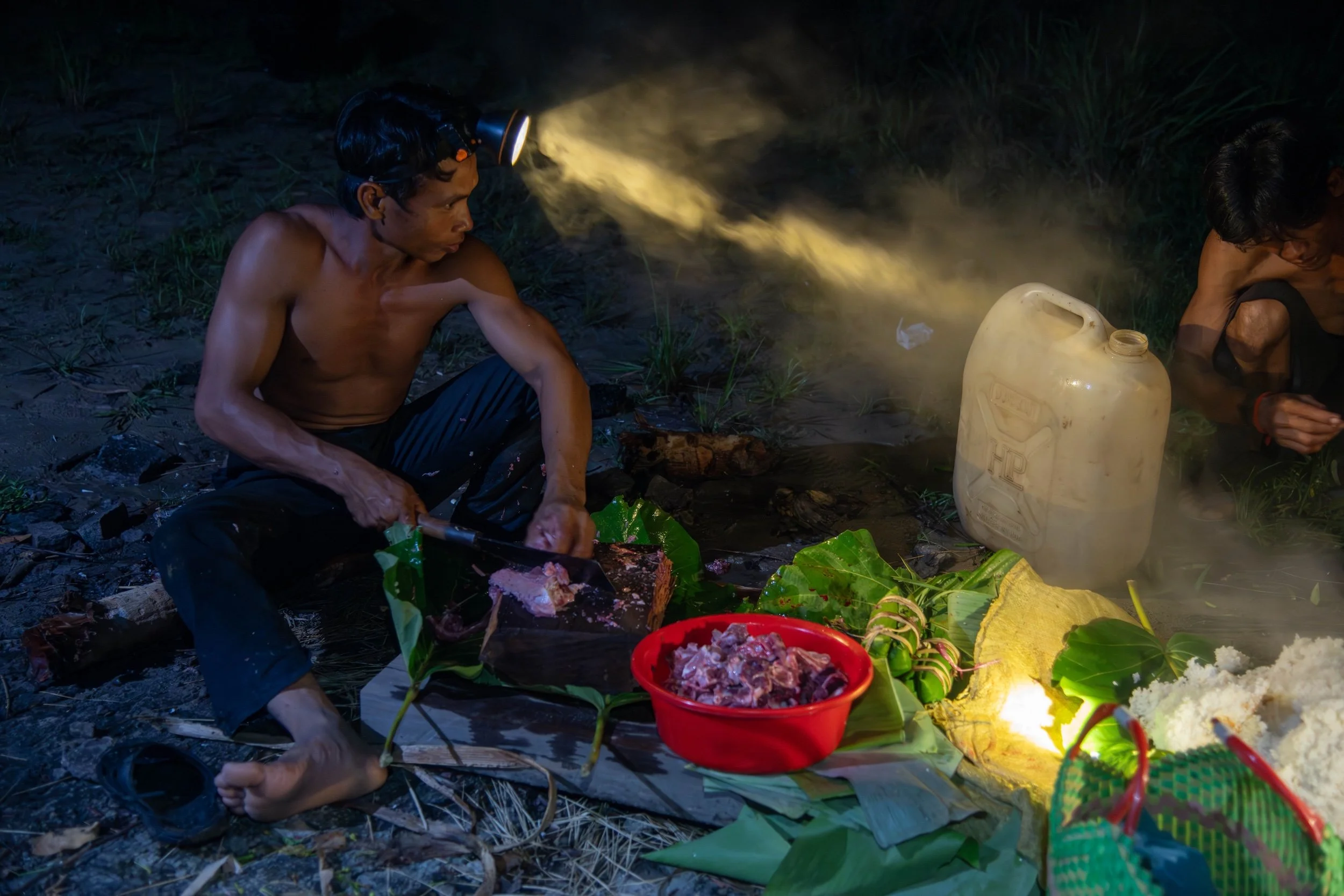
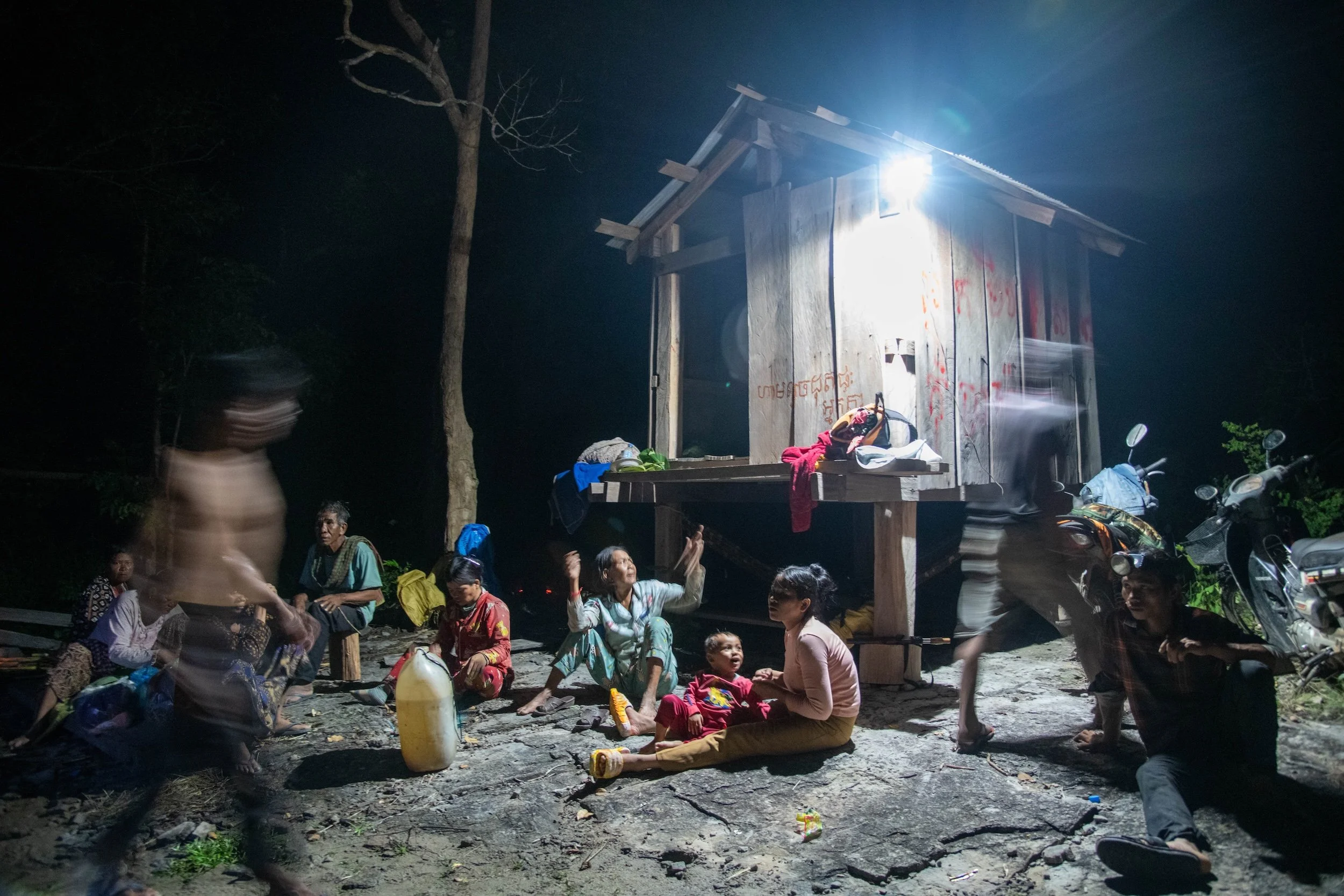
Flashlight and headlamp beams bounced around the secluded shrine deep in a Mondulkiri province forest as Bunong villagers hustled around, occupied with different tasks to a steady beat of crackling embers and chopping bamboo. They were busy preparing for a sacrificial ceremony and feast, requesting the traditional deities and woodland spirits to protect their ancestral forest from a World Bank-funded development project. Bunong people from the village of Roya Leu traveled by moped and tractor-towed trailers on narrow jungle paths to get to the community shrine in the heart of their ancestral forest. People began arriving in waves to prepare for the sacrifice and feast as the sun lost its edge and evening approached. They shared one goal, to protect their forest, because it is vital for spiritual lifeways, traditional foraging, and burial rituals. More than half of this area, approximately 3,000 hectares, was set to be swallowed by the Land Allocation for Social and Economic Development III (LASED III) project through land concessions granted by the Ministry of Land Management. These concessions of the community forest even contain Bunong graves, as it includes a ritual burial ground.
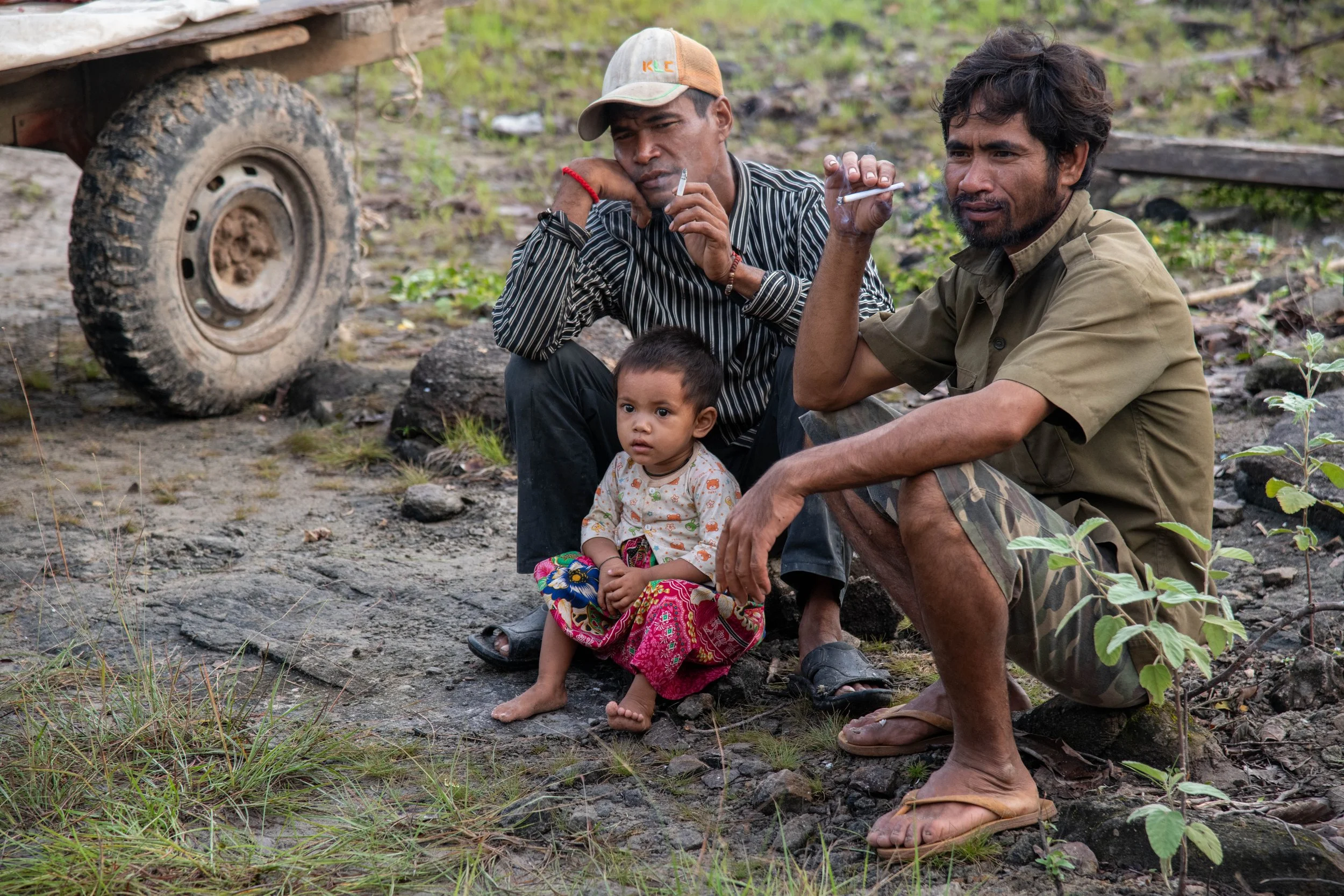
It's late afternoon when villagers from around the forest arrive on tractor-pulled flatbeds and mopeds, and arduous ride over two hours through narrow jungle paths. Some take a brief rest before preparing a shelter and a fire for the sacrifice.
To this day, land grabs and disputes are a major problem in Cambodia after the Khmer Rouge destroyed most land ownership records and reorganized the whole country into worker camps. Furthermore, Mondulkiri province is one of Cambodia’s most rural and ethnically diverse areas. Consequently, while the Roya Leu villagers have been bounced between different government ministries for years to protect and legitimize their ownership of the forest, the Cambodian government was able to make fast progress with this massive, internationally funded development project. Project implementers posted signs about LASED III and even made announcements at surrounding comunes and social media, but villagers from Roya Leu and surrounding Bunong communities felt ignored and afraid for the future of their forest. The project intended to redistribute the Bunong forest for landless Cambodians, and showed no signs of deviating even after community leaders tried to speak with representatives of local government.
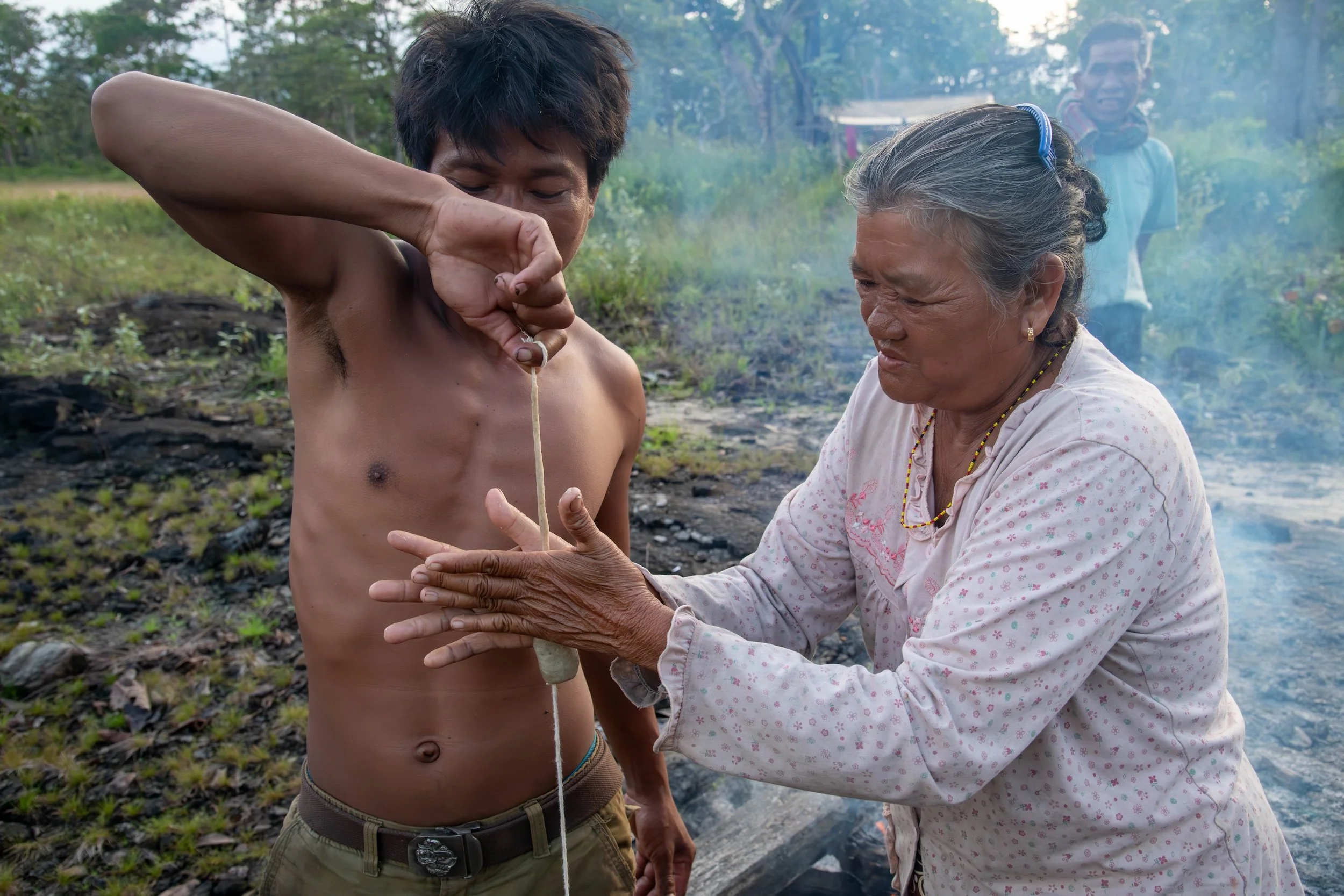
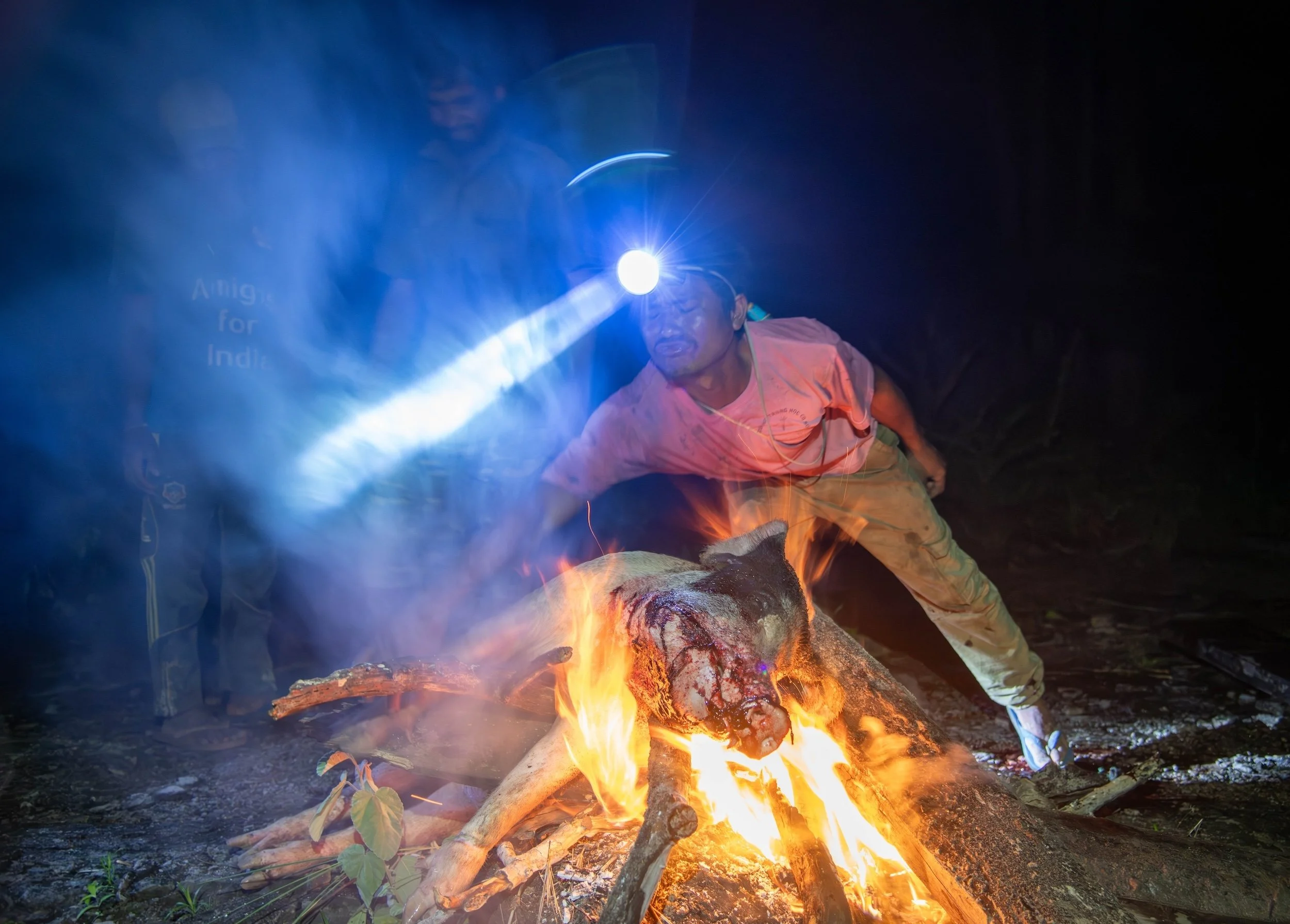
In a plan combining celebration of their Indigenous culture and activism, the community decided to hold a ceremony, inviting representatives from the ministry and LASED III team. All the community members gathered at the shrine the night before when the guests would arrive. They sacrificed a pig, its head and heart offered to the forest guardians and the rest for the feast. People busied themselves with setting up a small shelter of sticks and tarps for the hammocks while others chopped bamboo and vegetables for a traditional stew. Other tasks were more specific to the ceremony, like waxing wicks for candles.
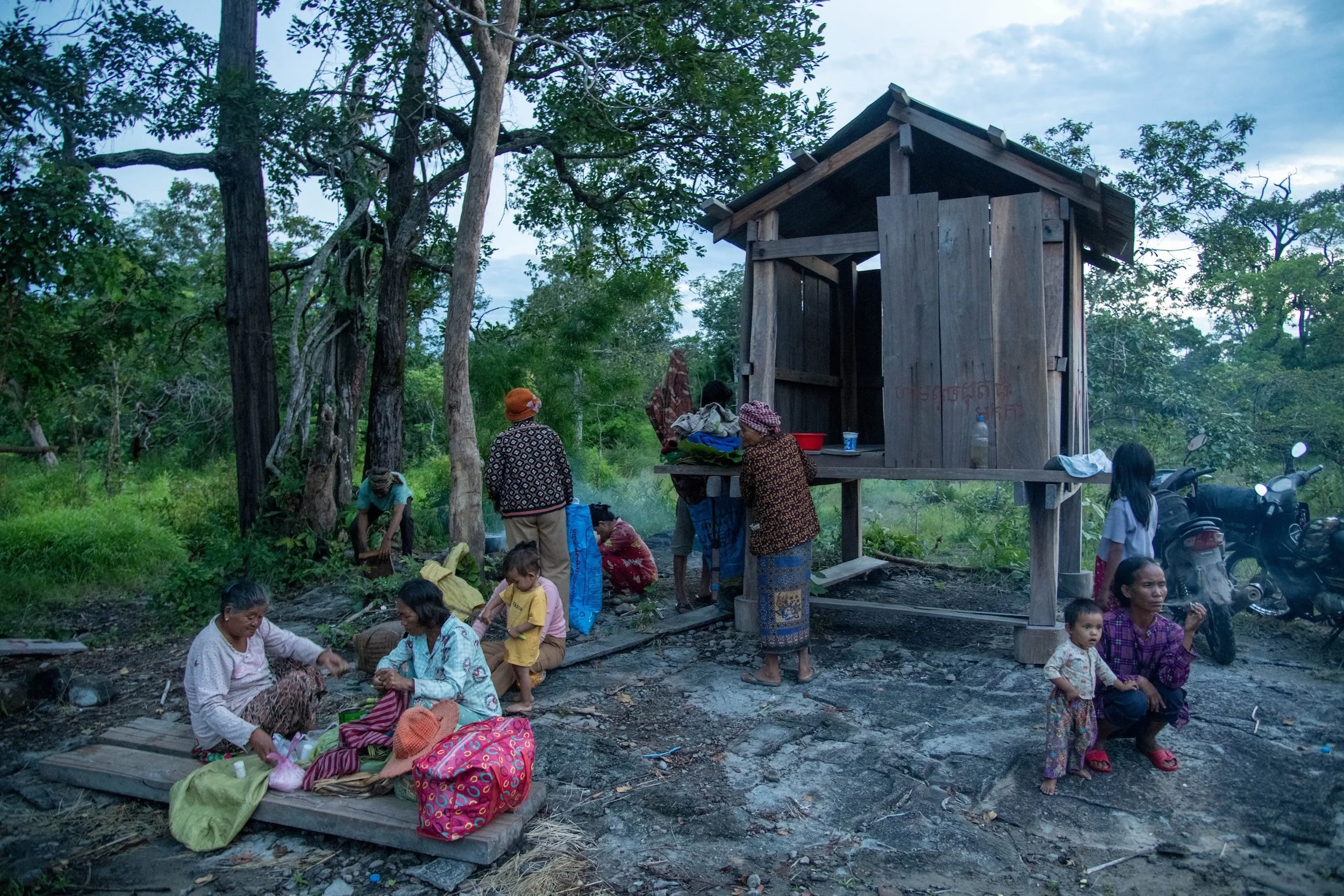
Once all the hard work was done, everyone gathered on a mat under the shrine for a late dinner and to pass around cut plastic bottles of rice wine. The next morning, the visitors arrived and the community leaders held a brief ceremony, properly offering up the pig’s head, heart, and life to the forest deities. Tensions were palpable as community leaders and officials drew lines in the sand delineating the forest and the social land concession granted to LASED III.
Headlamps and flashlights are needed as villagers cut up pork for bamboo stews and other dishes for the feast.
Community leaders then took the project implementers around in a small moped convoy through the forest to visit the burial grounds, a place for rituals with broken ceramics scattered amongst the overgrowth, and a sacred stream. Bunong villagers pointed out plants and fatwood on trees which they harvest for local use and to sell at the market. Upon returning to the shrine, the feast began.
Andrew Calif is a recipient of PWB’s monthly Micro-Grant.