IMAGES AND WORDS BY: SOPHIA NASIF
“I grew up with the ocean at my fingertips, but now the home I knew is being erased.” — Layaan, Feydhoo
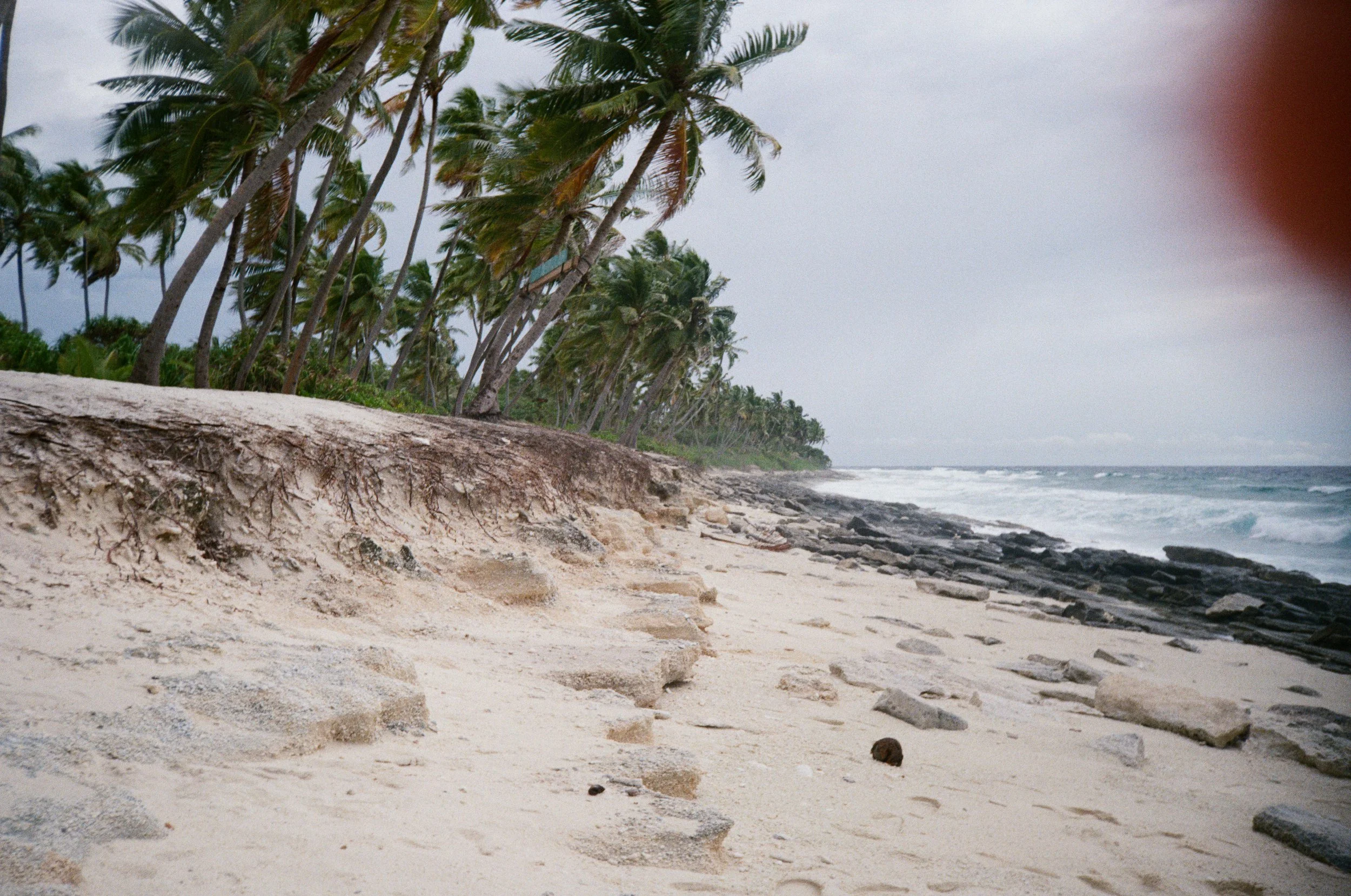
Despite being primarily viewed as a paradise tourist destination with picture-perfect beaches, the reality is quite different for Maldivians. Local beaches are collapsing into the sea, mangroves are stagnating, and reefs, the most vital natural defence to erosion, are facing massive damage by drastic reclamation and dredging projects. In addition to these issues, the government’s focus has been on development over long-term sustainability, and many of the losses occurring are poorly documented and observed.

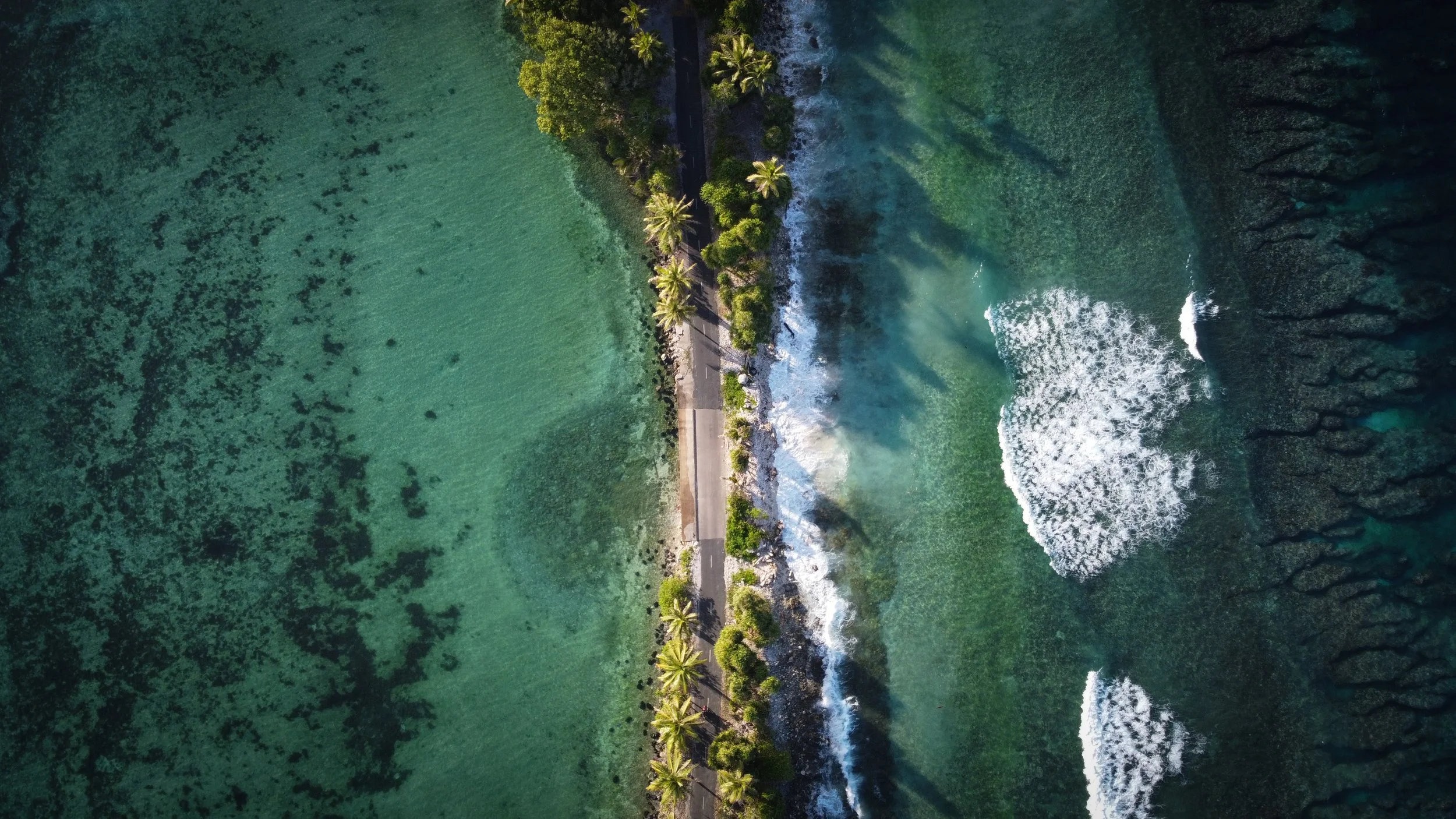
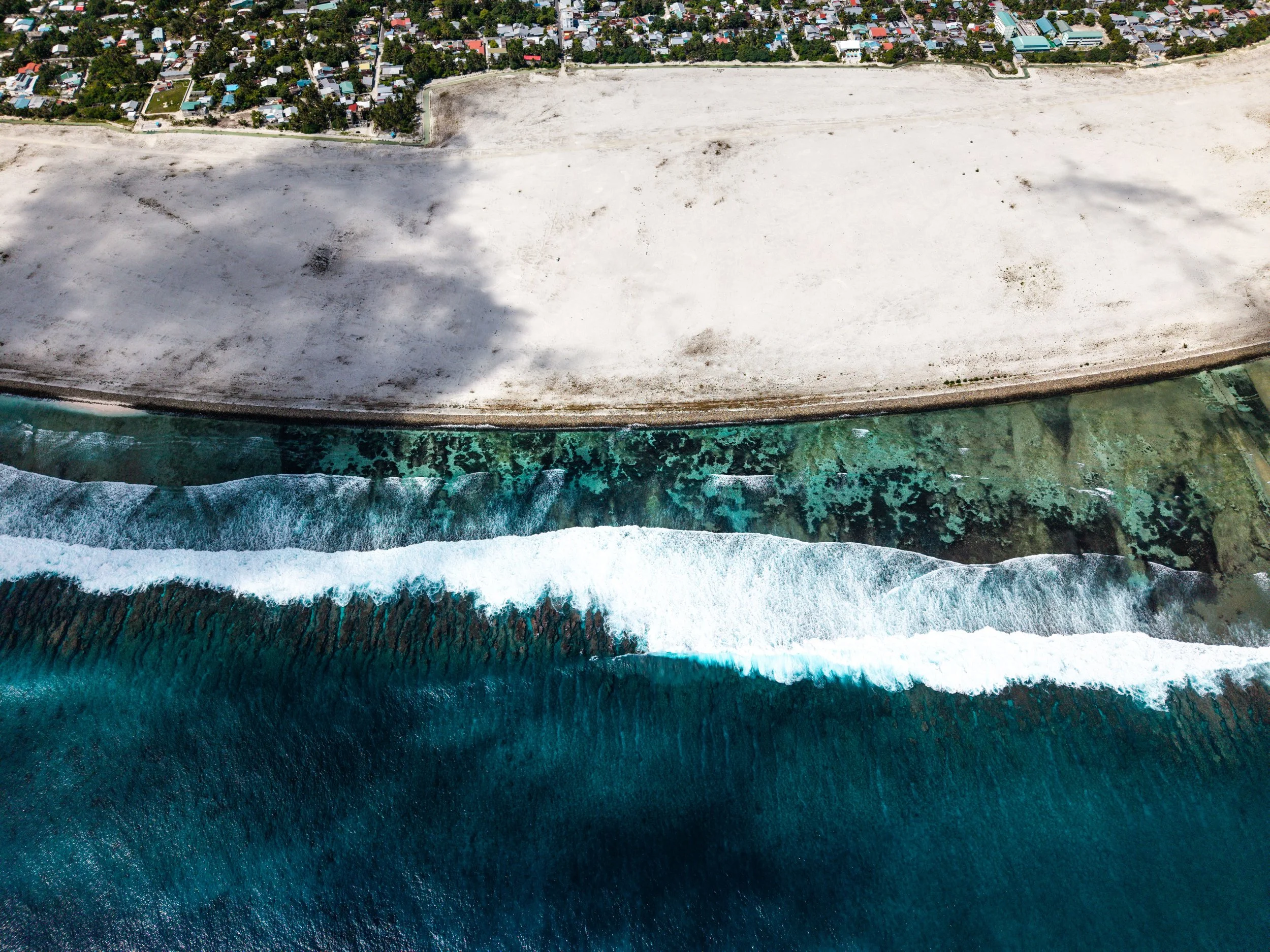
Above: At Hulhumeedhoo, three channels have been cut into the reef for boat passage, which has had an effect on the directions of the currents in the area.
UKULHAS: SAND, SURF AND SHIFTING CURRENTS
A small island located in Alif Alif Atoll, Ukulhas has been growing popular with tourists and has been expanding quickly. But dredging projects in the harbour and the surrounding channels in 2022 and 2023 have altered the currents and the local wave patterns, leading to accelerating the already existing natural coastal erosion around the island. With additional deforestation of important shoreline plants whose root systems help prevent erosion, in order to ‘beautify’ the beach for tourists and make way for more hotels and guesthouses, the future of Ukulhas is unclear.
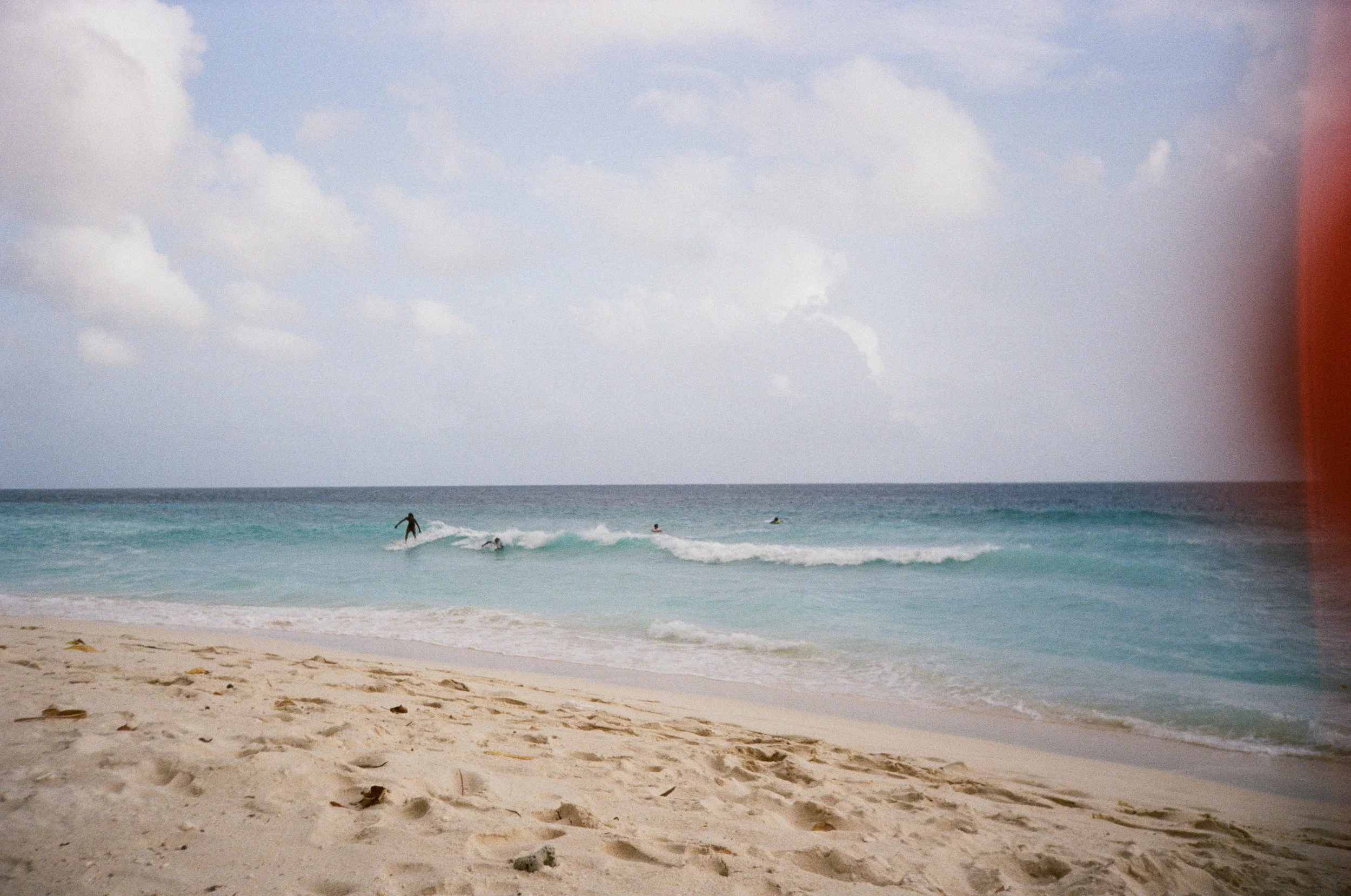
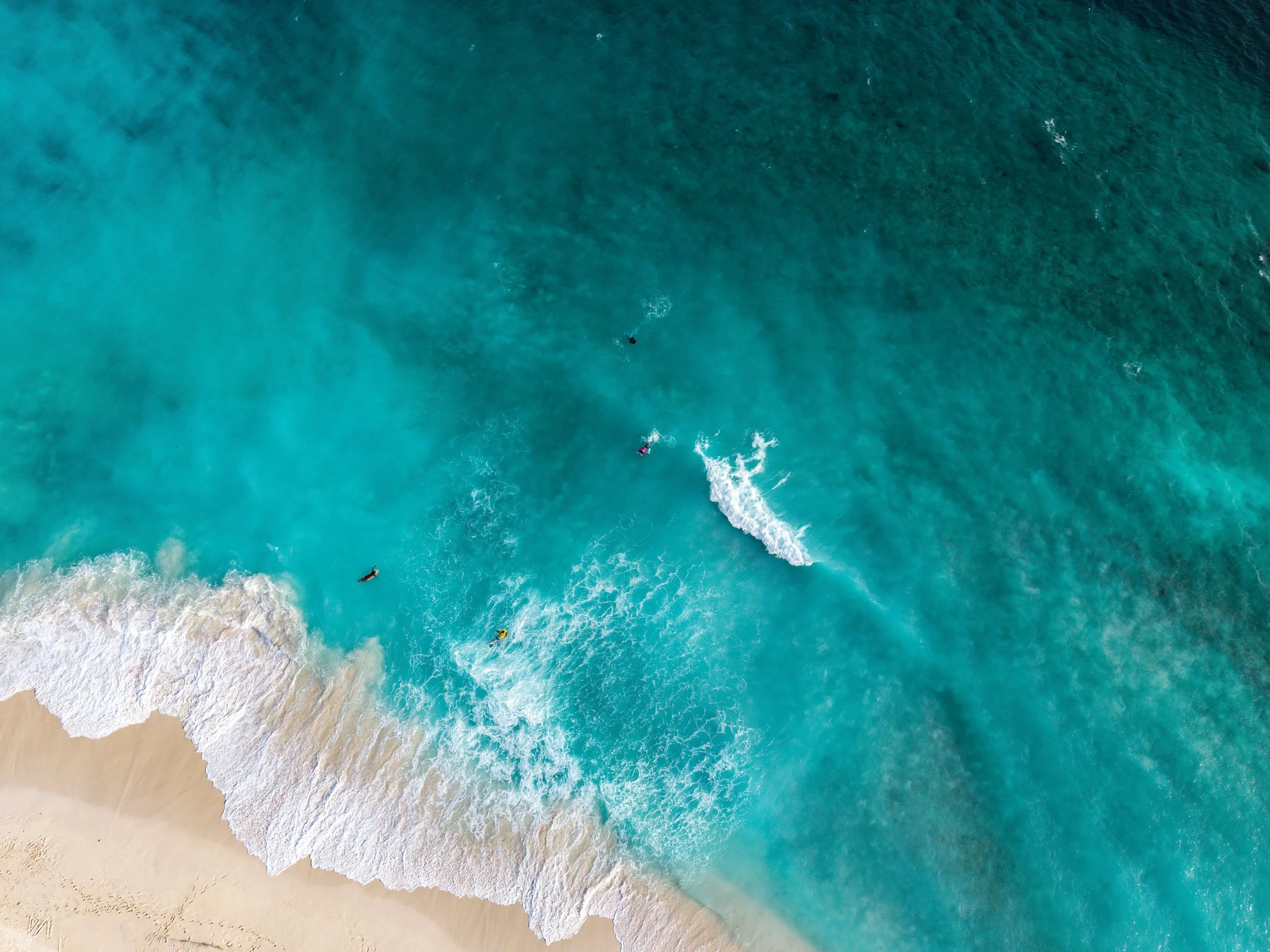
Ghazeel, a young local surfer, has been feeling the shift in the sea as well as the shore. The waves have become unpredictable, swinging between non-existent to dangerously strong. The tug of the new currents not only pull them off balance, but are also sucking away the sand from the beach at a shocking rate—an issue only visible from above, and to those who know the beaches well.
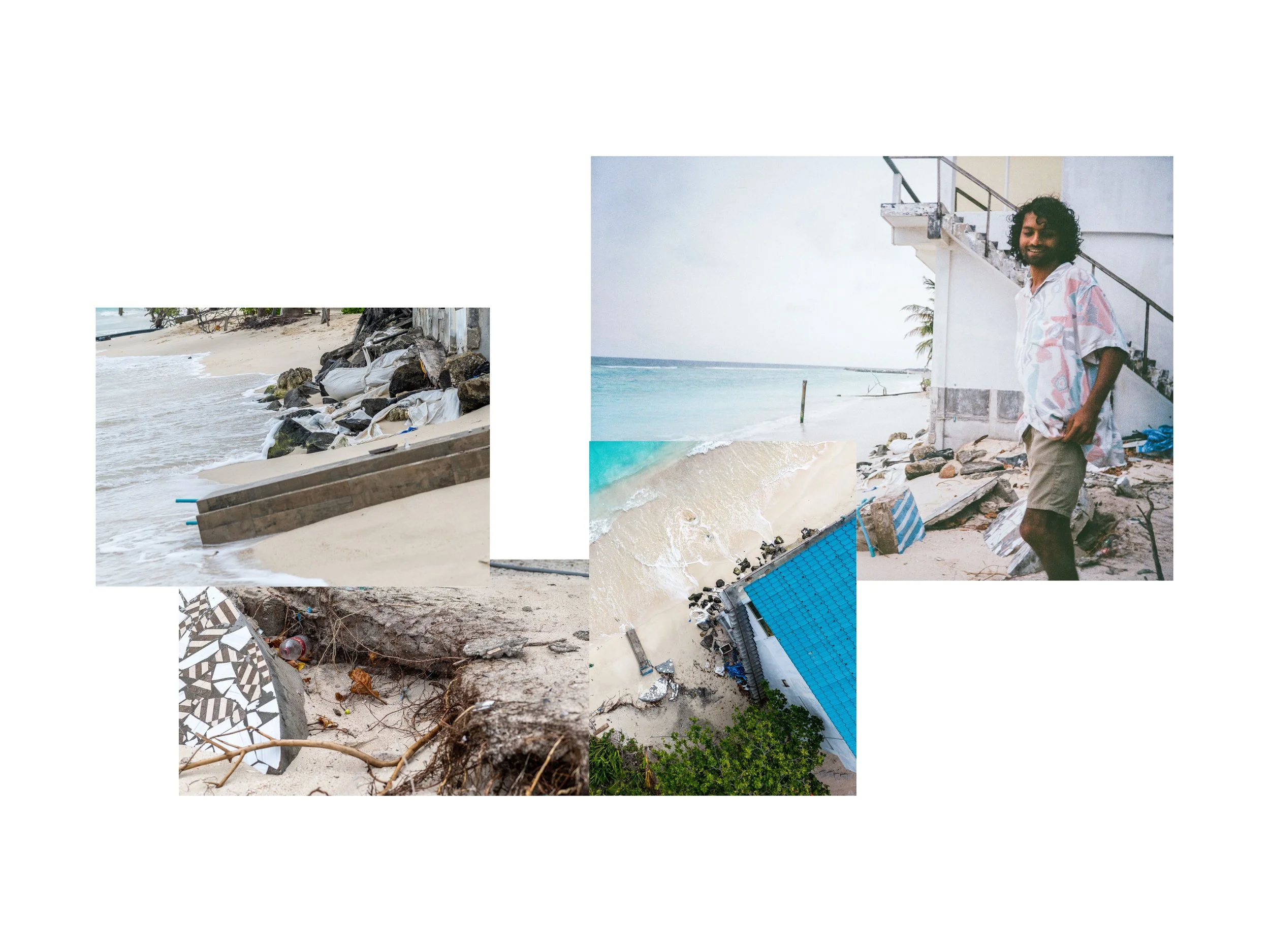
“When I was younger, the sea was further away. Now, it is at our doors.” — Aiman, Ukulhas
A father to a newborn baby girl, 20-year-old Ghazeel also worries about whether his island home will remain habitable by time she is his age—a fear shared by many of his generation. Aiman, his friend and fellow Ukulhas local, questions whether he could even consider having a family when they are facing these issues with little to no prevention or solutions. To him, a future of either having children but being unable to raise them on his island or to not have children due to an uncertain future are both heartbreaking outcomes.
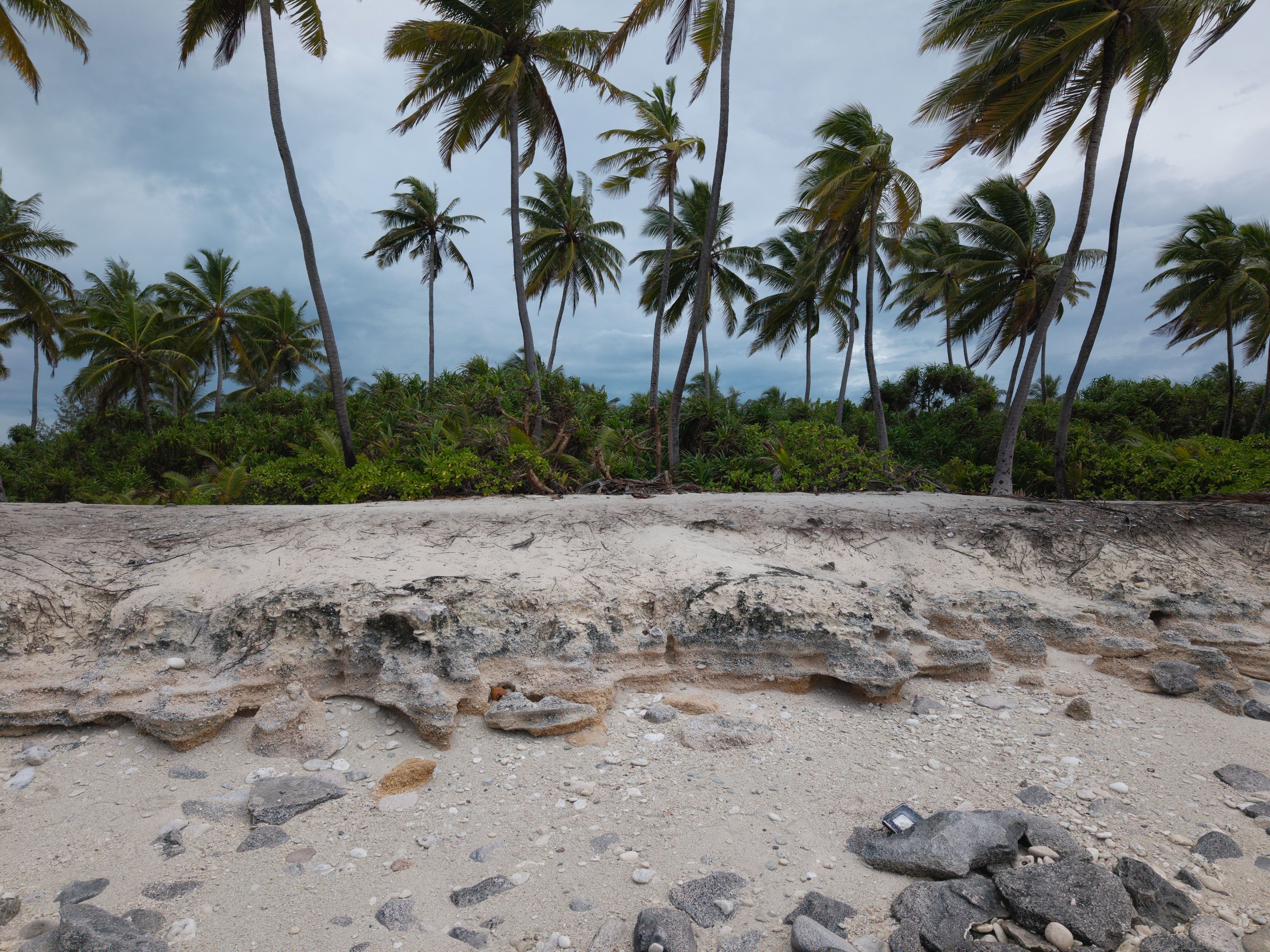
Aiman’s worries for the island stem from the damage occurring on the only beach off-limits to tourists, where the shrinkage of the beach has led to the buildings and construction on the shoreline to collapse onto the sand and towards the sea. Even more concerningly, Aiman’s intermittent records of the changes to shore show that these changes are incredibly rapid. But outside of phone footage collated by residents, official environmental monitoring of the erosion on the island is scarce, with no comprehensive impact reports or preventative measures put in place. Instead, the loss is being measured in lived memories and the shifting of the sands.
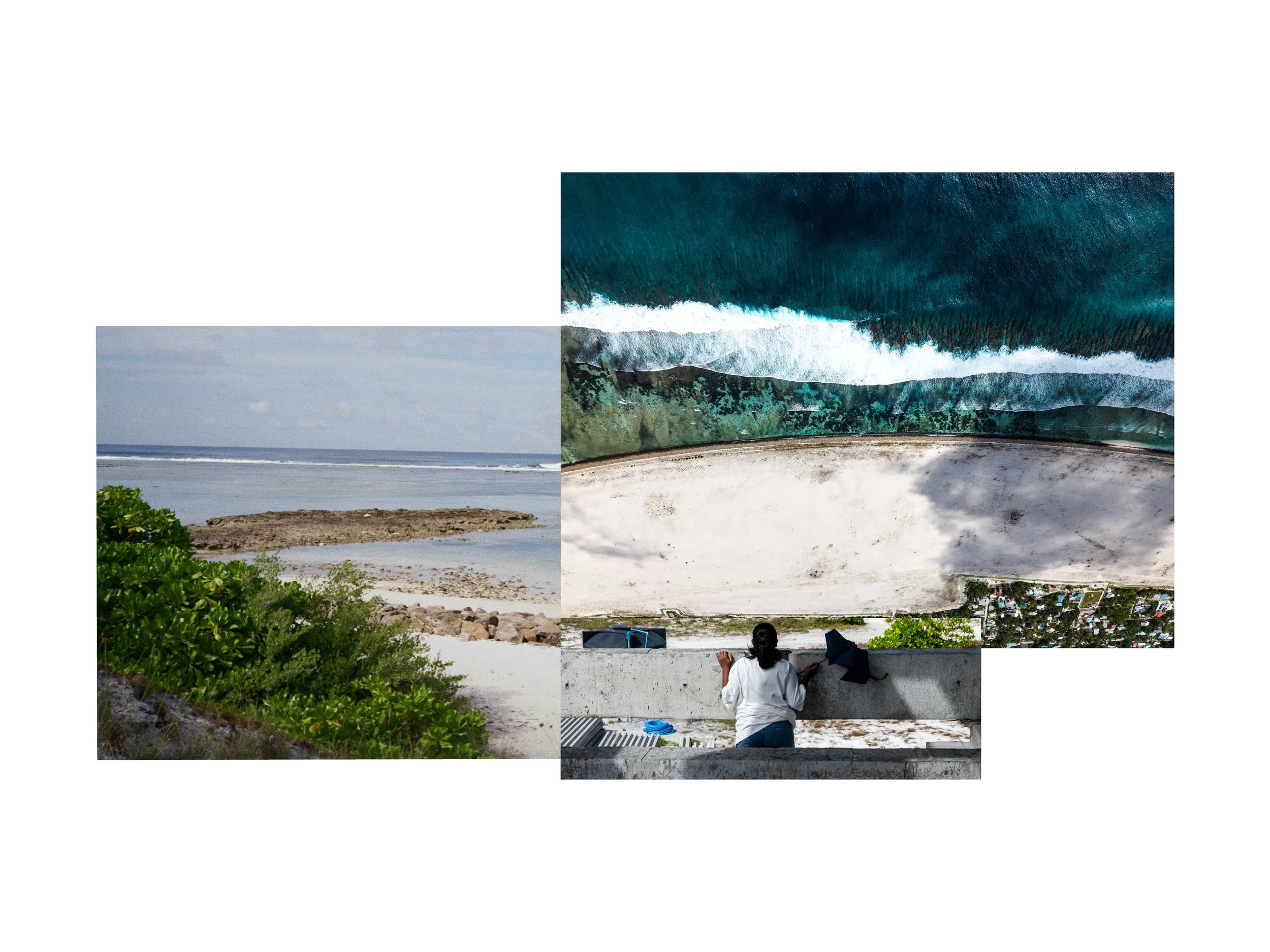
“This used to all be the sea.” — Layaan, Feydhoo.
ADDU CITY: DRY, DESOLATE AND DESERTED
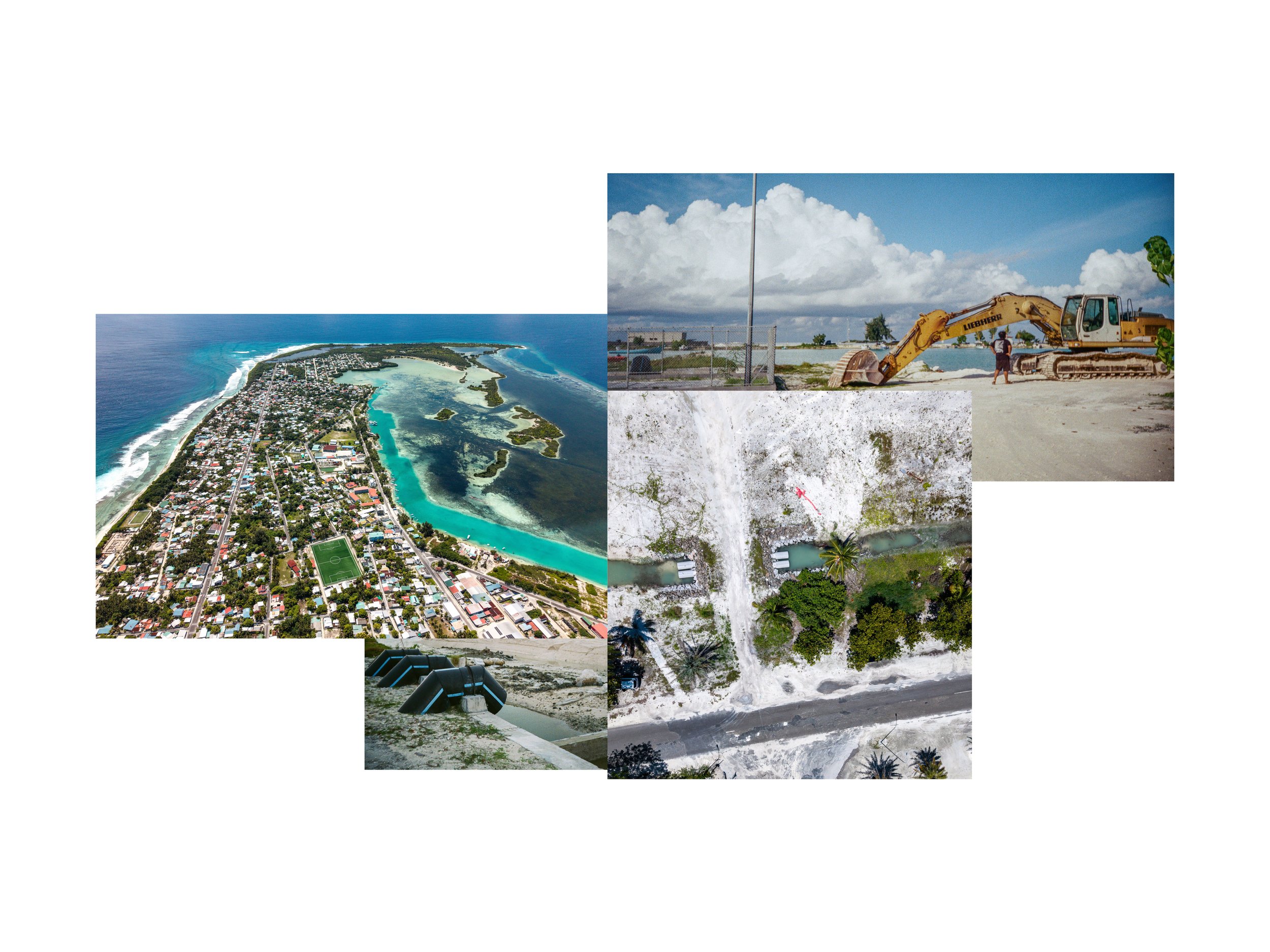
By mid-2024, approximately 184 hectares of land had been reclaimed in Seenu Atoll, despite pushback from the locals. Most of this was around Hithadhoo and Feydhoo, two of the three islands that make up Addu City. Despite the scale of the reclamation, Environmental Impact Reports and monitoring have remained opaque, with Human Rights Watch reporting a lack of transparency and harmed local livelihoods in 2023. These circumstances have led to the formation of groups such as Project ThimaaVeshi, a youth-led environmental NGO in Addu that campaigns against further planned reclamation work.
But the new artificial land sits largely empty and barren, and not meeting the promises to solve community needs – at the huge cost of altered shoreline geometry, water flows and thousands of dead corals. In Hithadhoo, where 84 hectares were reclaimed, the smell of dead fish still lingers, and a slimy, green substance has begun to grow on the surface.
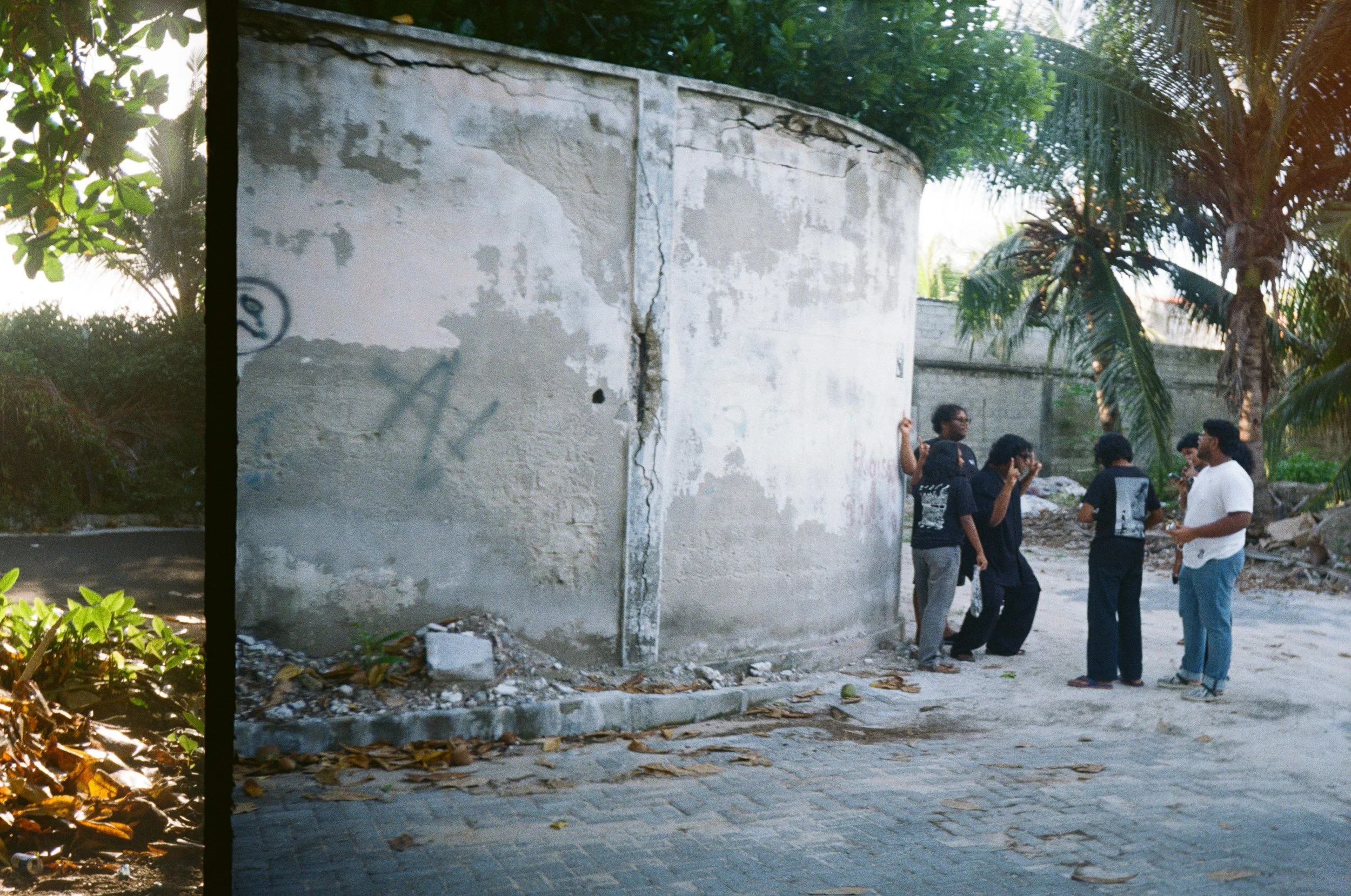
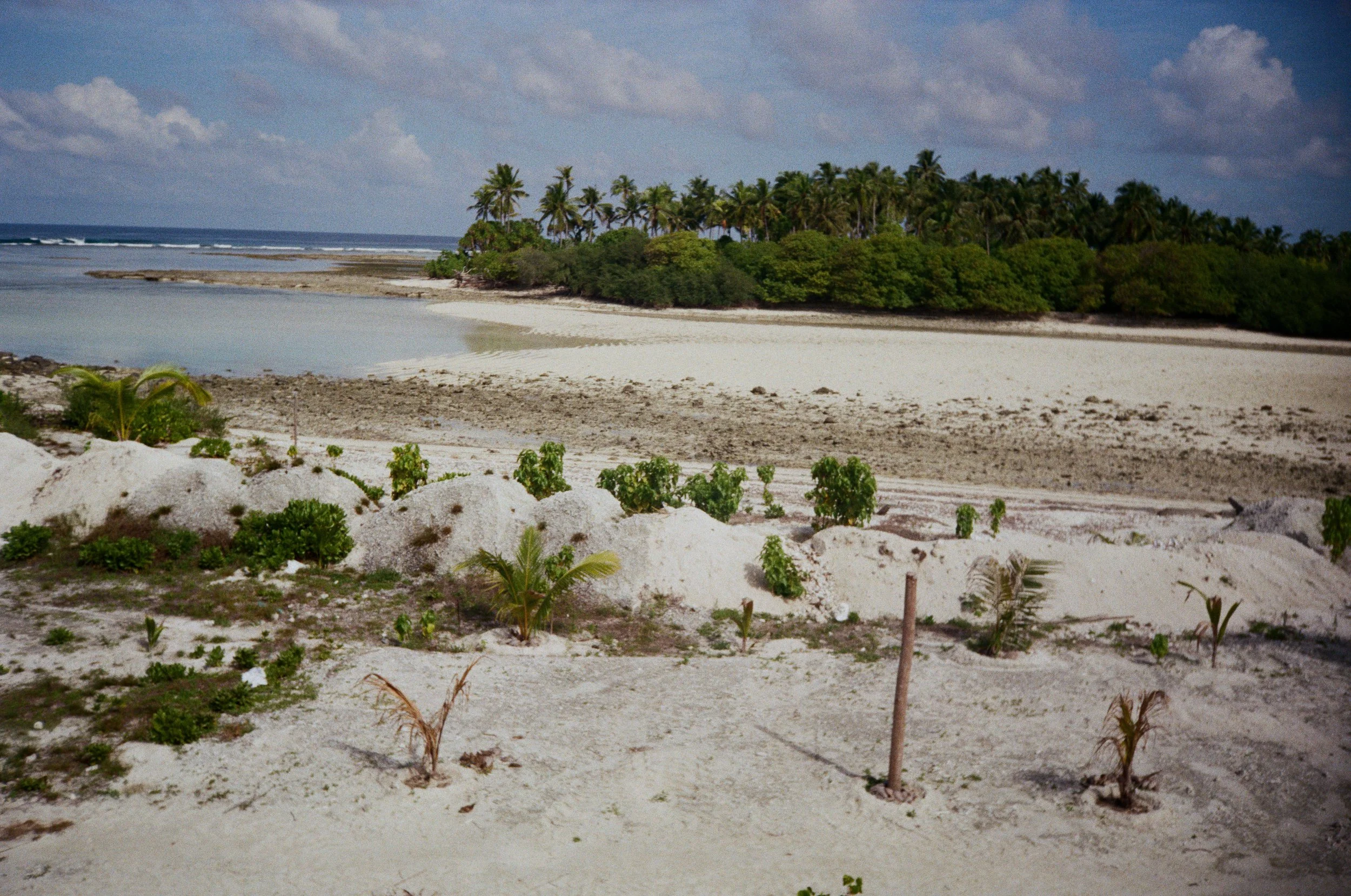
In Feydhoo, construction projects sit semi-abandoned on the reclaimed land, with weeds spreading across the dry sands. Layaan, another member of Project ThimaaVeshi, remembers the reclamation work happening as a child, finding dead fish and collecting large pieces of rare black coral in the dredged sand. She didn’t understand what it meant at the time, and was horrified when she later realised the death of nature that it signified.
And the changes sadden her. Layaan used to visit the nearby uninhabited island for weekend picnics with her family — it has now been absorbed into the reclaimed land. And due to the reclaimed parcel of land being constructed at a higher point than the original island, a bowl has been created. Layaan’s family house floods every single time it rains.
HULHUMEEDHOO: A VANISHING BEACH AND THREATENED WETLANDS
With most of the focus on Addu City, very little attention has gone to the other side of the atoll, where Hulhumeedhoo has been quietly losing their beach and damaging their wetlands. Once a daily hangout spot for the locals, the beach has become completely unusable, with very little of what it once was remaining, and the erosion beginning to eat into the road. An effort to prevent the erosion through the use of sandbags only resulted in the bags falling apart and creating the additional problem of severe plastic pollution.
As well as a thriving beach, Hulhumeedhoo locals Sajaya and Shiuma remember healthy mangroves and seagrass meadows. As members of the local environmental NGO Nalafehi Meedhoo, the two women have been campaigning for stronger protections, for, despite the entirety of Seenu Atoll being a protected UNESCO Biosphere Reserve, these wetlands are under threat from development. Unfortunately, it is too late for the beach.
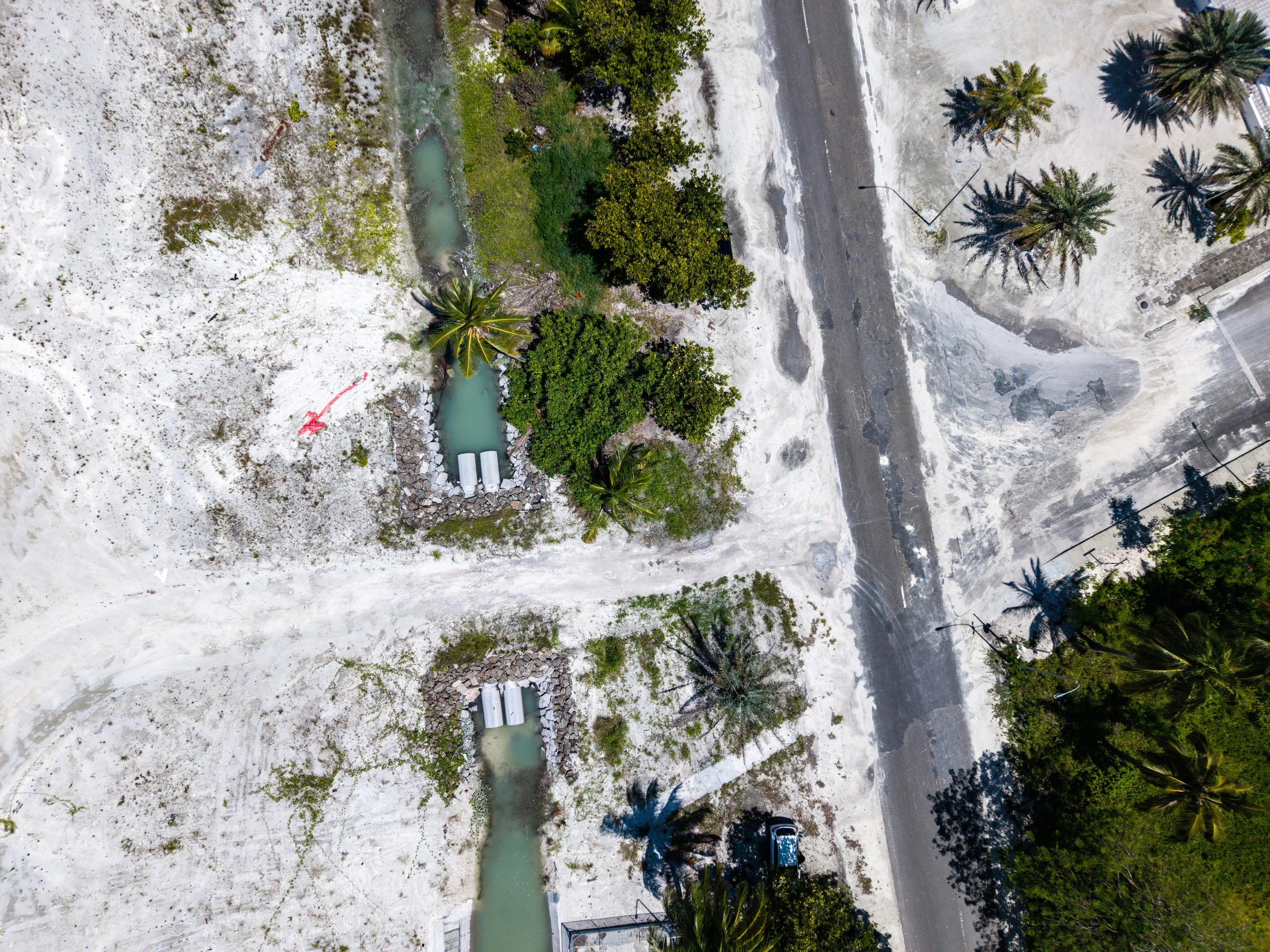
With the areas around the mangroves and seagrass meadows being reclaimed, there has been a noticeable impact on these areas. Nalafehi Meedhoo is particularly concerned about one mangrove, where reclamation at one end of it has blocked off the exit for the channel of seawater that flows through, resulting in severe stagnation of the water and a disruption to the biodiverse life in it. One suggested solution to the slowly dying area that is growing in popularity is to simply dredge and reclaim the entire wetland area, but Sajaya and Shiuma are working hard to educate their community on the importance of mangroves and hopefully convince them to find alternative solutions.
Another area of concern for the NGO is the salinization of a non-saline mangrove, situated by the edge of the shore and home to freshwater fish species such as tilapia. Erosion in the area has weakened the barrier between the ocean and the lake’s edge, and saltwater has been leaching into the wetland, ruining the natural balance and leading to the slow death of the fish and other animals within.
But the challenge for those like Nalafehi Meedhoo is the lack of formal and accessible studies and impact concerns — most records come from community monitoring by local groups, such as their NGO, which complicates advocacy. These ecosystems are dying quietly, leaving the local community to witness an unrecorded loss, and Sajaya and Shiuma are beginning to find it a very heavy and sorrowful burden to bear.
FUVAHMULAH: RETREATING SANDS AND SCARRED REEFS
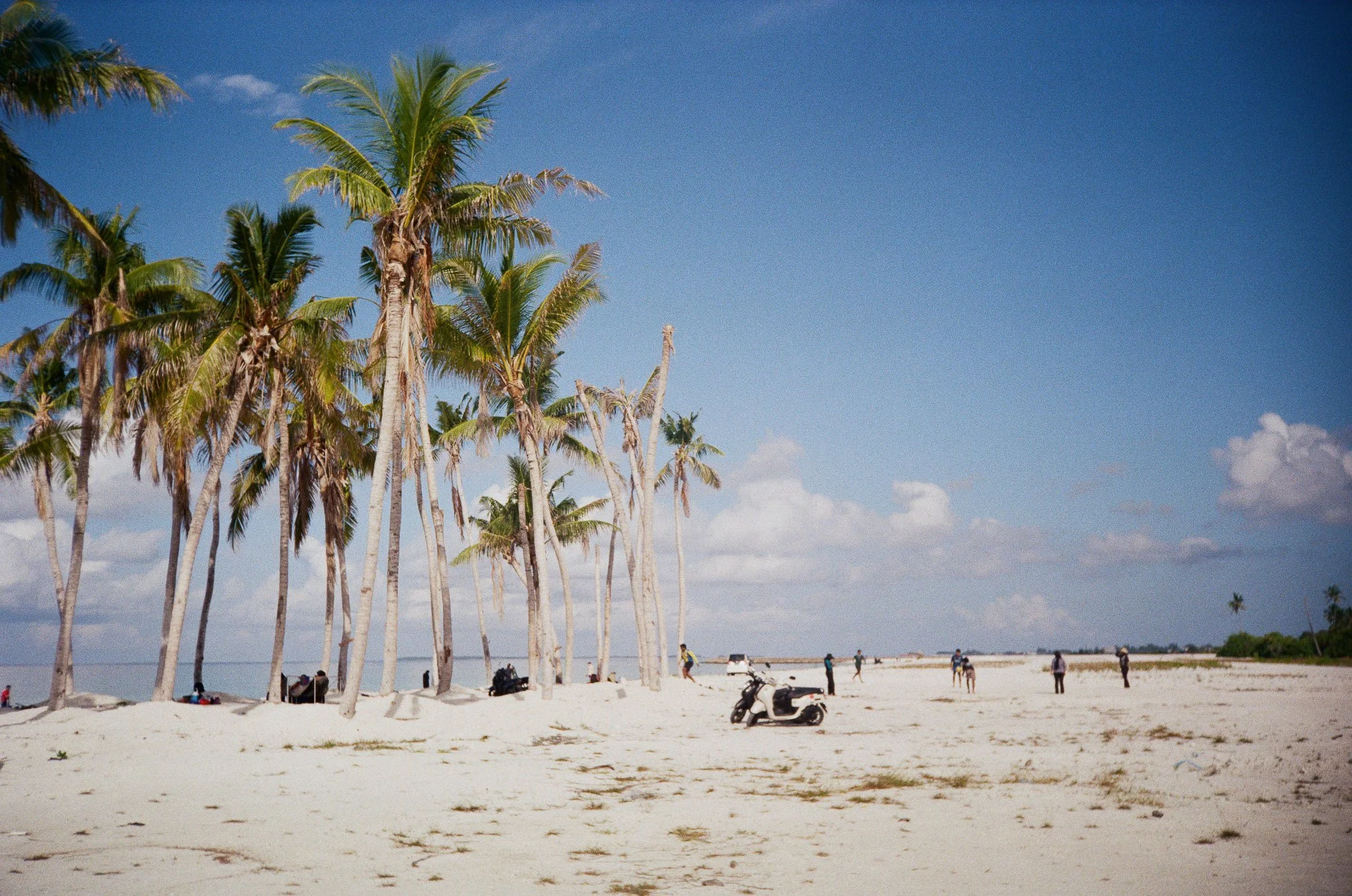
Fuvahmulah is different; not only does it make up the whole of Gnaviyani (the country’s only single-island atoll), it also has the Maldives’ sole pebble shore beach. Known locally as the Thundi, the beach is a fundamental part of the local island identity and shifts around the edges of the island and back throughout the 27 nakaiy (the Indigenous calendar of the seasons).
Shanu, the island’s only female silversmith, designs her work using sea glass that has been worn smooth by the pebbles, creating pieces that both pay tribute to and hold connection to her home. She has been shocked by the sharp increase of erosion on the coastline between her exploratory walks to find the glass, and by how much it has begun to eat into the island past the shore itself. Shanu’s alarm is echoed by the rest of her community, as studies and surveys between 2017 and 2019 showed erosion rates of up to 1.33 m/year in hotspot areas, and a typical retreat of roughly 0.26–0.28 metres along other stretches. As the coast destabilises, the Thundi is now eroding into the sea as it shifts.
Although counter-measures are being introduced to protect the shore and prevent further loss, they come with significant costs. In 2021, a MVR 300m ($19.5m) project was contracted to build 2,650 metres of sea wall—one of the largest coastal protection efforts in the Maldives—aimed at halting erosion and preventing flooding. Stretching from the harbour toward the island’s east, the wall offers security, but at a steep trade-off.
In 2023, a barge transporting the boulders needed for construction ran aground, spilling its load and causing severe damage to the surrounding reefs.
Internationally popular for scuba diving, Fuvahmulah is known for a thriving reef that has been minimally affected by coral bleaching. Live coral coverage reaches 41% on the East Reef and 64.1% on the West Reef—far above the national average of 19.2%. This makes the contrast between the healthy reef and the damaged zone even more stark, with the Environmental Protection Agency reporting metres of severe destruction and ongoing ecological consequences following the incident.
Ricky, owner of Oceanic Nomad Divers and a member of Fuvahmulah-based shark protection NGO, Miyaru Org, is one of the many dive guides on the island whose shore dives in the area have been affected by the catastrophe. As well as the effect to the visibility, he and other divers are deeply concerned by the continuing impact to the ecosystem and those dependent on it, including the pregnant female tiger sharks that specifically aggregate in Fuvahmulah.
THE SHAPE OF WHAT REMAINS
A small island located in Alif Alif Atoll, Ukulhas has been growing popular with tourists and has been expanding quickly. But dredging projects in the harbour and the surrounding channels in 2022 and 2023 have altered the currents and the local wave patterns, leading to accelerating the already existing natural coastal erosion around the island. With additional deforestation of important shoreline plants whose root systems help prevent erosion, in order to ‘beautify’ the beach for tourists and make way for more hotels and guesthouses, the future of Ukulhas is unclear.
The Maldives’ shores are shifting—not just in metres of sand lost, but in the daily lives of the communities dependent on them. Beaches, mangroves, and reefs are being eroded, reclaimed, or destroyed, and with them, the memories and futures of the young people who call these islands home. Their stories are reminders that climate change is not abstract, but lived daily in flooded houses, vanishing beaches, and scarred reefs.
With little official documentation to account for what is disappearing, young islanders have become the record-keepers, bearing the burden of evidence and acting as self-appointed advocates for what remains, despite the lack of formal records making these difficult topics to address.
For Maldivians, these are not distant environmental statistics, but an urgent loss of place, memory, and livelihood. To acknowledge their stories is to not only join in witnessing the changing shapes of the sea, but to also recognise the weight of what could still be saved.

Sophia Nasif is a recipient of PWB’s Revolutionary Storyteller Grant.