
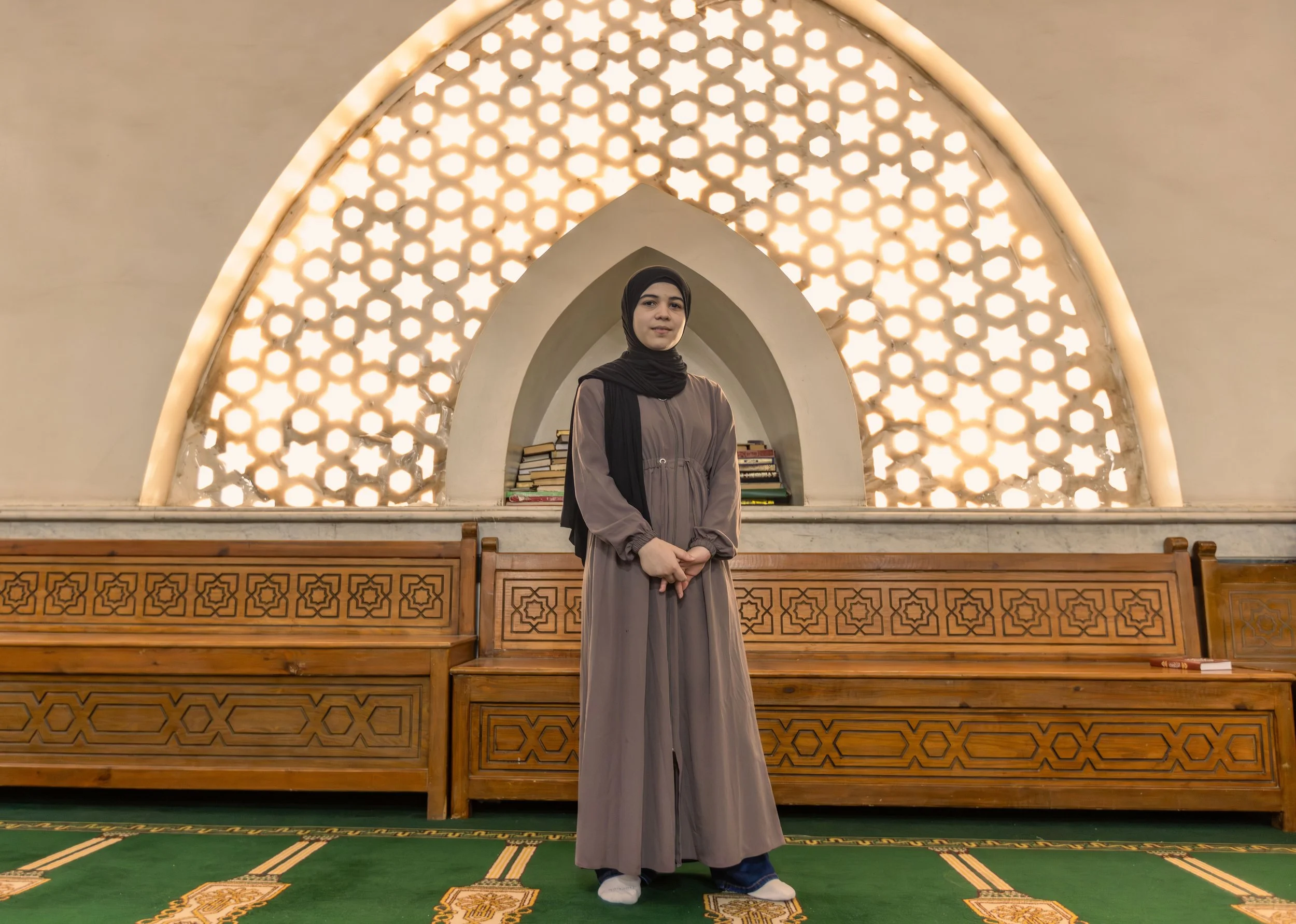
IMAGES & WORDS BY EMAN MOHAMMED
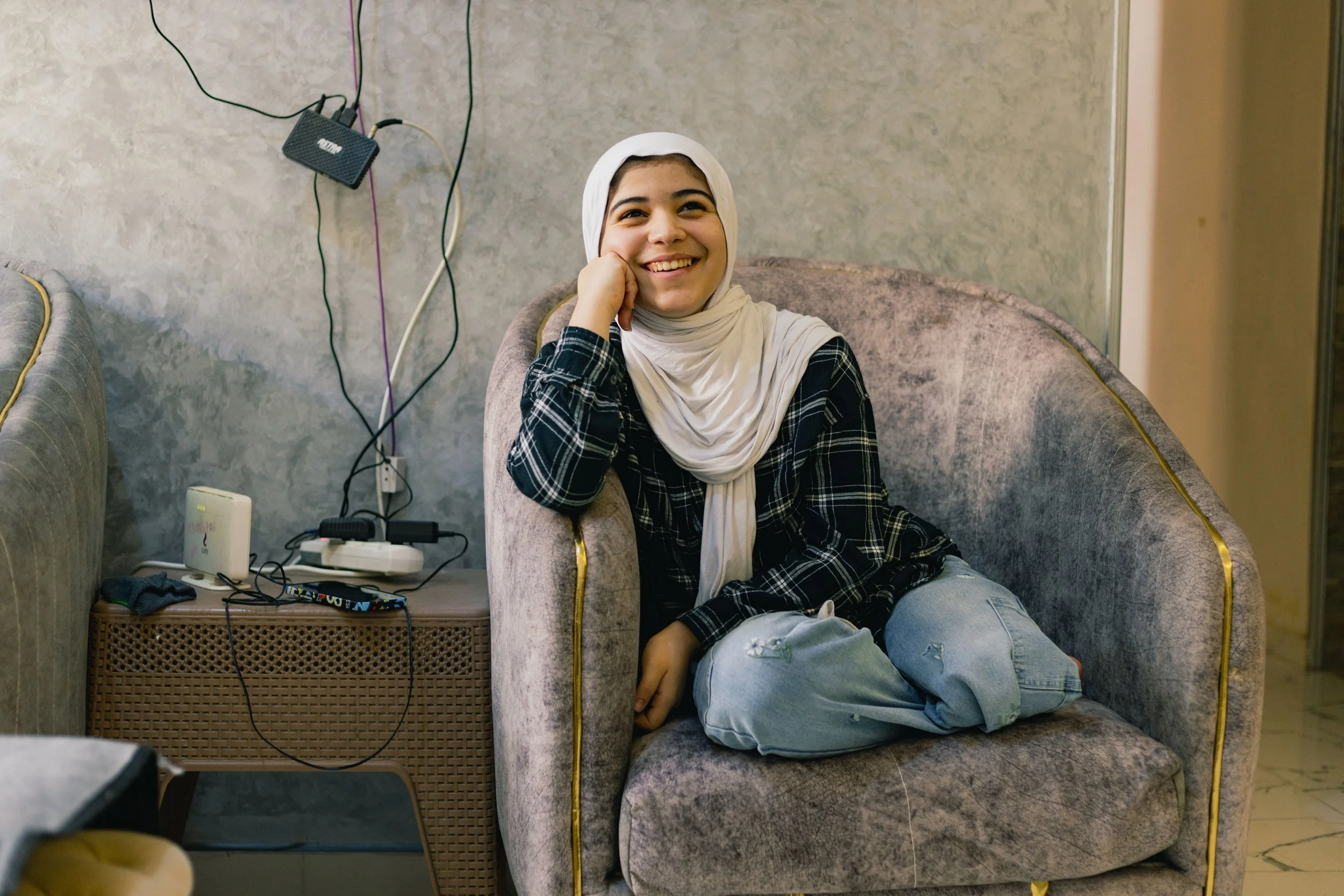
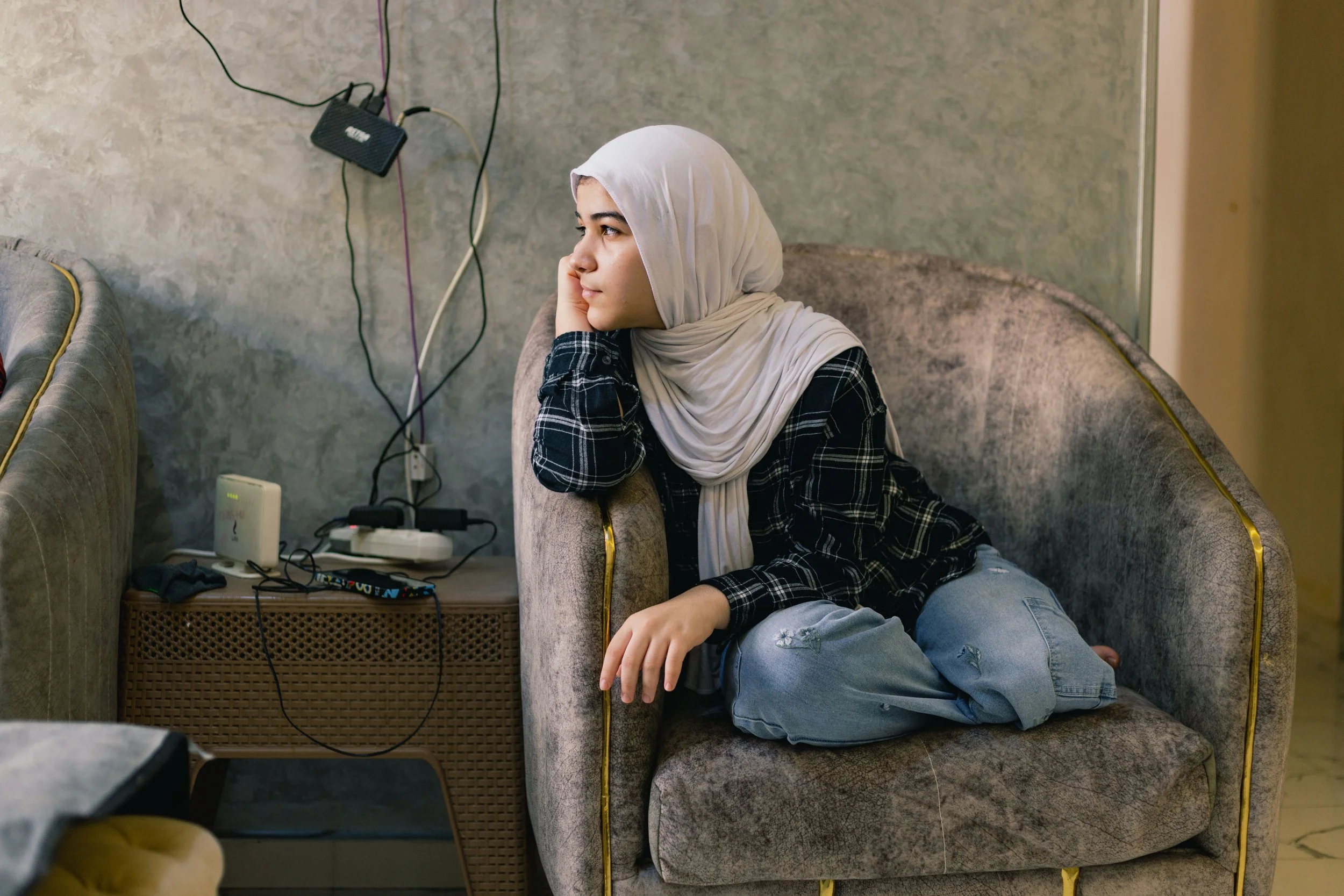
Rozan smiles in the living room of the shared Cairo apartment. At thirteen, she carries the loss of her parents, her brother, and most of her sisters, yet she still insists on moments of laughter. Her joy is not naive, it is defiance, a way of refusing to let Israel's bombing of her home erase her childhood.
The afternoon before Israel murdered her family, her grandfather’s house smelled like noodles and steam. Pots clattered, bowls scraped, someone oversalted and took the teasing.
A blast rattled the windows. The Gaza calculation followed: distance, direction, do we have time to finish eating? Rozan gripped her bowl. When she saw her cousins running, she dropped it. It shattered.
At 4 p.m. on October 17, 2023, Israeli bombing struck their home in Al-Zaytoun. That same evening, Israel bombed Al-Ahli Baptist Hospital, where families had taken shelter, killing 471 people. The house was struck during Israel’s carpet bombings that night.
For Rozan, the numbers blurred into the sound of glass breaking and bodies being carried. What remained was one fact: her family was gone.
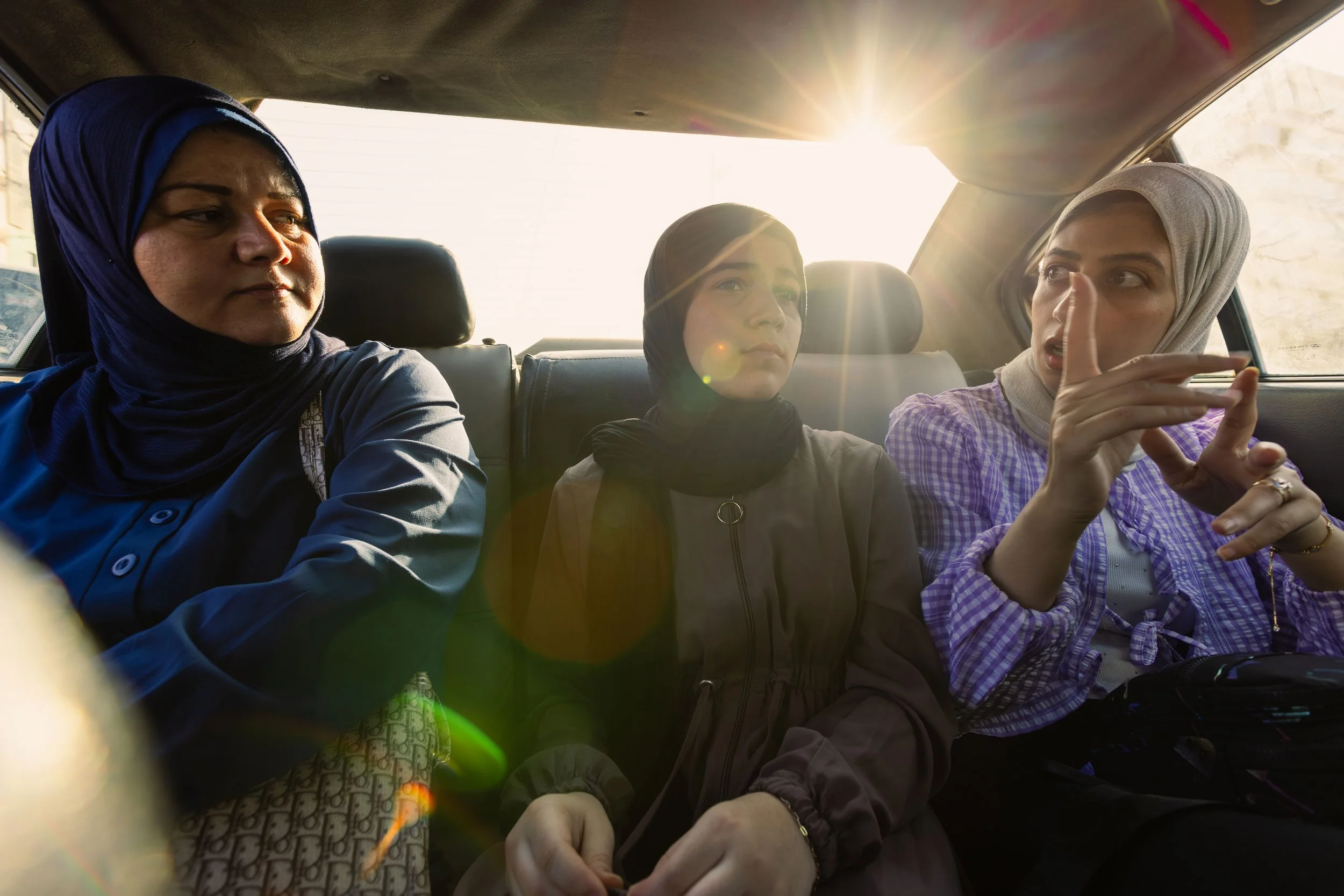
Neighbors shoved her into a taxi. Her ears rang; dust clotted her hair with blood. A woman slumped beside her, face swollen grey, hair matted loose, breath shallow. Rozan thought she was a stranger. Only later did she learn it was her sister, Maysoun, and she had watched her take her last breath.
Israel didn’t take them all at once. The killings came in phases, each one adding insult to the wound already open. Haitham, her twenty-eight-year-old brother, had just started married life when the bombing killed him. Asmaa, only twenty-two, was killed with her five-year-old daughter, while her two young sons were pulled alive from the rubble and later flown to the UAE.
Areej, the ninth-grader who used to sketch in Rozan’s notebooks and taught her how to draw trees, was killed too. Weeks later, another airstrike buried Enas with her husband and son. Amani is still under the rubble with her family, never recovered.
Maysoun, twenty-six, was the sister Rozan didn’t recognize in the taxi until it was too late, leaving behind two boys who now live without their mother. Shymaa survived, marrying during a ceasefire that Israel quickly shattered. And Nermeen, known as Nunu, survived at eighteen and became Rozan’s anchor.
In total, Israel killed seventeen members of Rozan’s family: parents, brother, sisters, nieces, nephews.
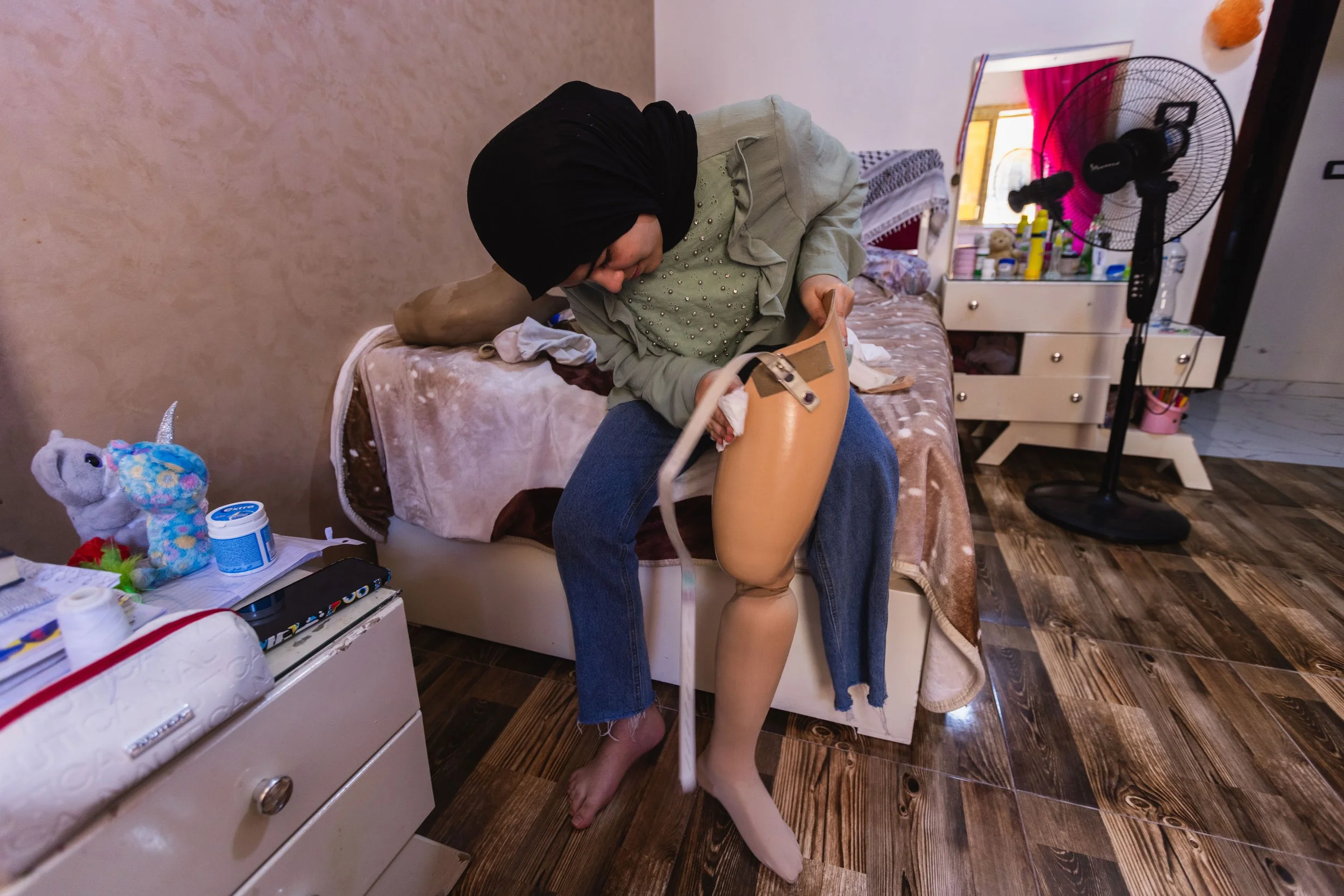
Rozan checks the alignment of her prosthetic leg before putting it on. Each step of the process requires patience, especially as she continues adjusting to life with the device.
Rozan’s own leg was shredded, bone black with infection. Doctors told her it had to be cut. Her sister Enas, still alive then, bent close and whispered: “Your leg will go to be with your dad in heaven.”
She remembers the squeak of the trolley wheels, the smell of iron in the elevator, the lineup of instruments glinting under hard light. She asked: “Is this the toy room?” The doctors joked softly, trying to keep her in the space of a child. Then the anesthesia carried her under.
When she woke, her leg was gone. The pain was quieter. “Cutting it off was a relief,” she says. Rozan spent ten more months displaced inside Gaza. She remembers Israeli soldiers herding civilians into ةبالح* cages meant for animals. A man was shot in front of his wife and children. A woman bled out on the road, covered only by a blanket no one dared stop to place. A soldier leaned down, pounded Rozan’s arm, and said “Salamtik, salamtik.” Minutes earlier, that same unit had gunned down a father.
Through it all, she refused stillness. “I used to run without my leg anyway. Just hop on one leg. I was in every hide-and-seek game. Didn’t miss one.”
She hopped through alleys, between tents, even back into the sea. “Sometimes I drowned because the waves were harsh and I had only one leg to anchor me. People put me in the middle while they swam around me.”
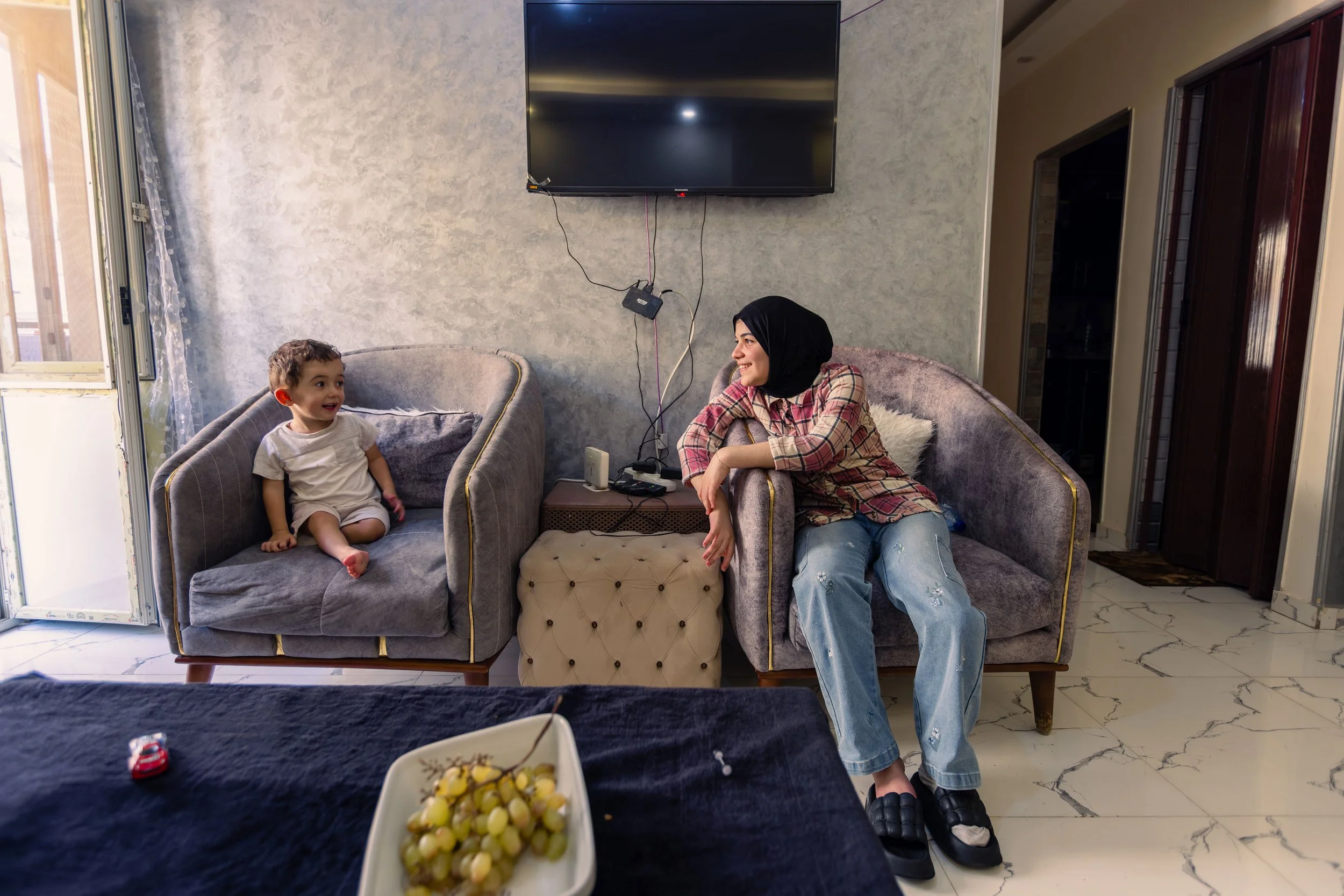
Rozan leans across the couch, laughing with Waleed, a toddler who shares the Cairo apartment with her. Waleed was only six months old when he left Gaza for medical treatment in the United States through Heal Palestine. He returned with his mother and now waits for the border to reopen so they can reunite with his father and three sisters still back in Gaza. Though not related by blood, Rozan and Waleed share a bond born of displacement and survival, two children whose lives were permanently reshaped by Israel's siege and bombardment.
Eventually, Heal Palestine picked up her case. Founded by Palestinian and American doctors and organizers, the group pushes medical evacuations that Israel controls with iron fists. Families are told at the very last moment if they’re approved, forced into a race against fate. Rozan’s guardian, her aunt-in-law Rula, left her husband and five children in Gaza to accompany her. Israel denied her permit four times. Finally, in August 2024, nearly a year later, the message came: it’s your turn. Heal Palestine got Rozan out for surgery, prosthetic fittings, and therapy—the kind of care every child deserves, without having to cross a border patrolled by their occupier.
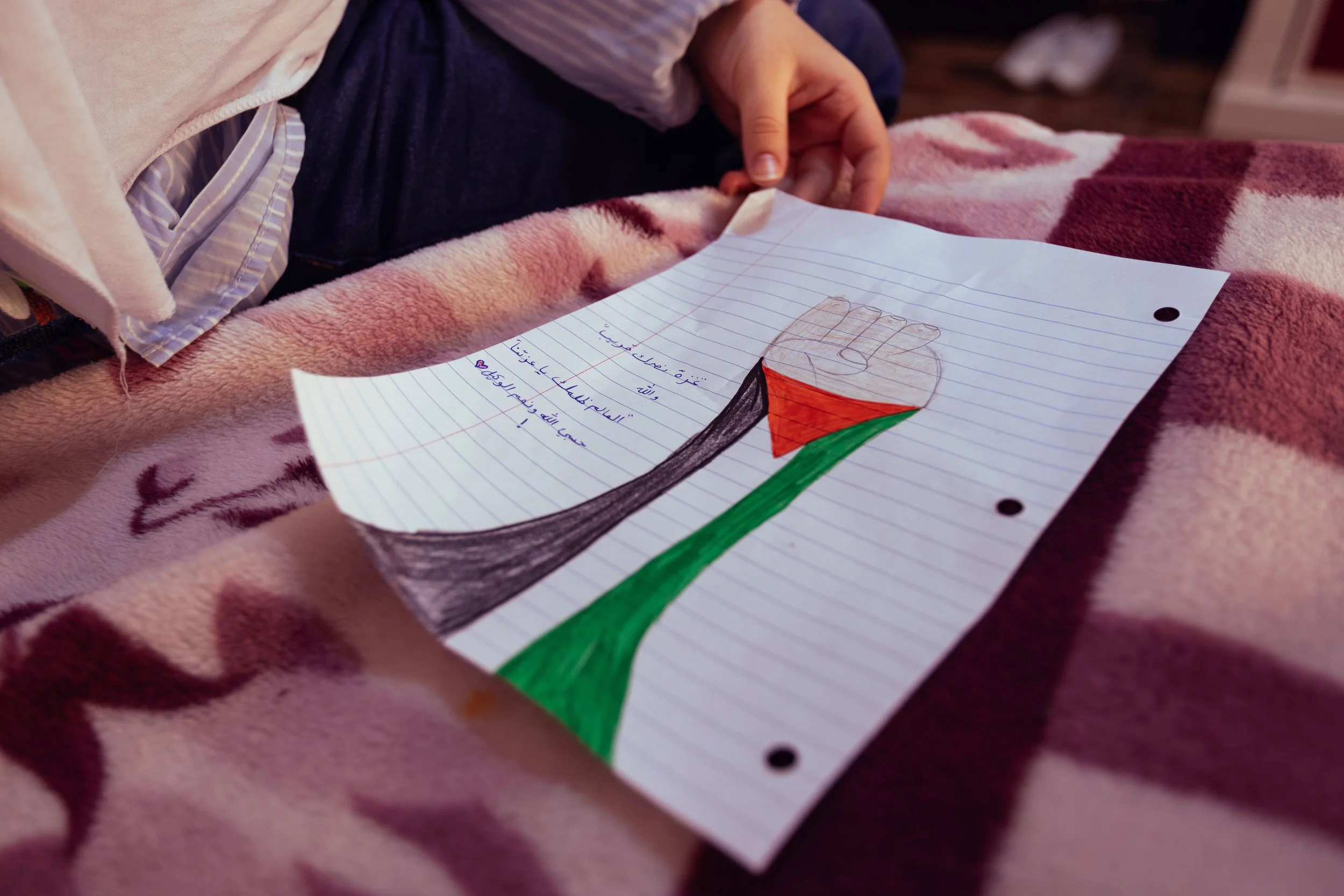
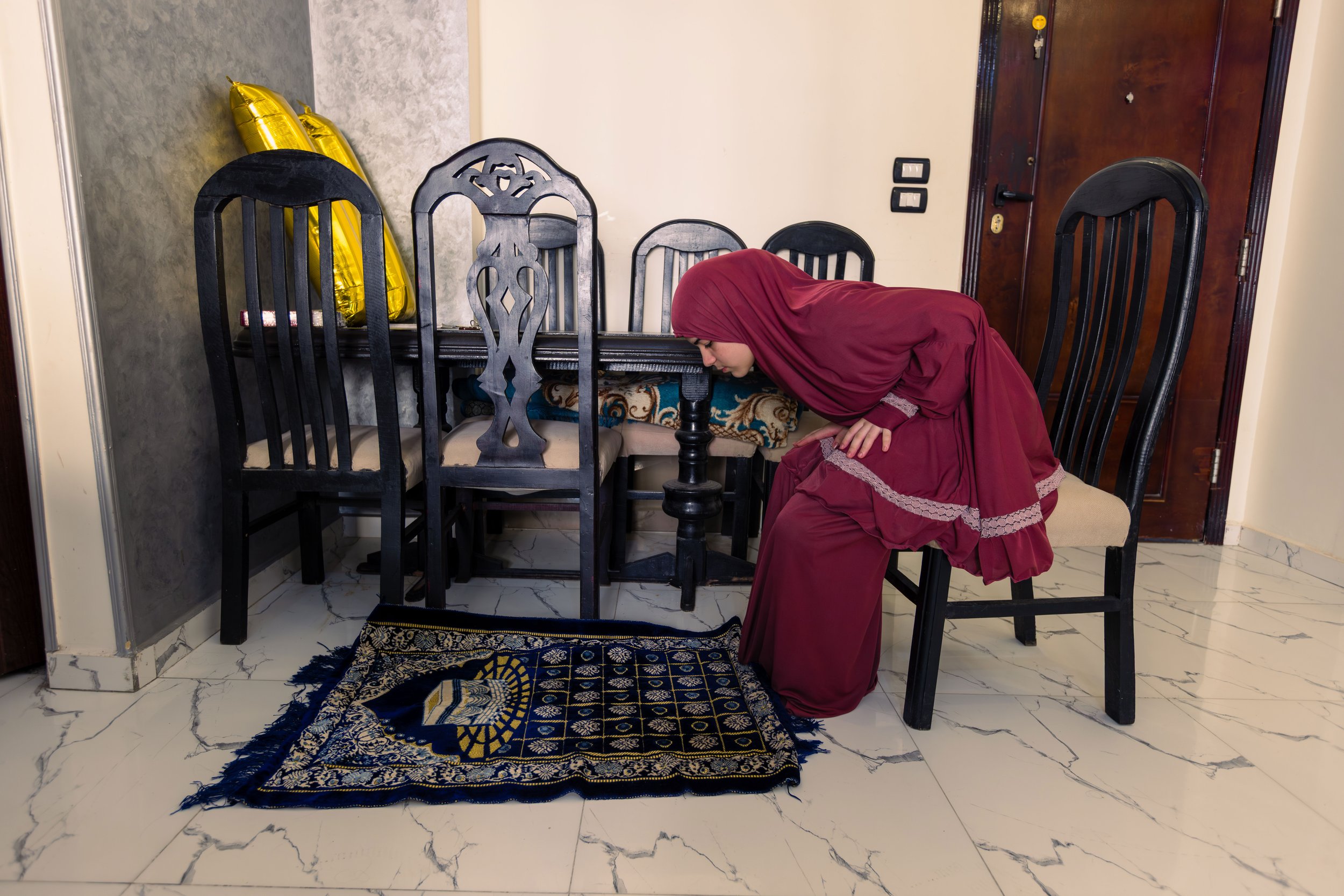
Now in Cairo, every morning is a ritual. Qur’an for her dead. Cleaning the prosthetic socket because sweat means infection. Then the small decision: flip-flops or sneakers. Sneakers take force, sometimes more than she has. “Nunu! Come help me with my shoes,” she calls. She wears hijab to feel close to her mother. She prays even when sujood is hard. Sometimes phantom tingles bring memories *دوجس of running on two legs and the tears come without warning. She’d rather be known for her drawings. Rozan sketches soldiers in black and white, seas with impossible waves. “The soldiers don’t feel guilty,” she says. “They see us as collateral damage.” Then she flips the mood, painting coconuts with cartoon straws, or blowing bubbles down the hall. She laughs behind the canvas, peeking with a grin.
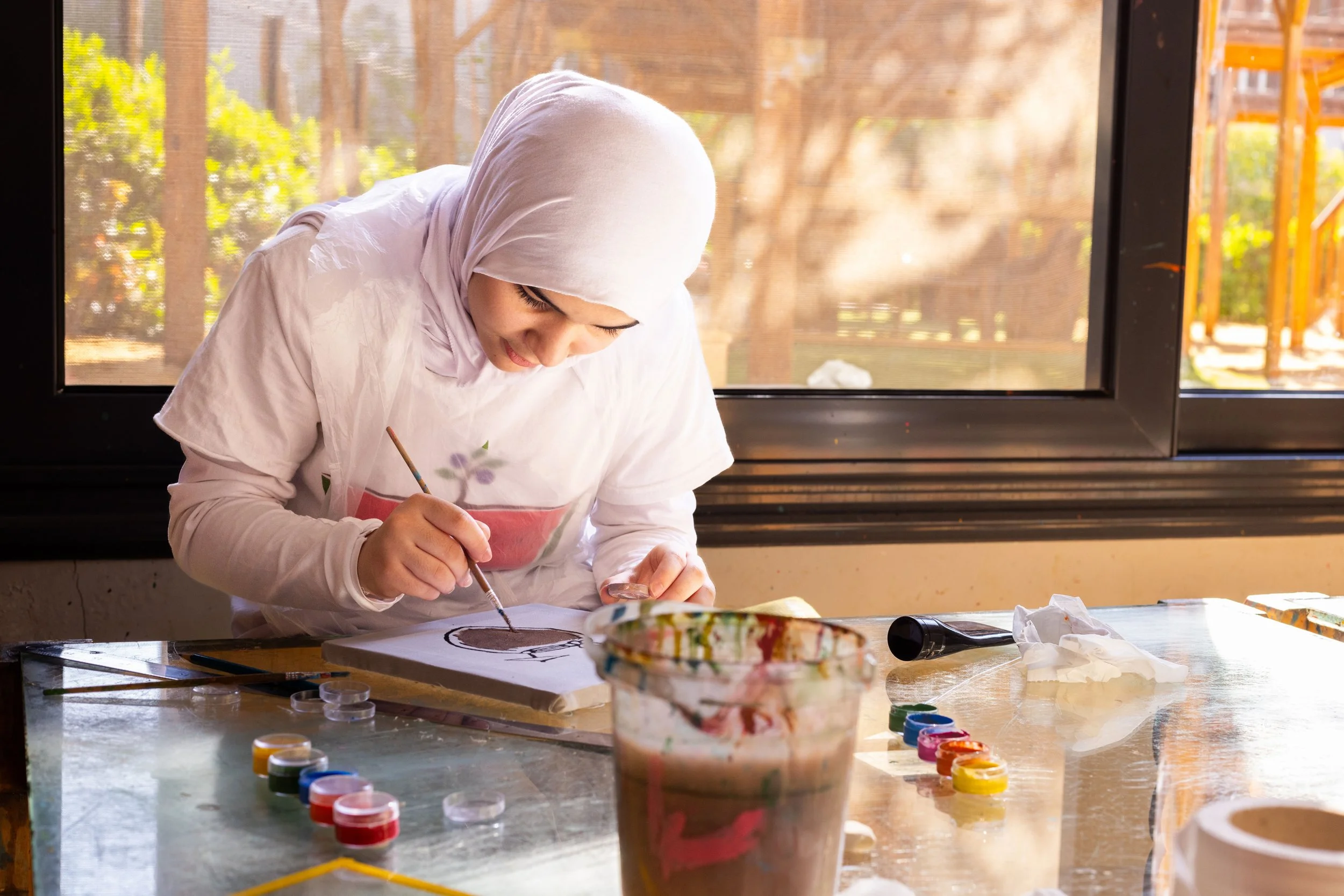
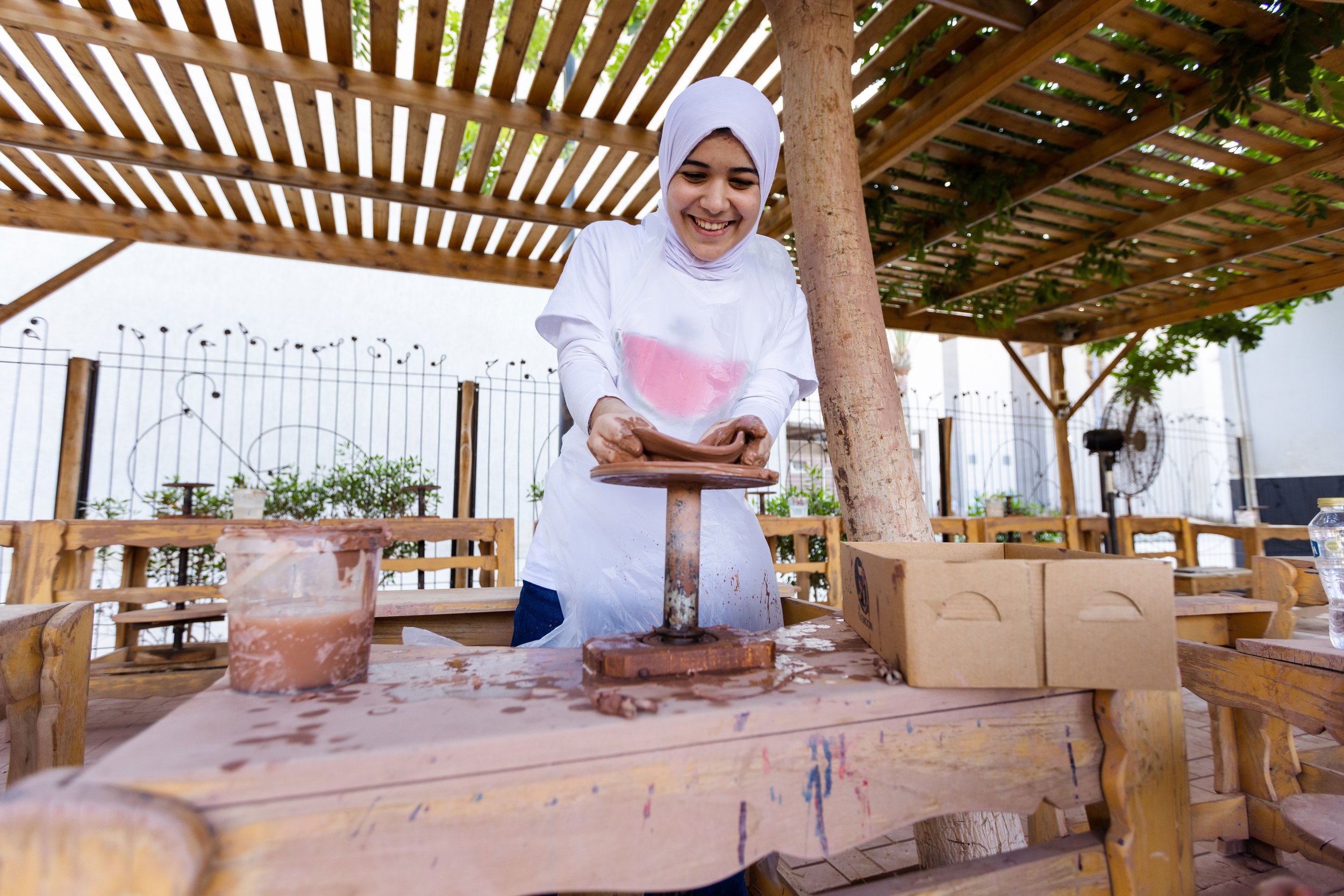
And clay! give her clay. In a Cairo pottery studio she calls, “Nunu, spin it!” because her missing leg can’t press thepedal. Nunu crouches, kicks the wheel, and Rozan coaxes the lump into bowls, one for her earrings, one for Nunu’s rings. Mud streaks her wrists. She laughs anyway. The bowls aren’t perfect. They’re hers. Waleed doesn’t notice. To him, Rozan’s prosthetic is just part of the morning routine, laid out beside her clothes like a backpack. He pokes her paintings, judges her bubbles, chases the ball until it wobbles back to her again. At night, Cairo softens. A fan hums. A vendor calls. Rozan lines up her clothes, sets the prosthetic beside them, whispers Qur’an for her dead, and closes her eyes. Morning will return: Qur’an, cleaning the socket, flip-flops or sneakers, “Nunu, help.” And then the ball, rolling crooked across the floor. Hop, laugh, hop, laugh.
Eman Mohammed is a recipient of PWB’s Revolutionary Storyteller Grant.