
Work and words by Danny Howard
The Nuraga Bhumi Institute is a woman led organization founded by Nayla Azmi, a Batak women born and raised on the island of Sumatra in Indonesia. The Institute was formally founded in June 2019, its main goal is to help indigenous women, queer communities and under-represented people engage in conservation. Ms. Azmi had already been working for years to educate and empower younger generations in her community. This formed the core of what would eventually become the small but ever-growing group of people that now encompass the “Nuraga Bhumi Institute”.
In 2015 before the organization existed Nayla taught after-school classes to indigenous children in the Bohorok region of Sumatra. These classes focused on environmental conservation, indigenous rights and English language skills. She believes English is essential, as it enables students to read, write, and understand scientific research-particularly reports related to climate change and environmental protection.
Several students have graduated from these classes and are now heavily involved in the “Nurga Bhumi Institute”. Today, the Institute delivers a wide variety of programs including micro-grants, education grants, capacity building training and community development initiatives and an all-female led conservation patrol team.
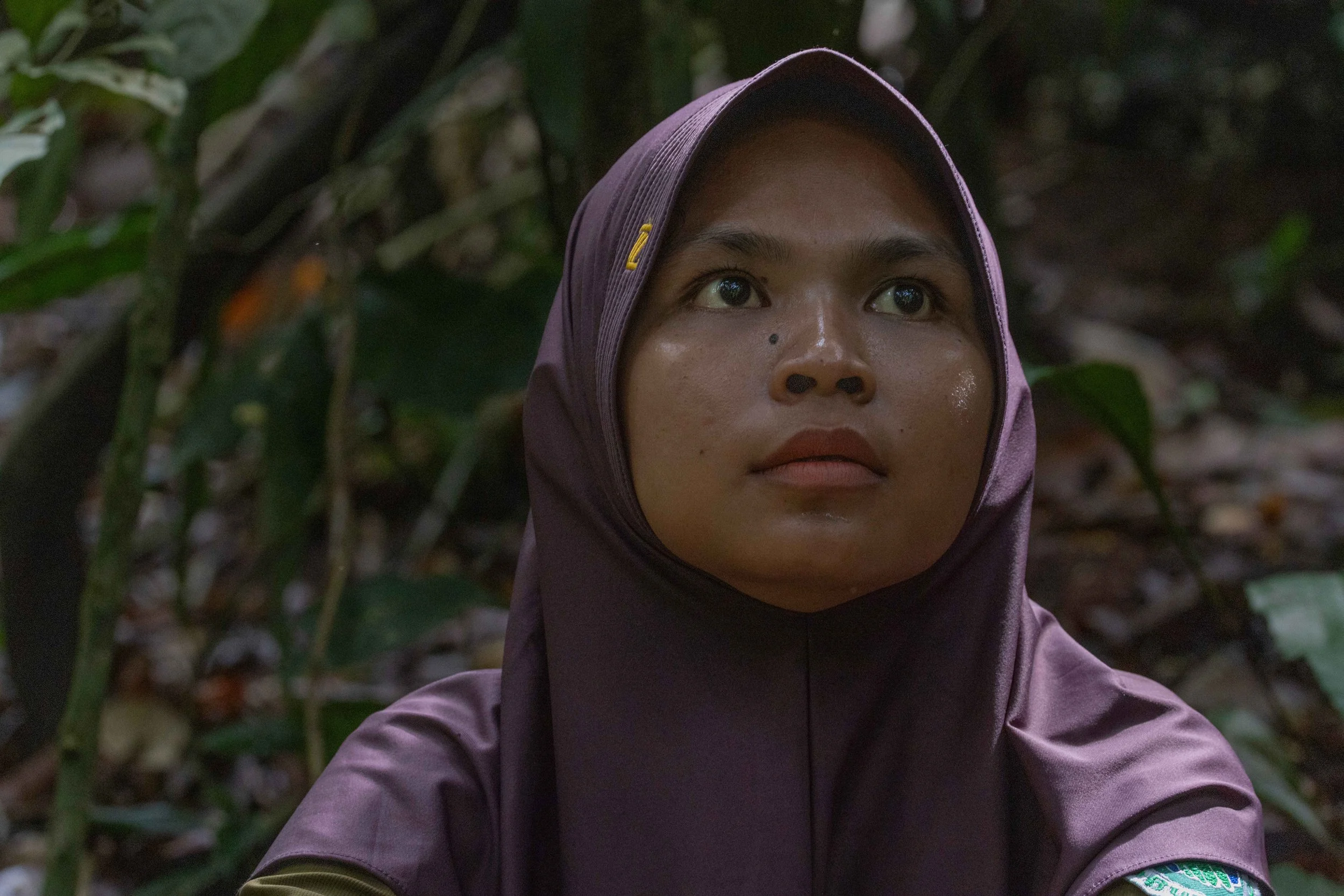
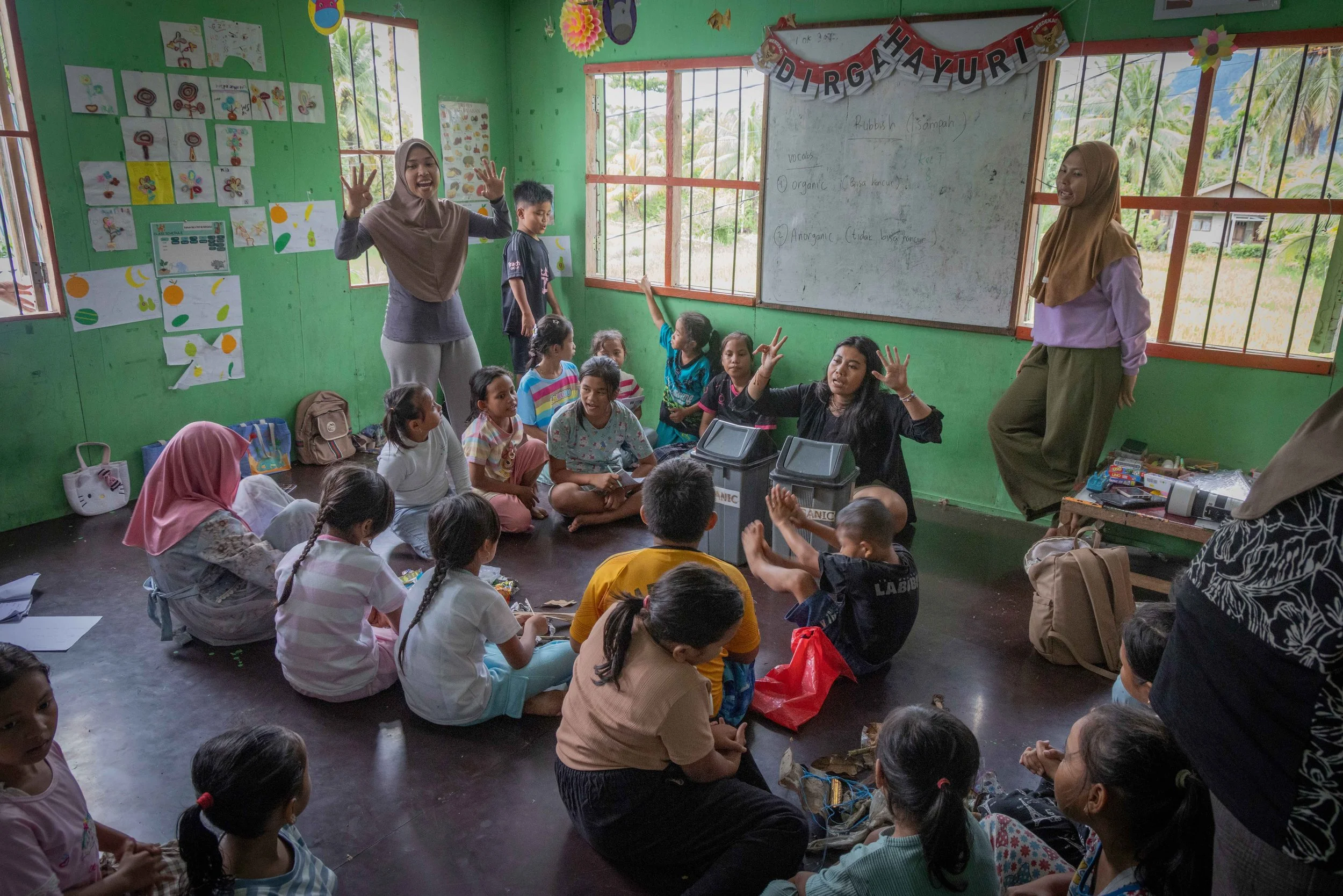
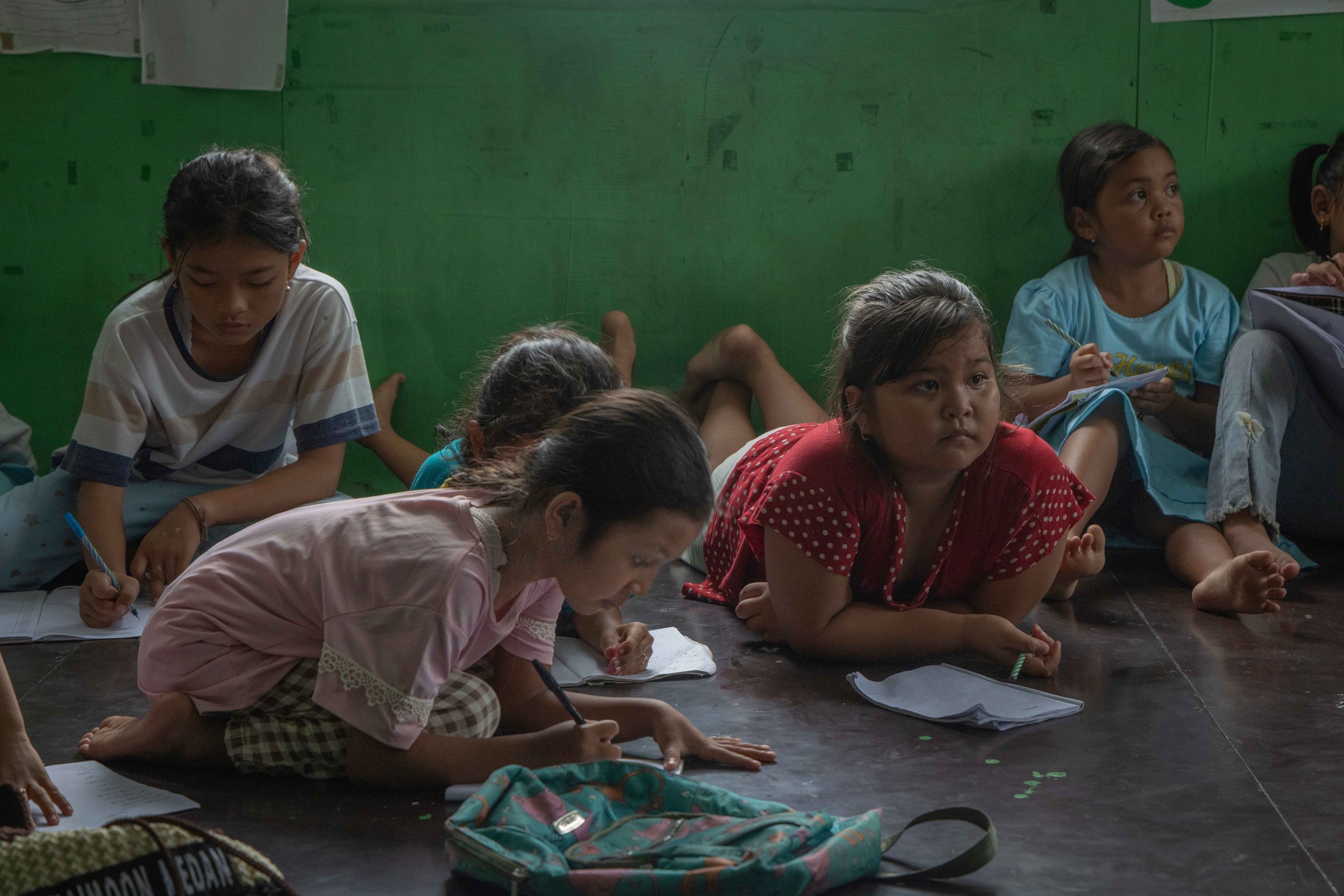
Wulan Dari and Selvi Atika are two student graduates from that after-school program which continues to thrive. They take an active role in programming and delivering education to the next generation of students in the after-school program. More than 35 local students attend classes three times a week in a modest classroom situated above a garage, generously donated by local resident. The room is bare, and often uncomfortably hot, but the students who attend gain invaluable knowledge.
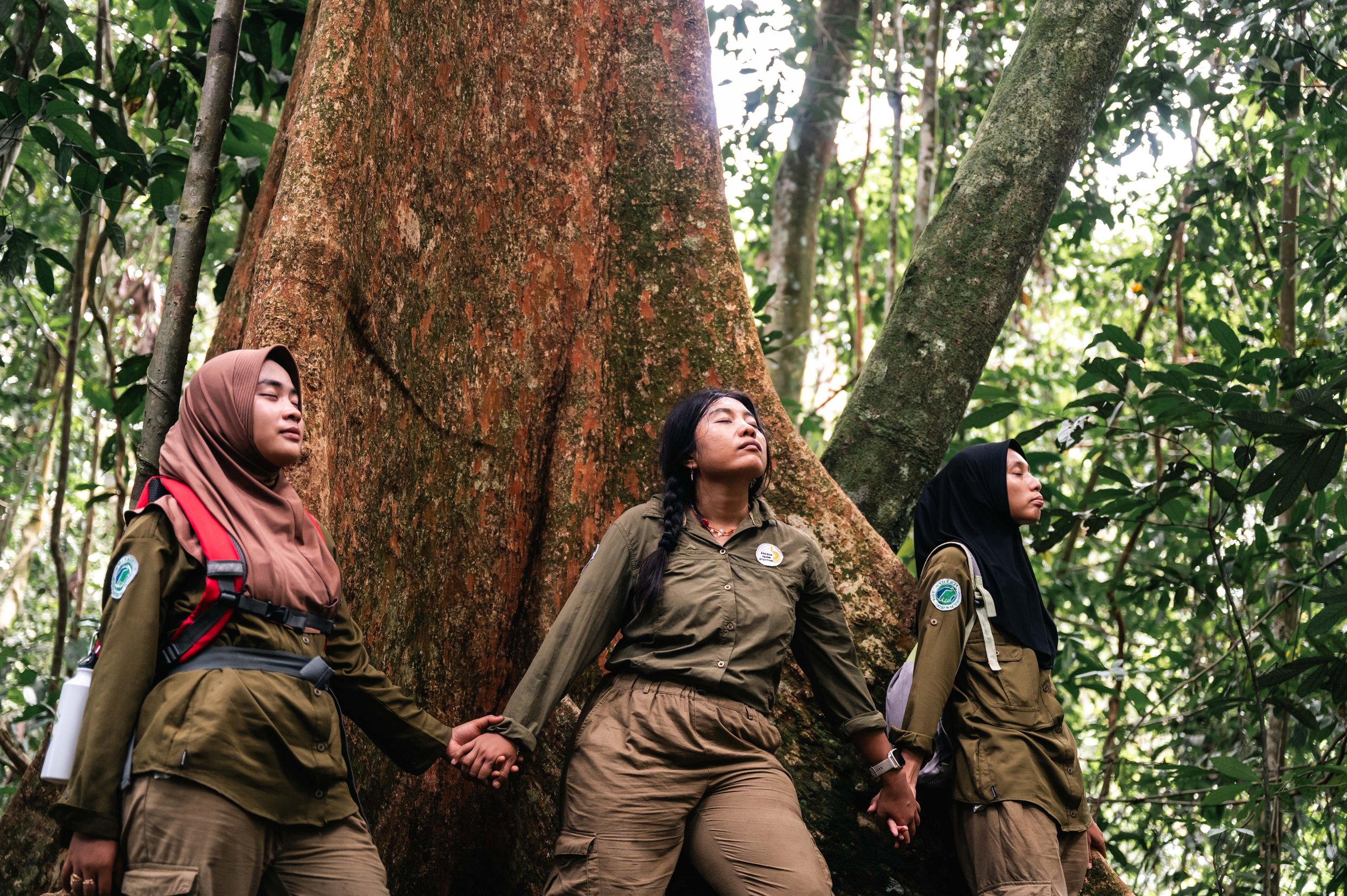
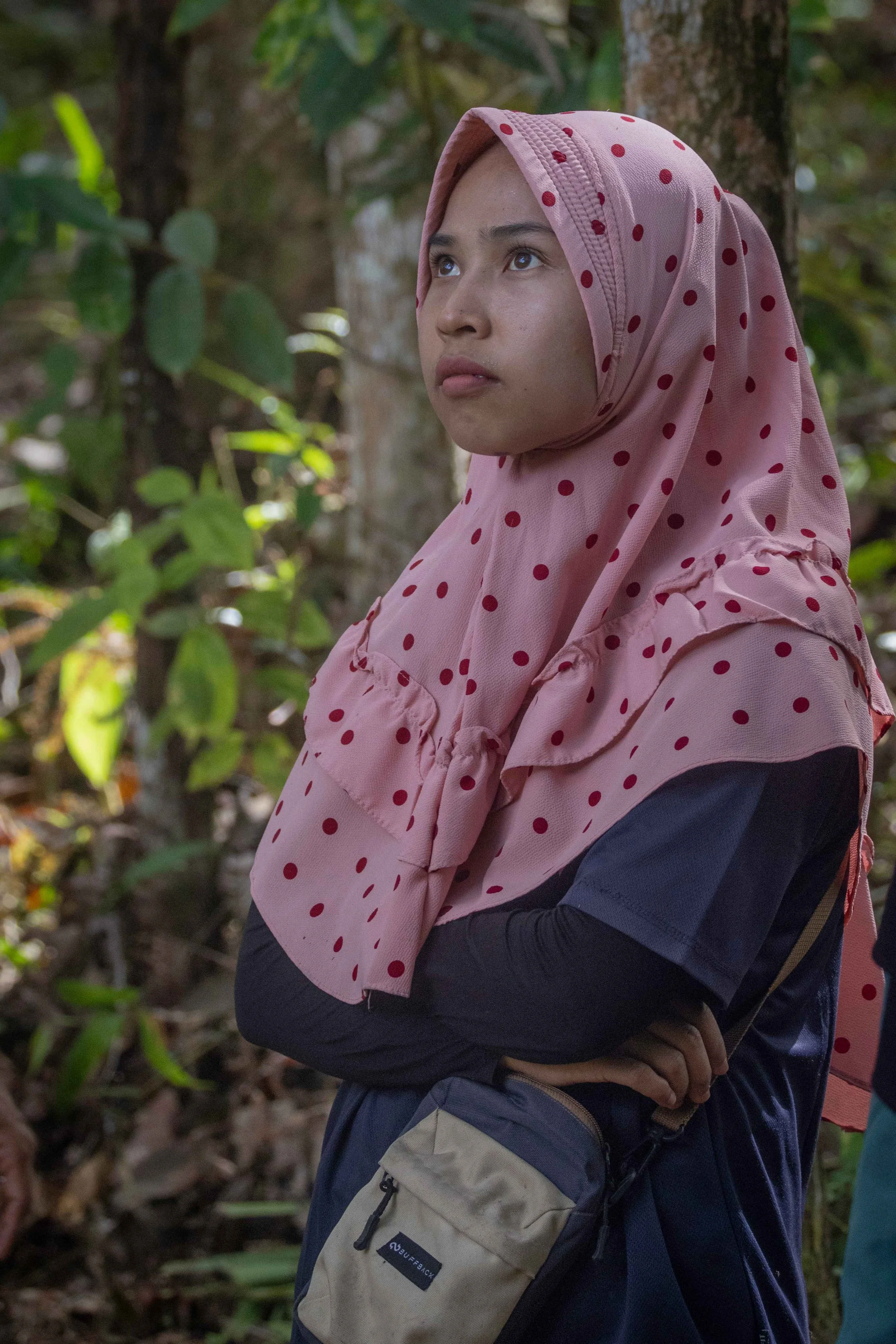
In addition to running the after-school program, Wulan and Selvi along with other members of the team patrol conservation land owned by the Institute that buffers the Gunung Leuser National Park. The hope is that the Institute can continue to purchase and expand this land, which is home to an incredible amount of biodiversity and endangered species. Pictured opposite is a mother and child known locally as “Mawas” or Orangutans. One of many endangered species that traverse the rainforest.
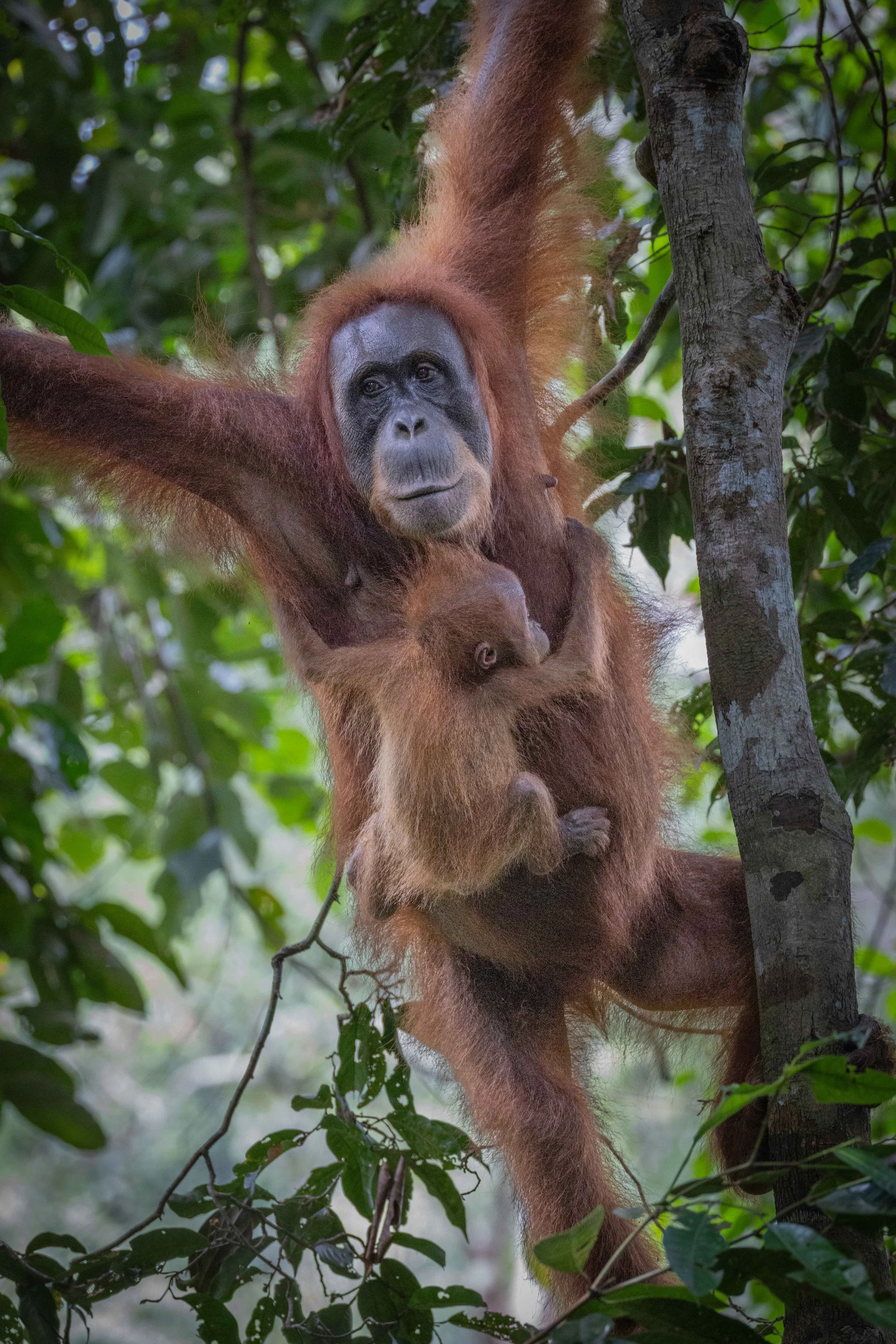
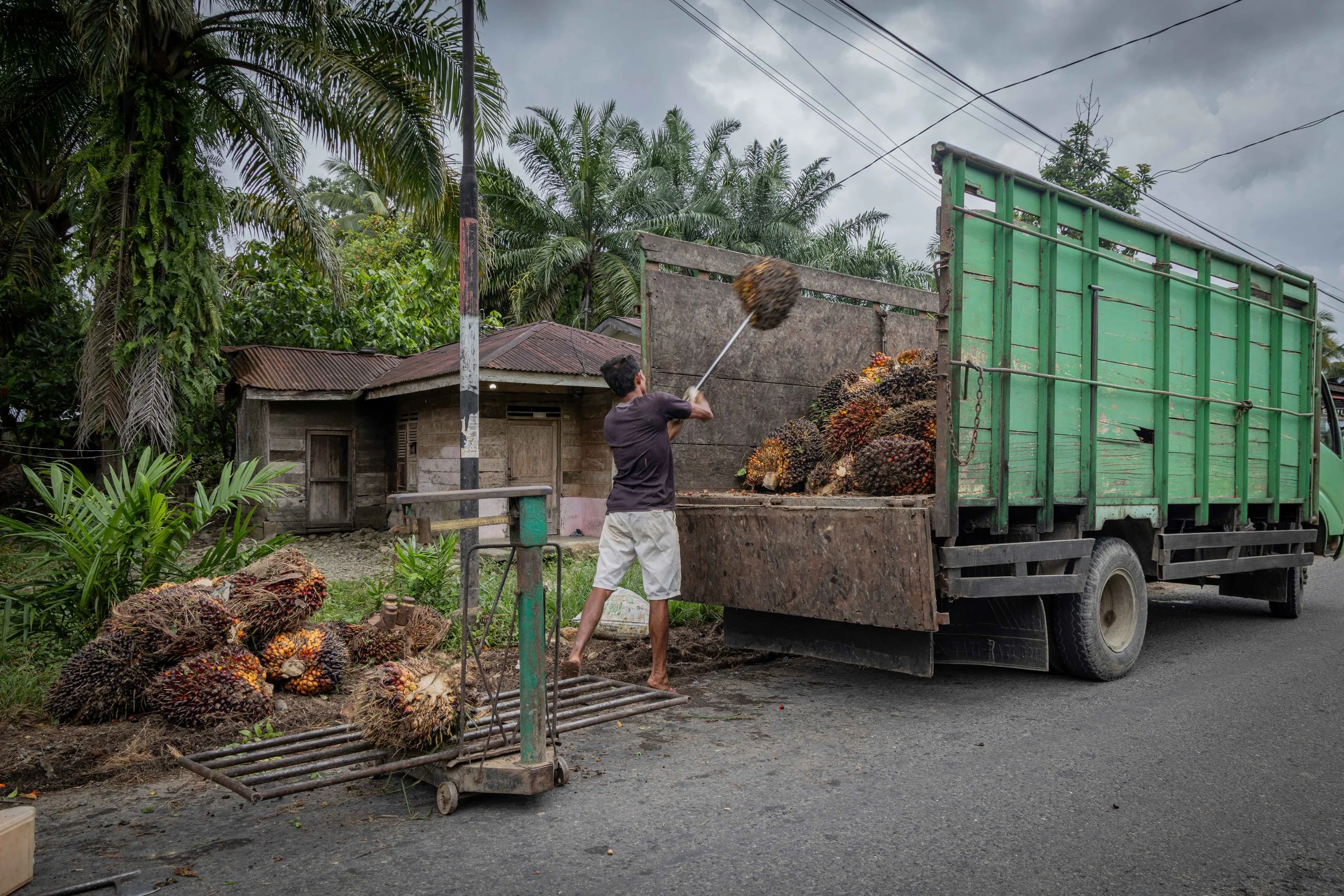
This land faces constant threats, not only from mother nature but human activity. In particular palm oil plantations are prevalent throughout Indonesia and Sumatra. Their continuing expansion threatens the rainforest and wildlife throughout the island, especially the endangered species of the National Park, like Orangutans, Sumatran Tigers, and Elephants.
While palm oil plantations often offer higher wages and housing to local workers, the environmental costs are severe. Nothing grows or lives under these trees leading to soil degradation, erosion and significant carbon release. Deforestation continues to have a significant impact on the indigenous communities and wildlife. This has most recently been seen when Cyclone Senyar formed in the straits of Malacca, the first cyclone recorded in the region in meteorological history in late 2025. It caused widespread destruction across three regions of Sumatra. Deforestation led to at the time of writing, more than 1,000 deaths and over a million people have been displaced.
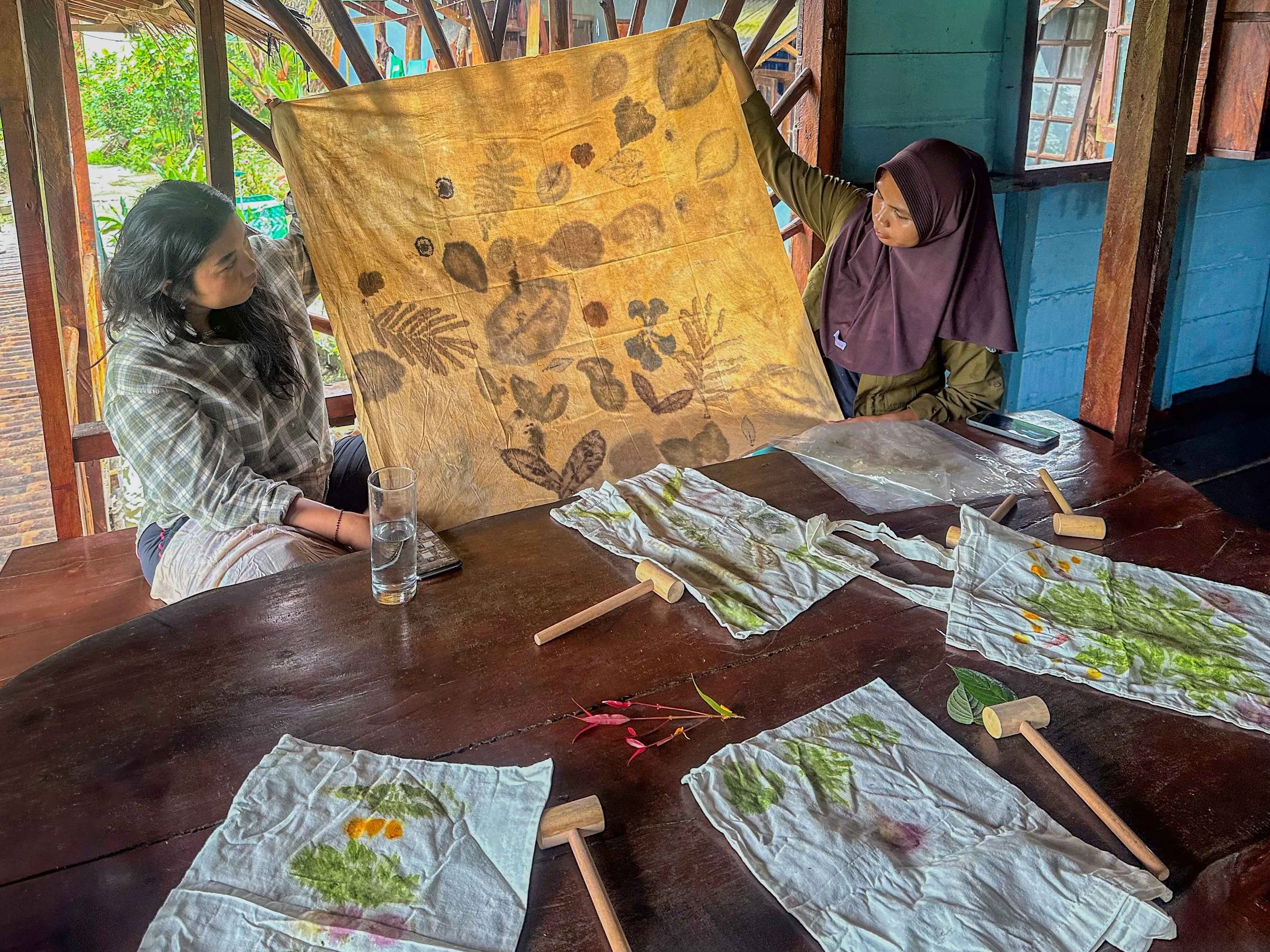
One of many ways the Institute is looking at creating alternative sources of income is Eco-Printing. Wulan and Selvi studied this recently, trying to implement environmentally friendly sustainable jobs. This currently helps fund the Institute and offers jobs in the region that aren’t based in the palm oil trade. Using flowers and leaves gathered from nearby plant life they print natural designs onto bags made by local artisans.
The Nuraga Bhumi Institute has also successfully funded several micro-grant initiatives. An example of this is Lija Asmida, who received a $75 startup grant to produce and sell flavored chips in her village. Lija started with a small cooking pot and sealing bags using a candle. She has since repaid the grant and invested in new equipment to help expand her business. Lija makes about $100 a month working two days a week. The flexibility allows her to continue working other jobs like farming and cooking during the week.
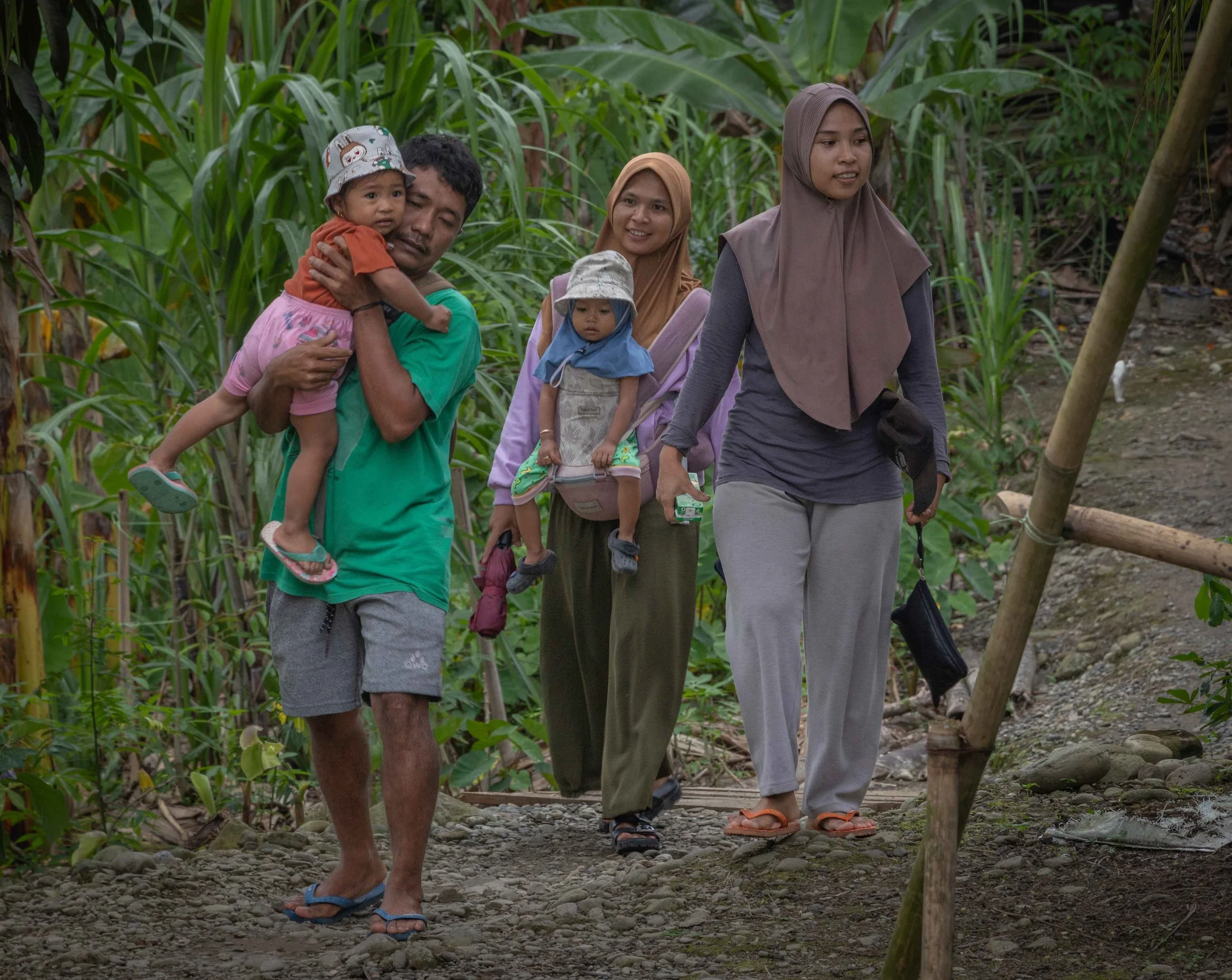
Lija’s long-term goal is to buy larger equipment and be able to expand and sell to other villages in the region. Currently when the local shops run out, she can’t always fulfill those orders.
Another micro-grant supported a broom making business run by Rajimah. Here two local children from the afterschool program help with her project. After farming all day, she makes brooms in the evenings to supplement her income. Her daughter is also a recipient of a monetary education grant of $20 per month to help her attend school.
Wulan and Selvi both wish for better lives for their own children, Selvi wants her daughter to become the first female licensed Guide in the Gunung Leuser National Park, perhaps the second overall in Sumatra, following her mother’s footsteps as a woman already making a lasting impact in the region.
Danny Howard is one of the participants in our Storytelling School Indonesia. To learn about our Storytelling School, please check our website.