
IMAGES & WORDS BY ALEX JOSEPH HANSEN
The author would like to acknowledge all of the people who comprise Guardianes Del Mar: Luis Antonio Lloreda, Daniel Dualiby, Nelly Ibagüen, Liliana Arango, Camilo Morante, Diego Gonzáles, Benjamín Gonzáles, Santiago Mosquera, Dairo Cajiao, and María Andrea Pia.
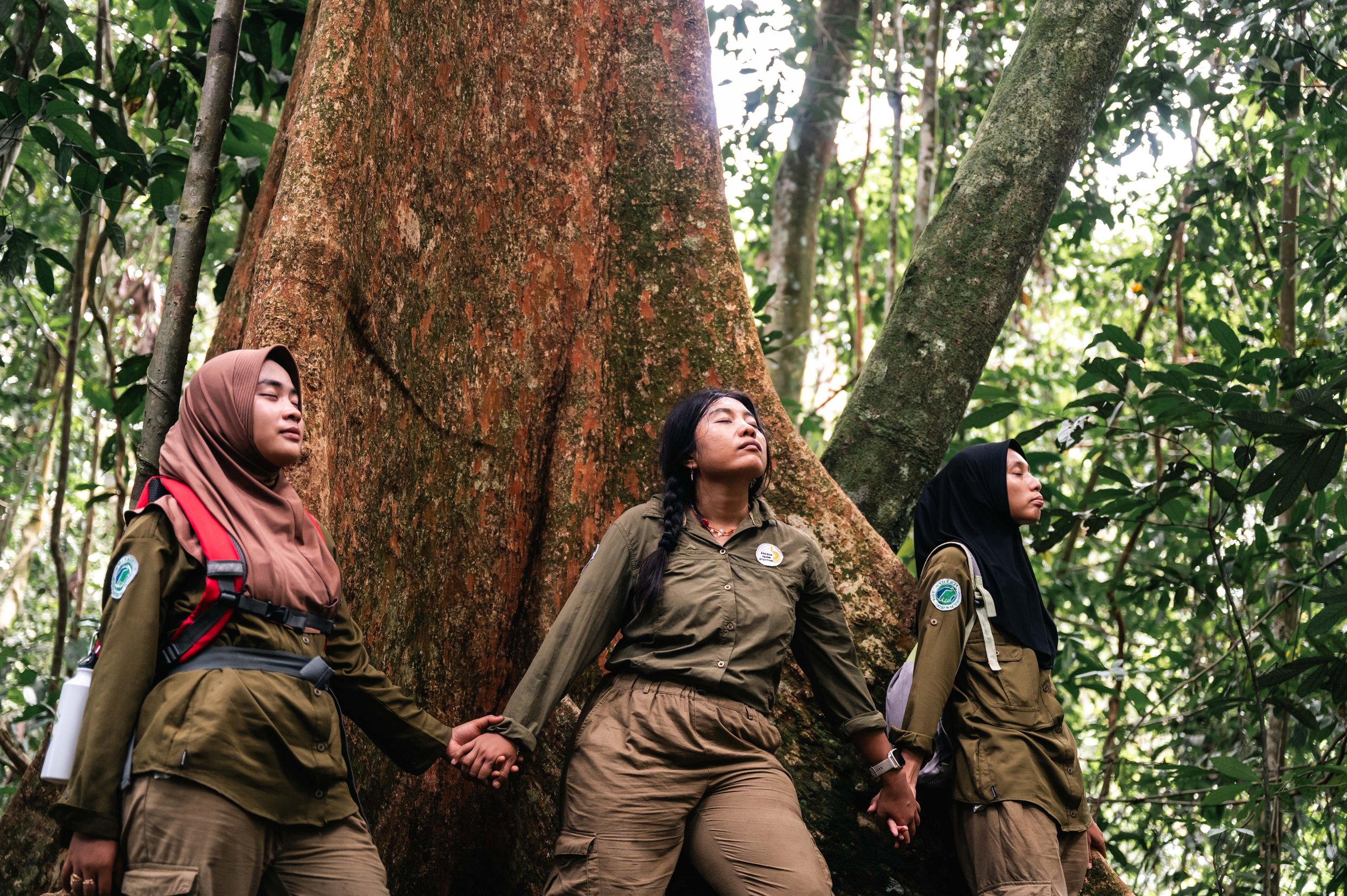
Camilo Morante holds out his hand, something resembling a sea urchin nestled gently in his palm. “Do you know what this is?” he asks. He takes the round, bristly capsule and gently runs it over the top of his head. “It’s the fruit from a Monkey Comb tree,” he says before pausing. “Do you think we’re the only ones that brush our hair?” Camilo laughs amusingly, alluding to the fact that monkeys here also use the fruit to self-groom. Then, he walks over to the trunk of the tree; it’s thick, robust, woody. This particular tree–part of the Malvaceae family–is mature and has thus shed the pronounced ribs of its youth. He brings the pointer finger of his right hand to his lips, signaling us to stay quiet. All except the butterflies are still before us. He balls his fist and knocks on the woody trunk. Tock, tock, tock! The sound from the hollow trunk reverberates through the heavily canopied forest. Although we can’t see it, Camilo ensures that the sound reaches the ocean nearly a kilome-ter back. He tells us, “Our ancestors would use these trees to orient themselves in the rainforest if they became lost…they would use the echo from knocking on the trunk to call for help. If this didn’t work they would gain higher ground and look for a stream. Then they would follow that tributary to a larger river, which would lead them to the sea.”
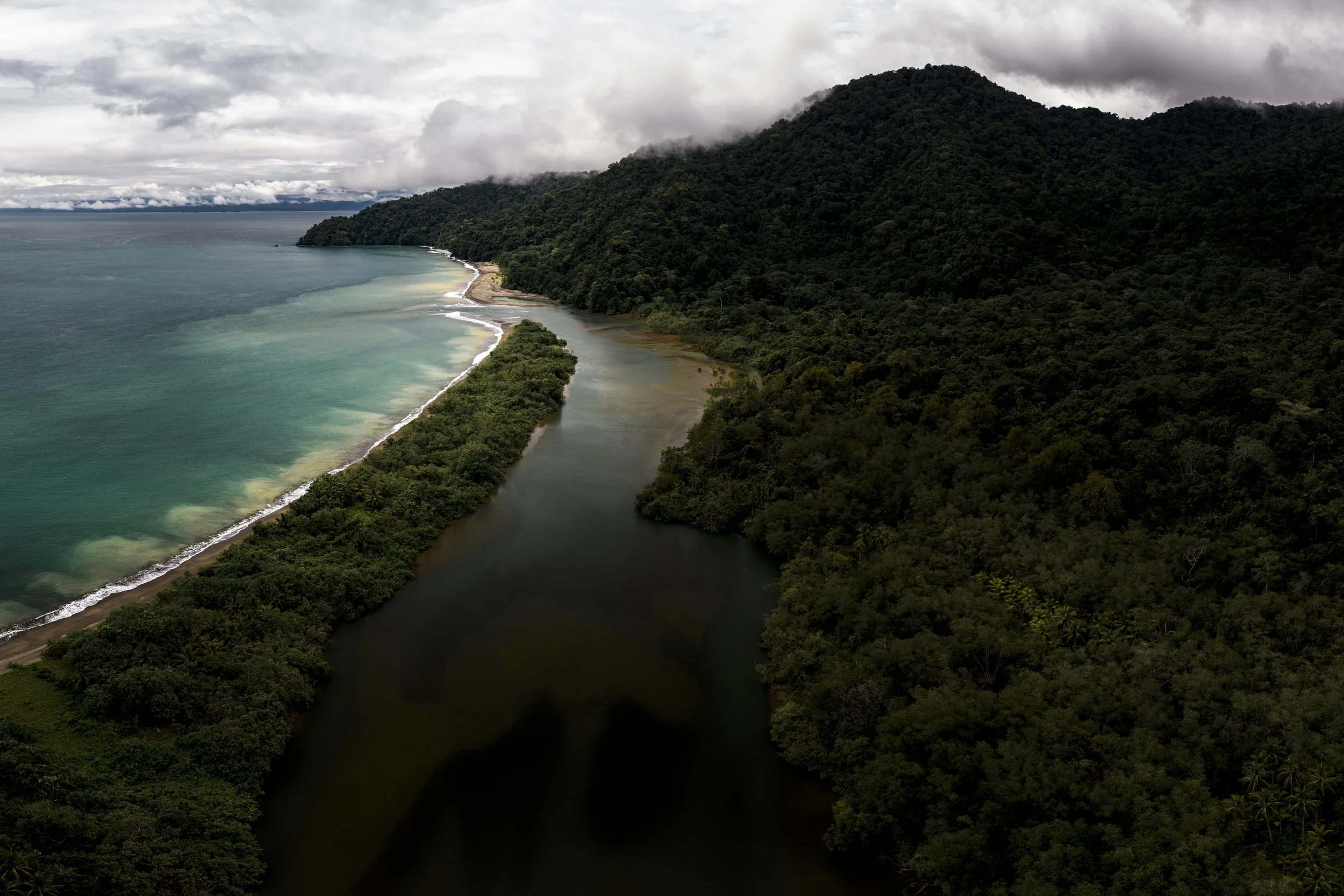
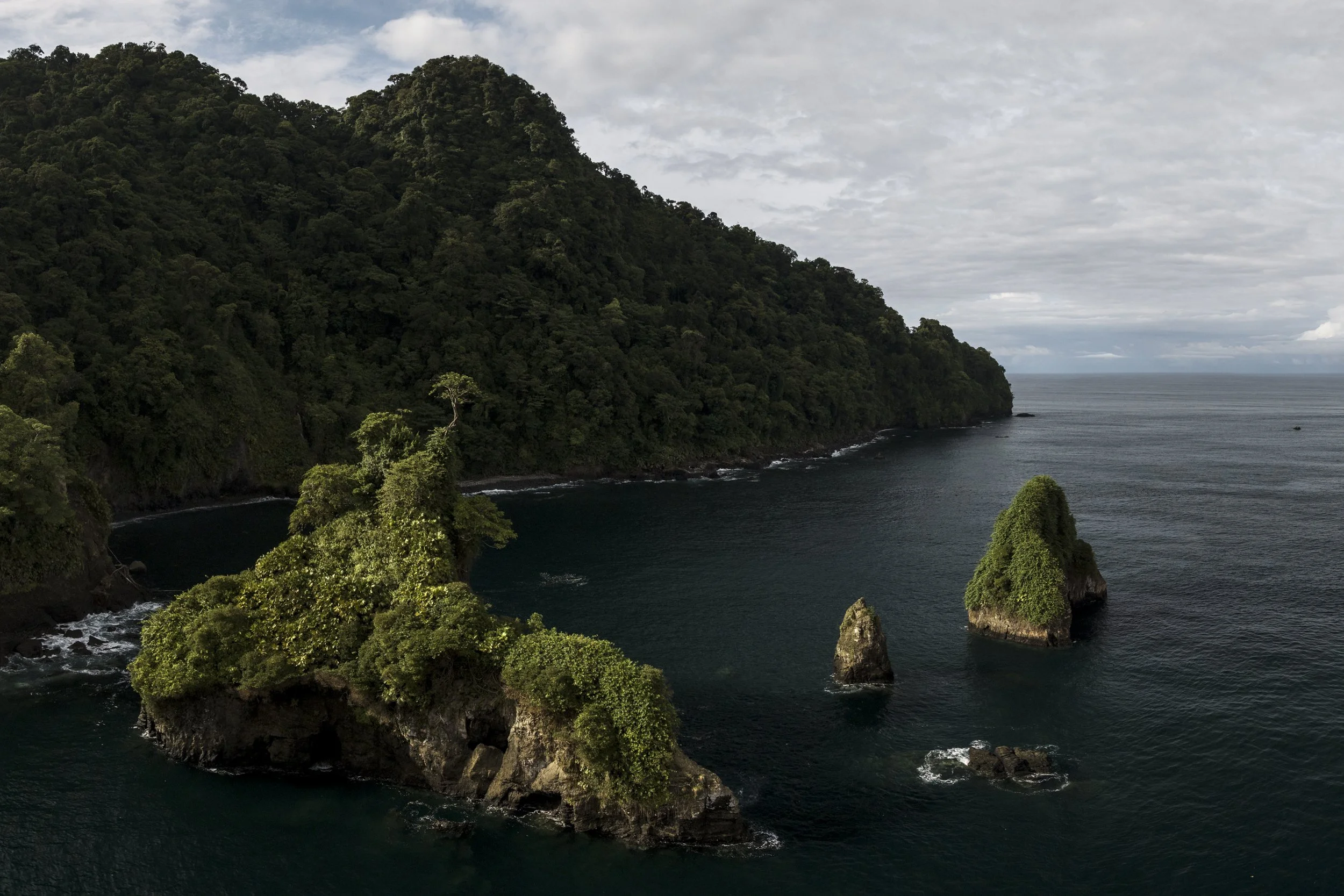
Colombia’s Chocó region is among the most biodiverse places on Earth. The Gulf of Tribugá reflects this ecological richness, holding 20% of the country’s remaining mangrove forests and serving as a vital migration stopover and birthing ground for humpback whales. Nutrient-rich waters from the surrounding rainforest and river systems feed into the gulf, creating a unique and highly productive coastal ecosystem. This productivity is essential for sustaining local artisanal fishing traditions and for supporting the long-term health of both aquatic and agricultural subsistence livelihoods.
In northwest Colombia–an isolated region of dense rainforest and the ecologically vibrant waters of the south Pacific–the population is overwhelmingly Afro-Colombian, with 82% in Chocó identifying as Afro-descendent. This concentration traces back to Africans brought as slaves by the Spanish in the 16th and 17th centuries, many forced into the country’s gold mines and agricultural plantations. Seeking freedom, some escaped into the rolling hills west of the Andes, where settlements grew beyond colonial control. It’s this land, a transient green, paper maché-like terrain laced with winding, milk-chocolate rivers, that once guided Camilo’s ancestors. As it did then, these waterways would one day carry his family–and thousands like them–back to the sea.
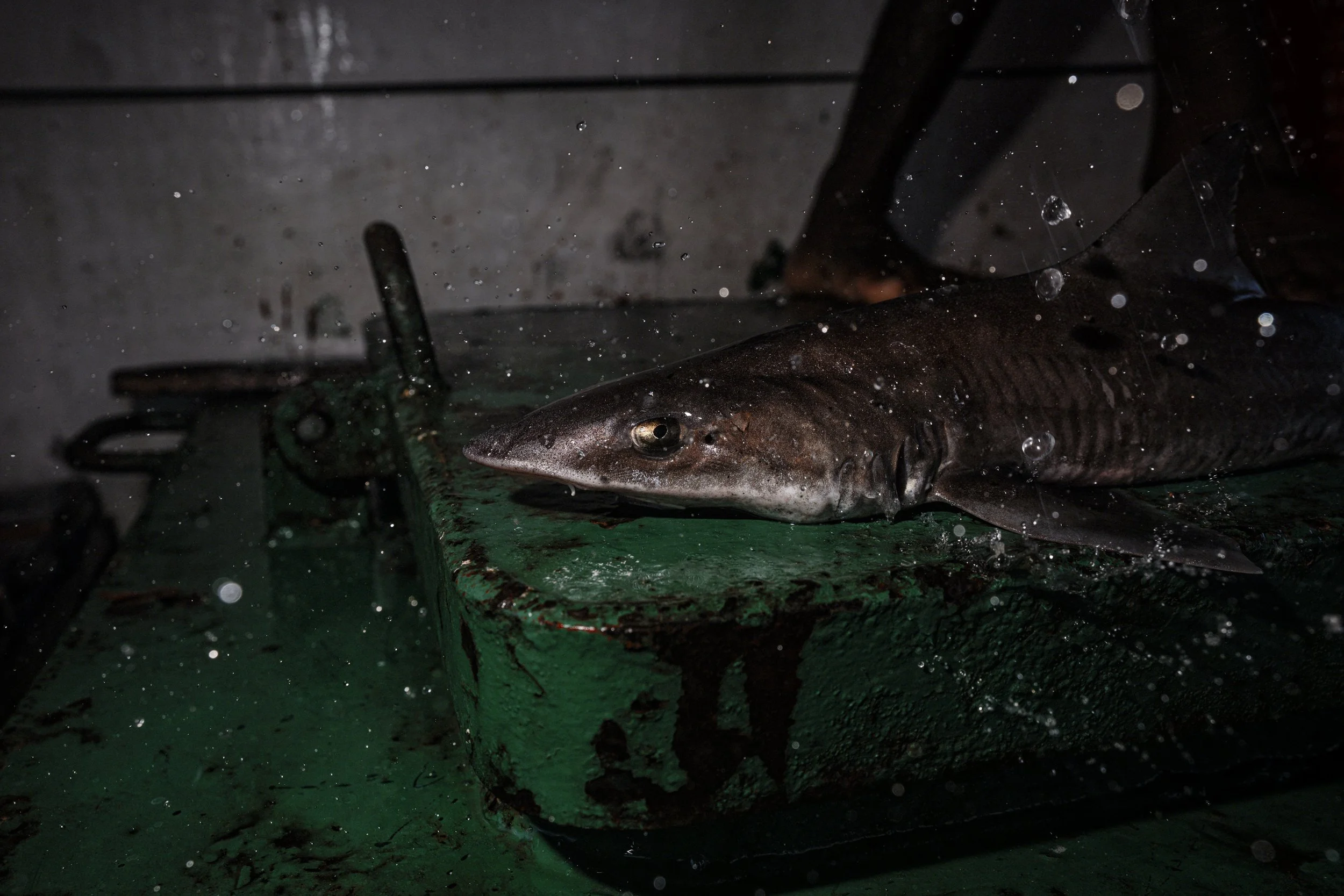
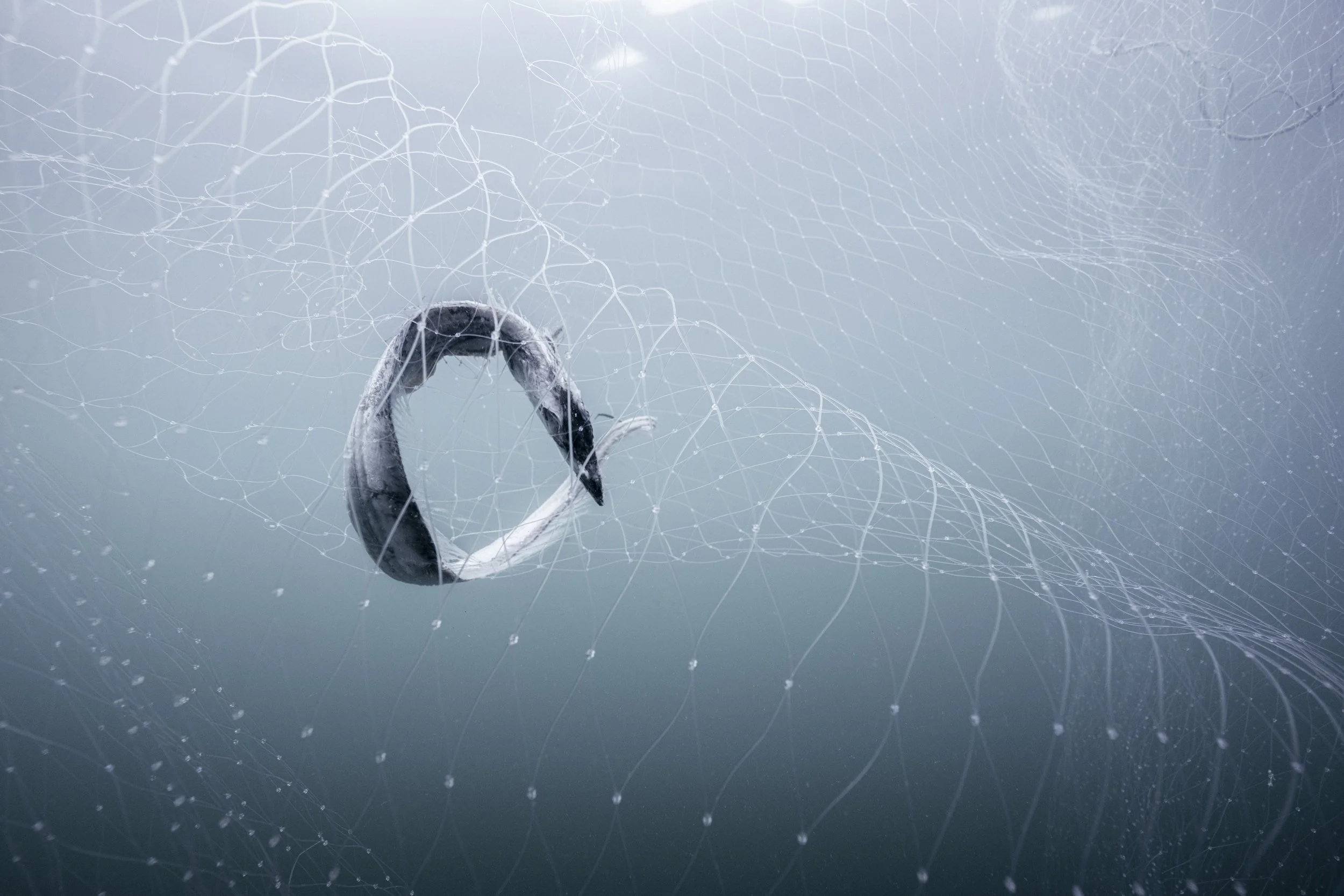
A fish hangs motionless in a small mass of nets and ocean plastics in
Colombia’s Gulf of Tribugá. Each year, an estimated 650,000 marine
animals, including whales, sharks, sea turtles, and seabirds, are killed
by lost nets and lines, plastics that can persist in the ocean for decades
and degrade vital marine ecosystems.
But the waters that have always sustained life along Colombia’s Pacific coast are now under threat.
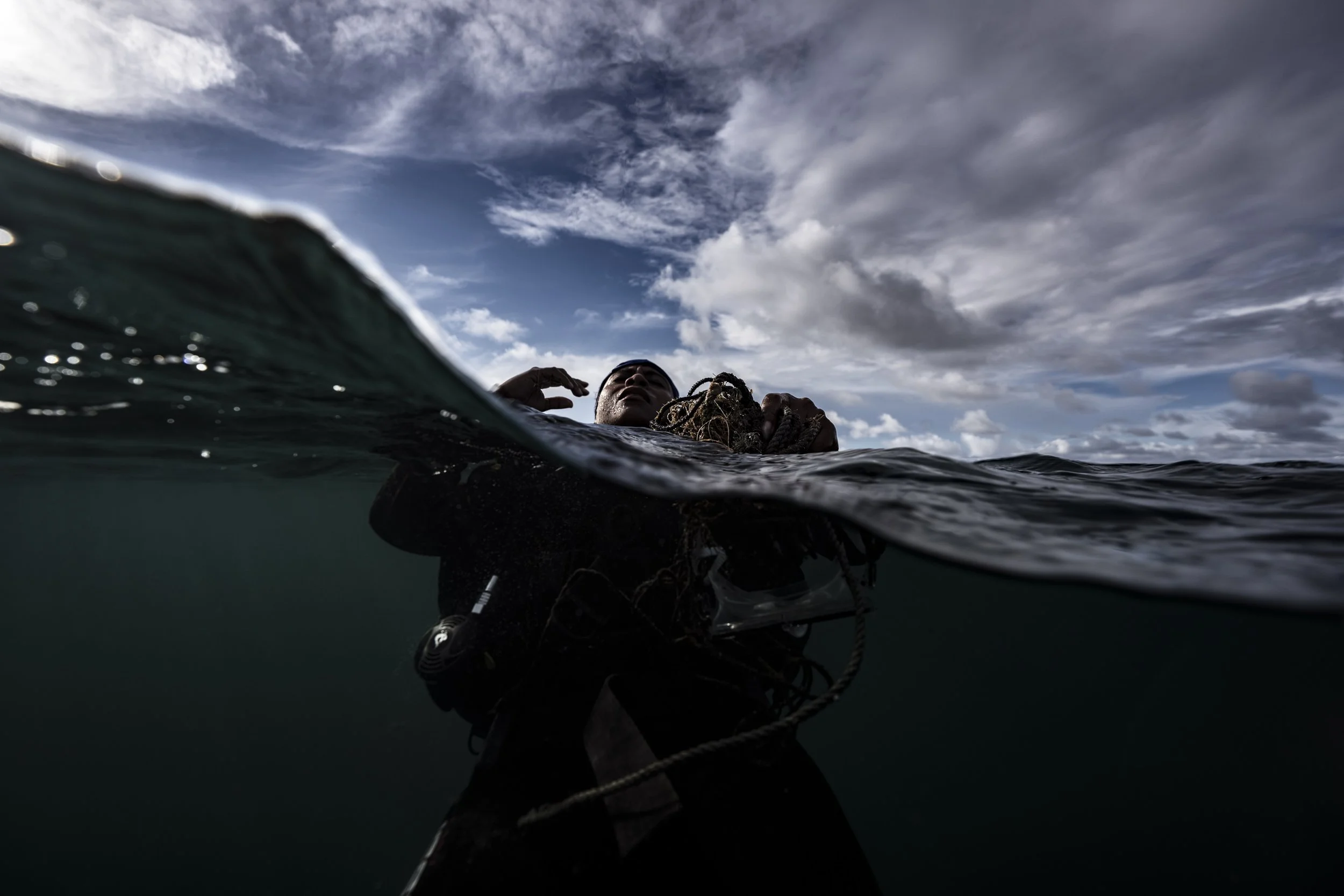
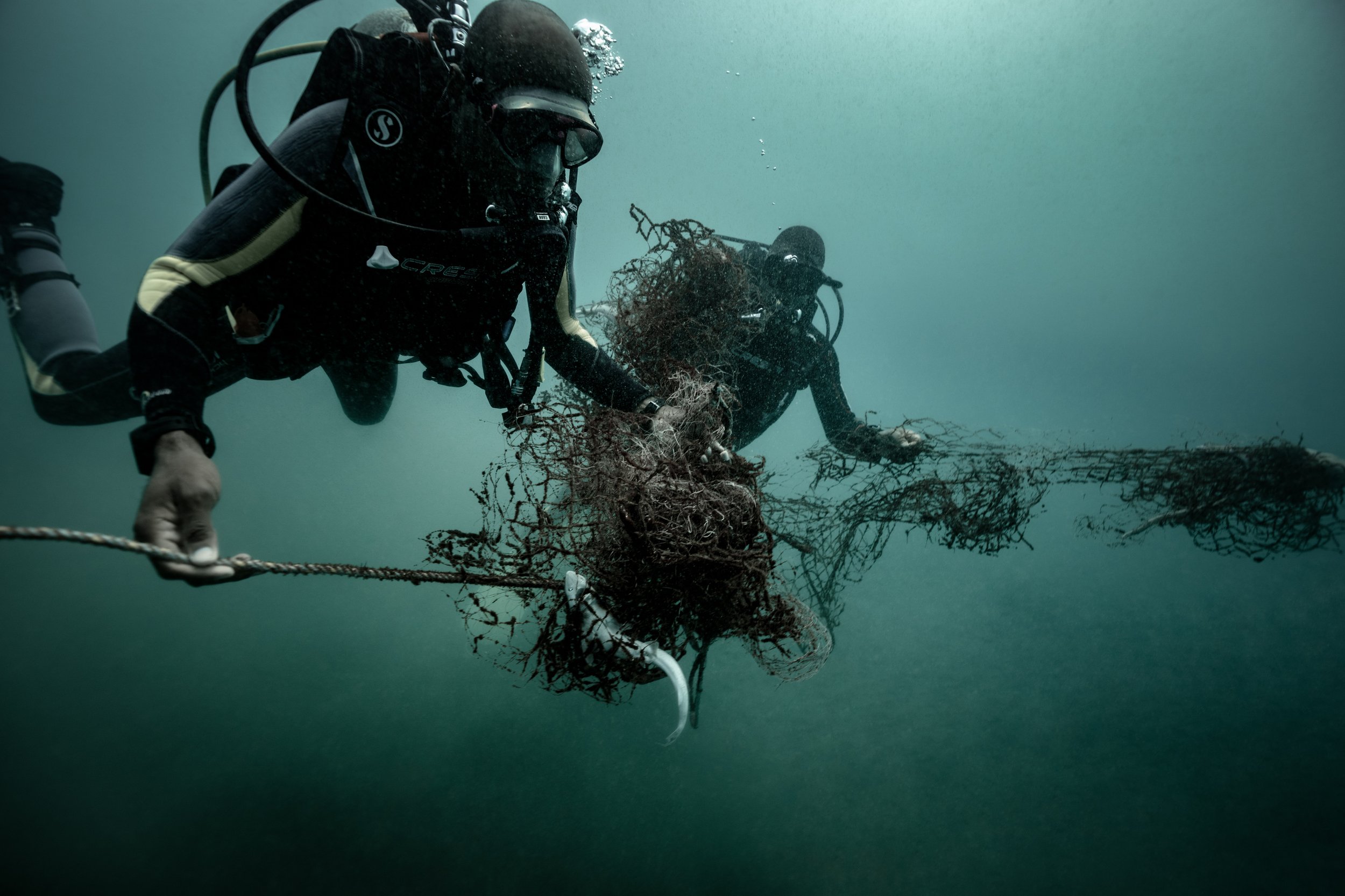
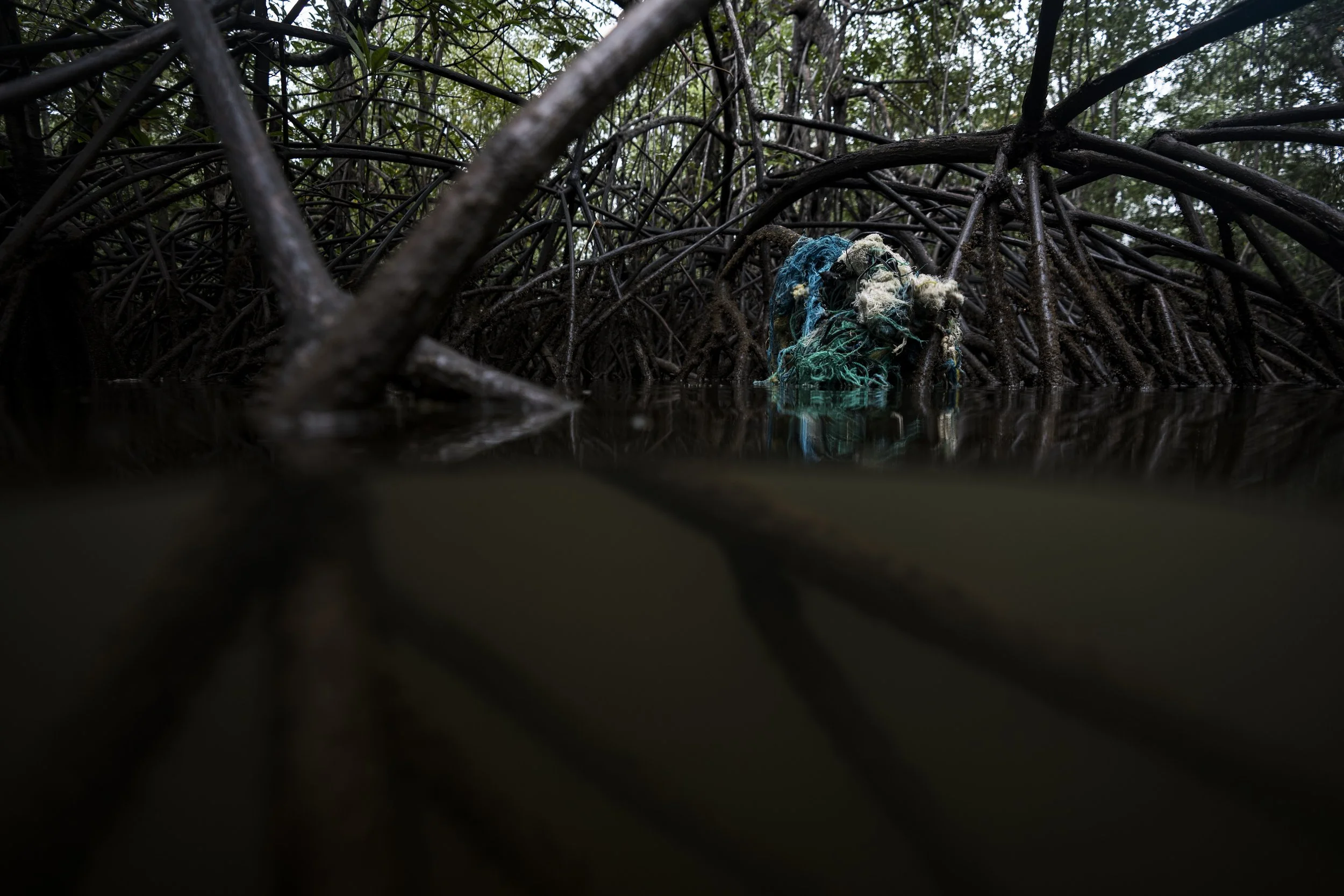
The local marine environment now faces the mounting challenges of ghost gear–abandoned, lost, or discarded fishing gear (ALDFG) that persists in the greater ocean environment and silently entangles marine life and suffocates coral reef systems. Plastic pollution and the extent of its damage now reaches all of the planet’s major bodies of water. This growing crisis has brought together a group of local native divers and led to the formation of Guardianes Del Mar (“Guardians of the Sea”), a grassroots ocean conservation initiative located in the Gulf of Tribugá. In its mission for sustainable ocean management, the group focuses on the removal of ghost nets, a type of abandoned fishing net that falls within the broader category of ghost gear. Their work draws on traditional knowledge systems, community resilience, and local autonomy that have long been central to life in the region.
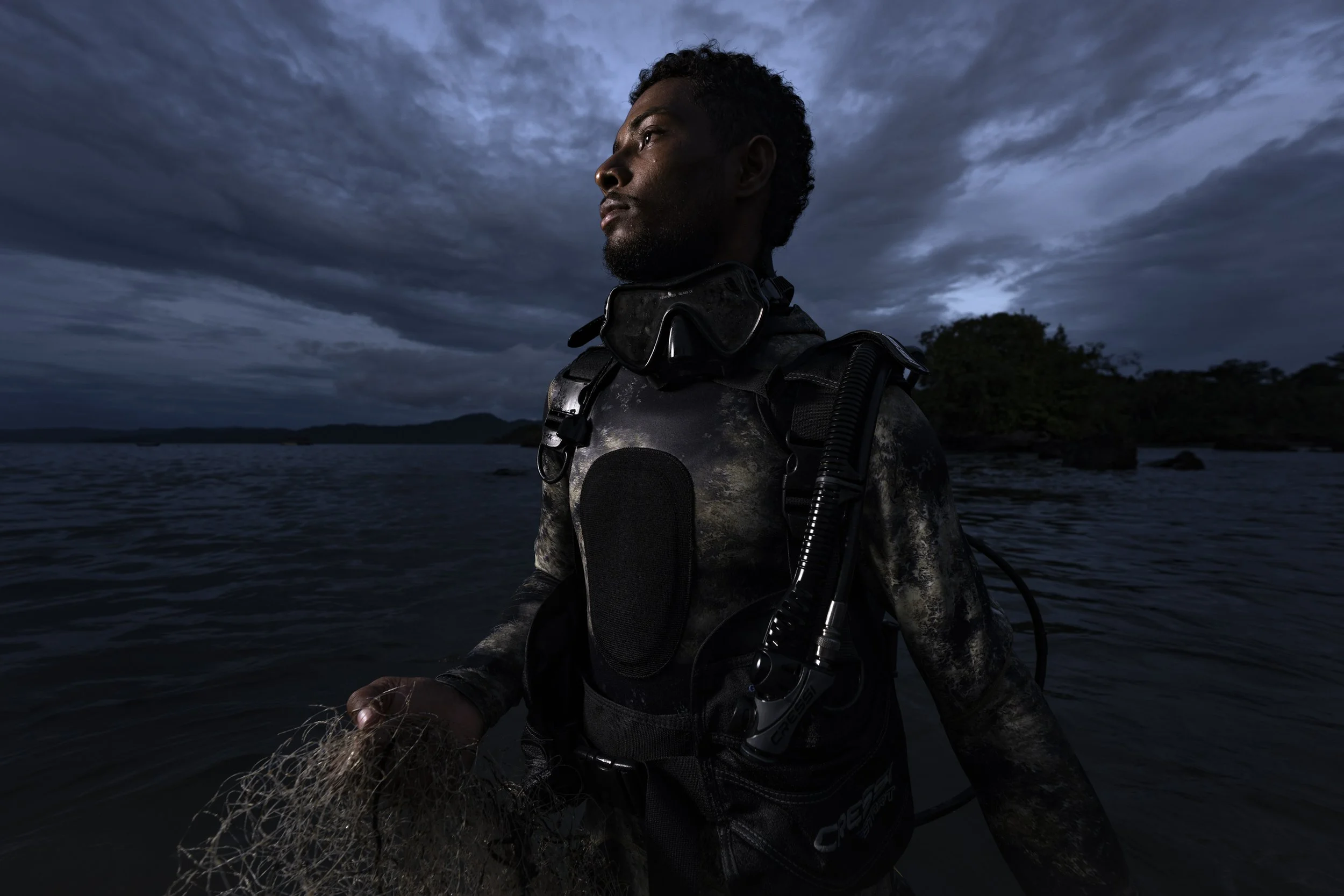
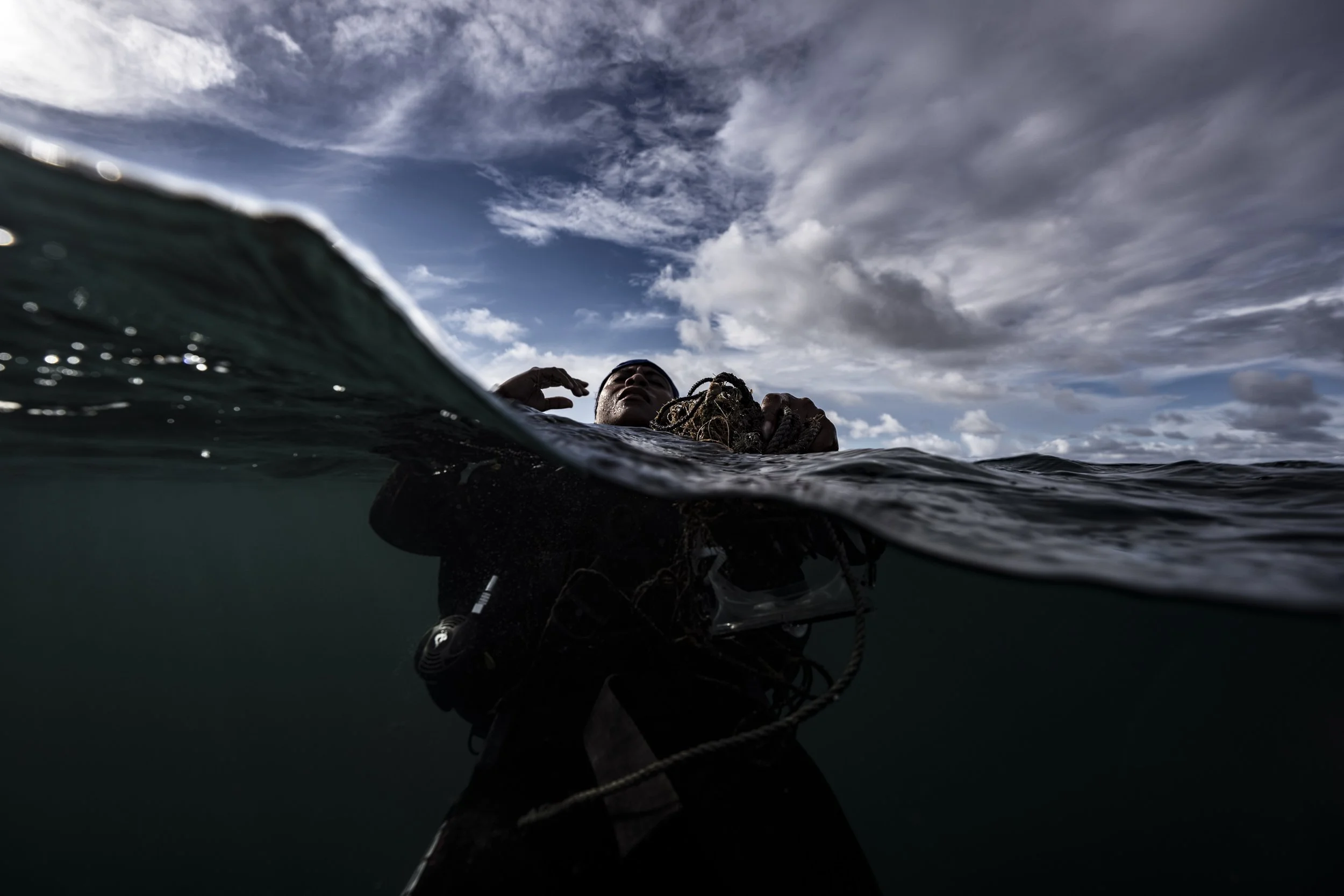
Founded in 2014 by Benjamín González and Liliana Arango, the initiative began as a series of civic efforts along Colombia’s provisional coastlines. What started as small acts of care has grown into a collective of nine native divers committed to protecting the ocean and its connected waterways. To date, Guardianes Del Mar has removed over 700 kilos (more than 1,500 pounds) of ghost nets and gear from fragile ecosystems; the group has witnessed its destruction firsthand, removing nets that have strangled entire rock reefs and others that have entangled and killed smaller fish, shark, and ray species.
Neyí Ibagüen, a member of Guardianes Del Mar and Colombia’s first female certified diver, puts it plainly, “These nets kill everything they touch.” She notes that ghost nets can blanket coral reefs for years, disruptingentire food chains and transforming vital habitats into lifeless wastelands. Beyond entangling smaller species, these abandoned nets also pose a severe risk to larger animals. Each year, between 30 to 40 whales become entangled in the Gulf of Tribugá, usually with fatal outcomes; nine cases have been reported this season, though the true number is likely higher since only incidents observed directly are documented.
“Each time we remove a net, we give this ecosystem a chance to recover,” says Neyí. “But protecting it demands a collaborative effort…every person and every part of nature has a role in keeping it alive.”
In June 2023, UNESCO designated the Tribugá-Cupi-ca-Baudo region as part of the World Network of Biosphere Reserves, the first such site on Colombia’s Pacific coast. Stretching nearly 600,000 hectares from Cabo Corrientes to Punta Cruces in Bahía Solano, the reserve shelters one of the most intact mosaics of ecosystems in the country: coral reefs, dense mangroves, and rainforest that feed directly into the Pacific. The recognition places this coastline on the global map as both a biodiversity stronghold and cultural refuge for Afro-Colombian and Indigenous Emberá communities, while formally committing Colombia to balance conservation with sustainable local development.
On the ground, the fight to protect these waters and forests predates UNESCO’s designation. Since 2014, the area has been guarded under the Distrito Regional de Manejo (Regional Integrated Management District), a governance framework created by Afro-Colombian communities as a defense measure against industrial encroachment including commercial fishing and deepwater port development. A recent proposal to build a deepwater port in Tribugá sparked strong resistance from local defenders and environmental organizations, who argued that the existing port in Buenaventura, 200 kilometers south, was operating far below capacity and that Tribugá’s ecological losses would be irreversible.
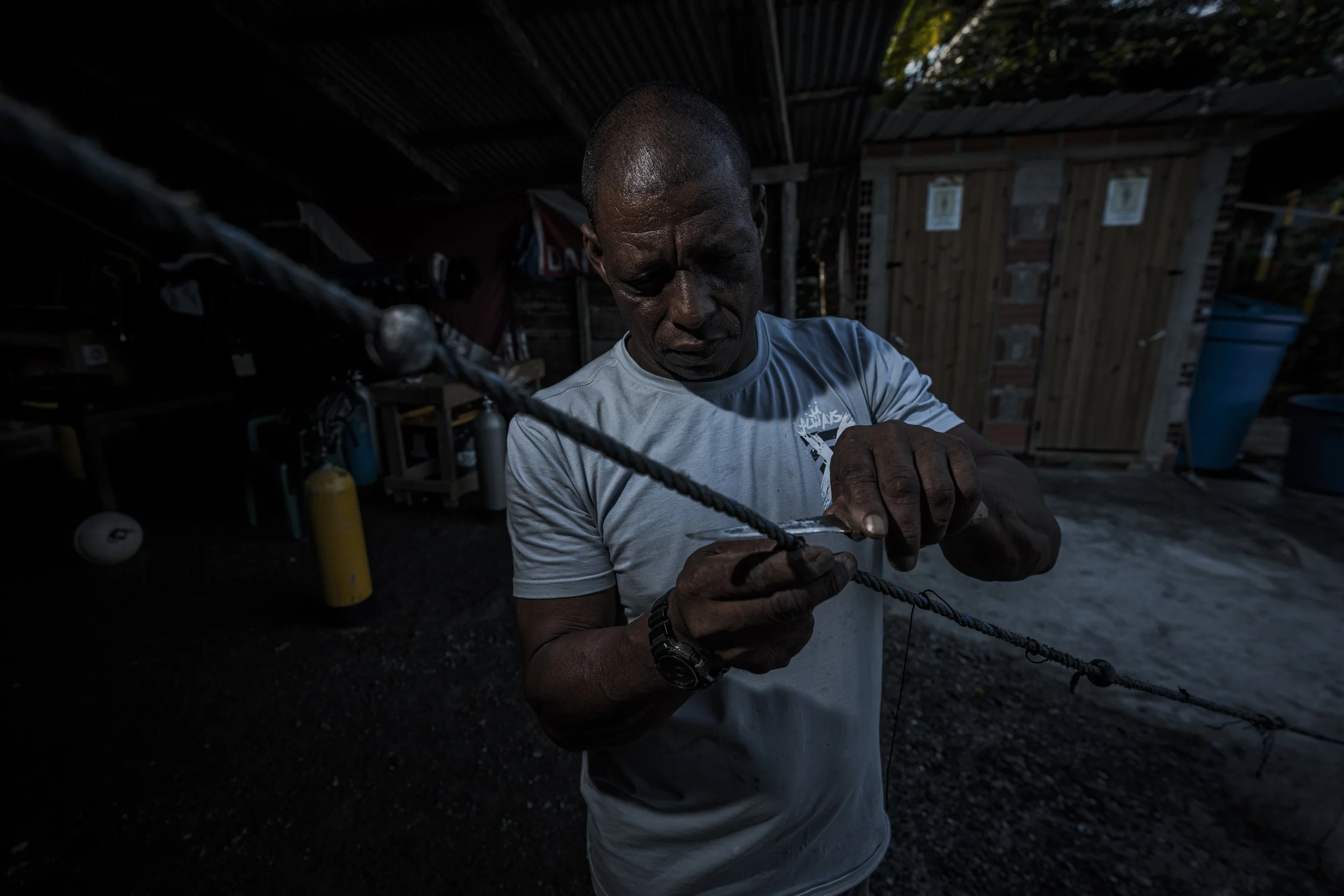
Benjamín González, co-founder of Guardianes Del Mar, removes lead weights from a recently recovered ghost net. The reclaimed metal is later melted down and repurposed into new diving weight belts.
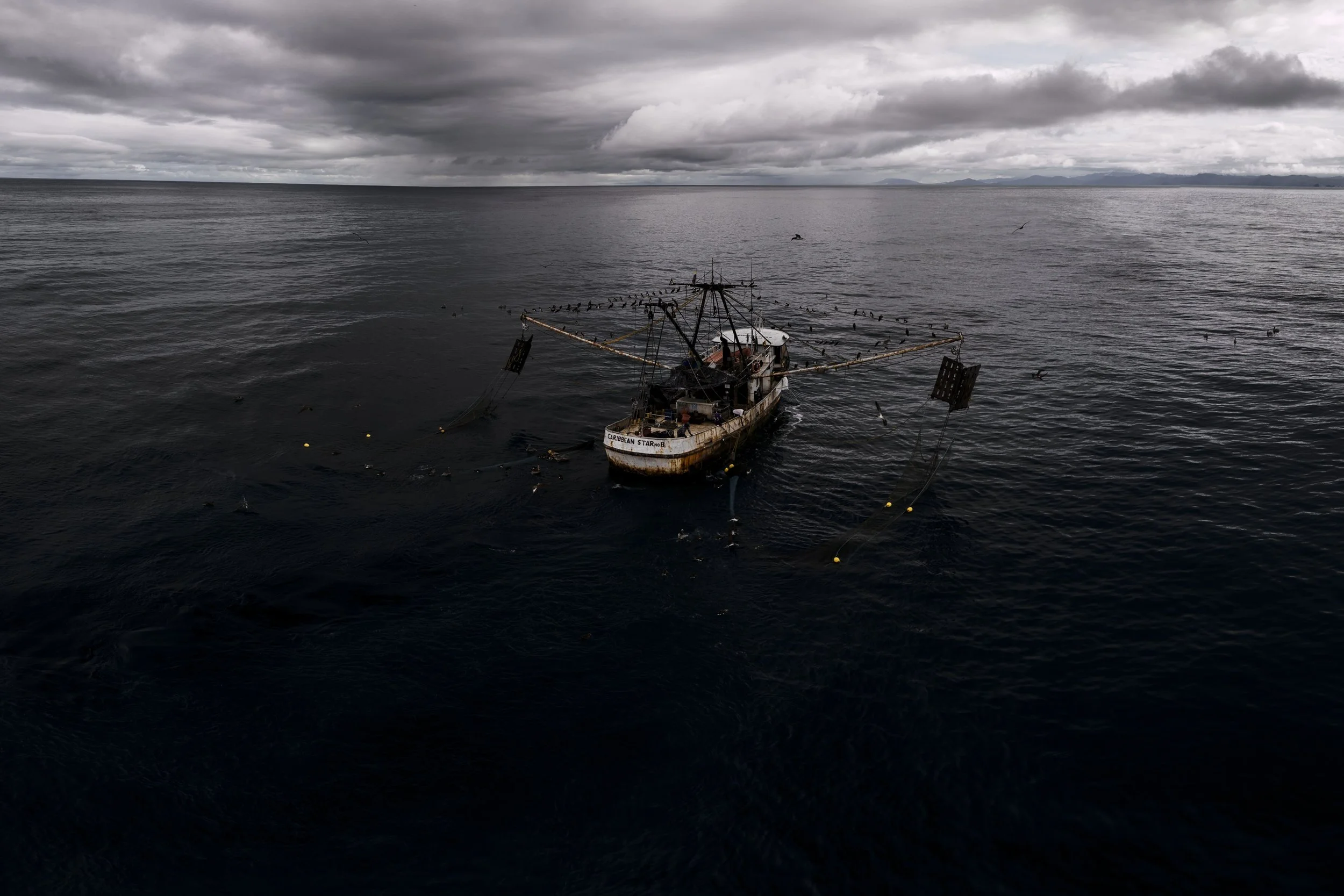
Alongside port development and other industrial activities, commercial fishing continues to put pressure on the region. Industrial fleets operating just beyond protected near shore waters compete directly with local artisanal fisheries, threatening food security and income for thousands who rely on small-scale fishing. These operators are also a leading source of abandoned ghost nets, compounding the region’s growing burden of marine plastic pollution.
Speaking with a fisherman working on a commercial vessel in the Gulf of Tribugá–who asked to remain anonymous–he acknowledges that lost nets are a routine part of the job. “We consistently lose nets to the sea…it’s something that happens often,” he says. Trawl nets are often cut away when they become caught on the ocean floor or tangled in the ship’s mechanized equipment.
Natalia Botero Acosta, director and founder of Macuáti-cos–a foundation dedicated to research and conservation of Colombia’s aquatic mammals–speaks directly to the issue. “Industrial fishing, especially shrimp trawling, results in a large number of ghost nets,” she says. “With minimal oversight, equipment losses often go completely unreported. Many animals become trapped in these nets far offshore, making effective monitoring nearly impossible.”
This is not an isolated problem; globally, commercial fisheries lose significant amounts of gear each year. It’s estimated that nearly 2% of all fishing gear, comprised of nearly 3,000km2 of gillnets, 75,000km2 of purse seine nets, 218km2 of trawl nets, 740,000km2 of longline mainlines, and more than 25 million pots and traps are lost or discarded to the ocean annually.
Guardianes Del Mar works to build respectful, collaborative relationships with both commercial and artisanal fishermen, choosing cooperation over criticism. This is especially true for artisanal fishers, as net fishing is technically banned throughout the Gulf of Tribugá. “We’re not going to get them to stop using nets altogether. And it’s not about prohibition,” Camilo says. “For many, it’s how they provide for their families. Neither we nor the government have the right to erase an age-old livelihood.” Instead, the group partners directly with fishing communities to reduce harm. “If a net is cut or lost, we ask them to contact us immediately so we can remove it safely,” Camilo adds.
“The work of Guardianes Del Mar is essential in the Gulf of Tribugá,” explains Natalia. “Fishing is a main pillar of the local economy, and these communities have developed highly sustainable practices. Protecting these reefs is vital to their future.” Now, the work of Guardianes Del Mar is more important than ever.
While local initiatives are essential, the scale of ocean plastic pollution demands an international response that remains elusive. In 2022, UNEP proposed a landmark plastics treaty—the first binding global agreement addressing plastic across its full lifecycle, from production to disposal. Aimed at limiting plastic output, setting global standards, and improving accountability, the treaty’s promise has been steadily diluted after years of negotiations among nearly 200 countries.
The final treaty draft was shaped by pressure from powerful industrial interests and stripped away meaningful ghost gear provisions, reducing the mandate to a series of weak, non-binding suggestions; during the latest round of negotiations in August 2025, the treaty failed to be ratified with no plans for delegates to reconvene. Enforceable commitments to mark and recover fishing nets, coordinate international action, and fund projects vital to supporting frontline conservation efforts were all lost. Any momentum towards real change dissolved into voluntary targets and rhetorical pledges, leaving parts of the current plastic crisis like ghost gear unaddressed.
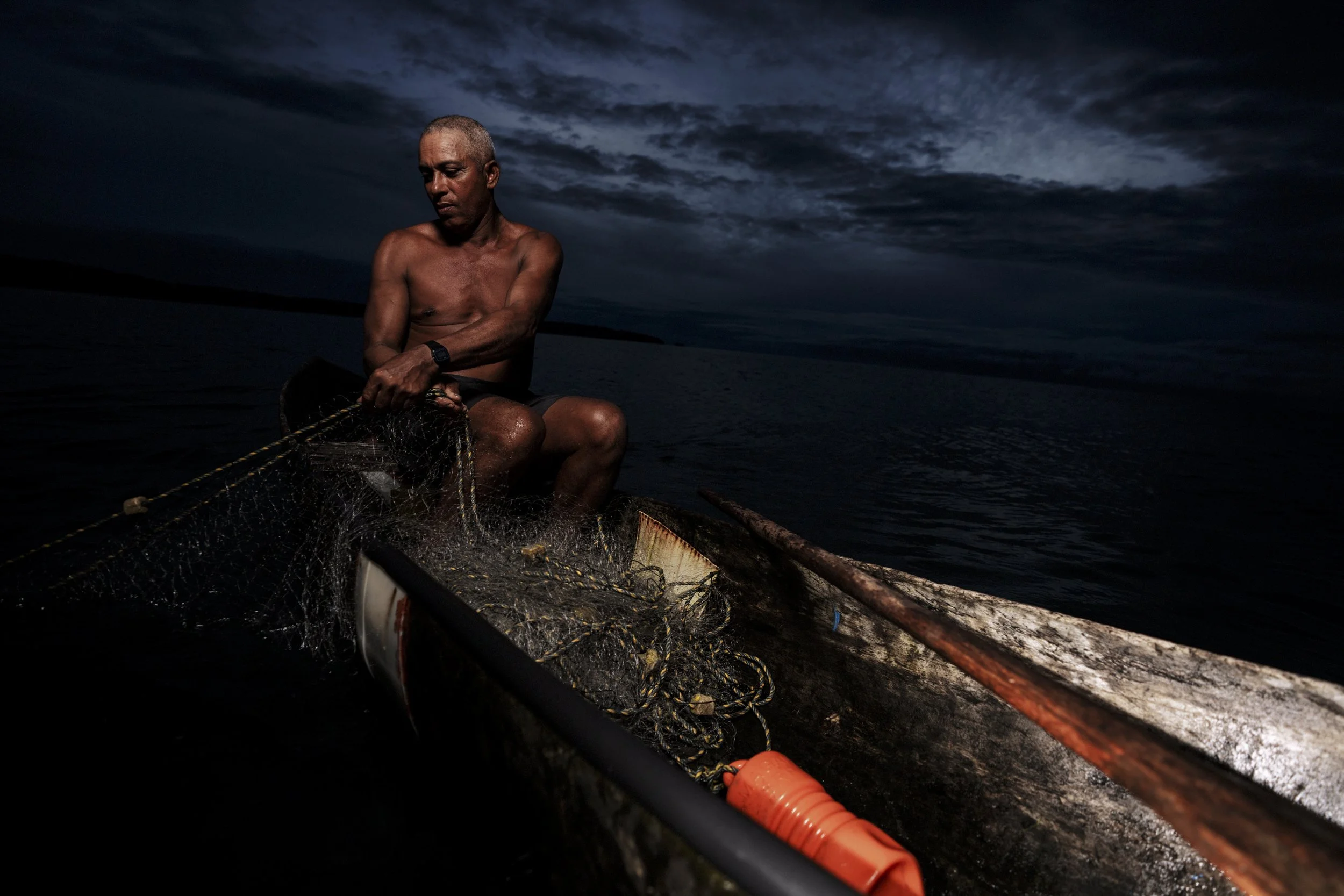
Newly released research in the Proceedings of the National Academy of Sciences, led by scientists from Ocean Conservancy, compounds the already grim reality of the ocean plastics crisis. The study shows that macroplastics can be fatal to marine wildlife at extremely low exposure levels. Sea turtles, for which the coastline and intertidal zones of the Gulf of Tribugá are critical nesting and hatching habitat, are particularly vulnerable to soft plastics that accumulate in coastal waters. Larger marine mammals, including whales, are more at risk from fishing debris–the lost nets, lines, and gear that now shape the waters from Arusí to Juru-bidá in remote western Colombia. For marine mammals in the study, 12% had plastics in their digestive tract at the time of death, and, more broadly, 21.5% of all animals examined had ingested plastic in some form. Taken together, plastic consumption sits within the larger ocean plastic emergency, in which entanglement in ghost gear and other debris remains an equally devastating pressure on already stressed marine populations. These definable, quantitative findings offer a clearer picture of the scale of harm caused by plastic pollution, but their value ultimately depends on whether policymakers are willing to translate the data into concrete action.
The threat to coastal habitats and marine life now demands even greater resolve from those working on the ground. Guardianes Del Mar and other grassroots movements now carry the weight of ocean conservation, stepping in where governments have failed to act. The example set by these groups–removing ghost gear and educating coastal populations–shows that action, not rhetoric, is what continues to move ocean conservation forward.
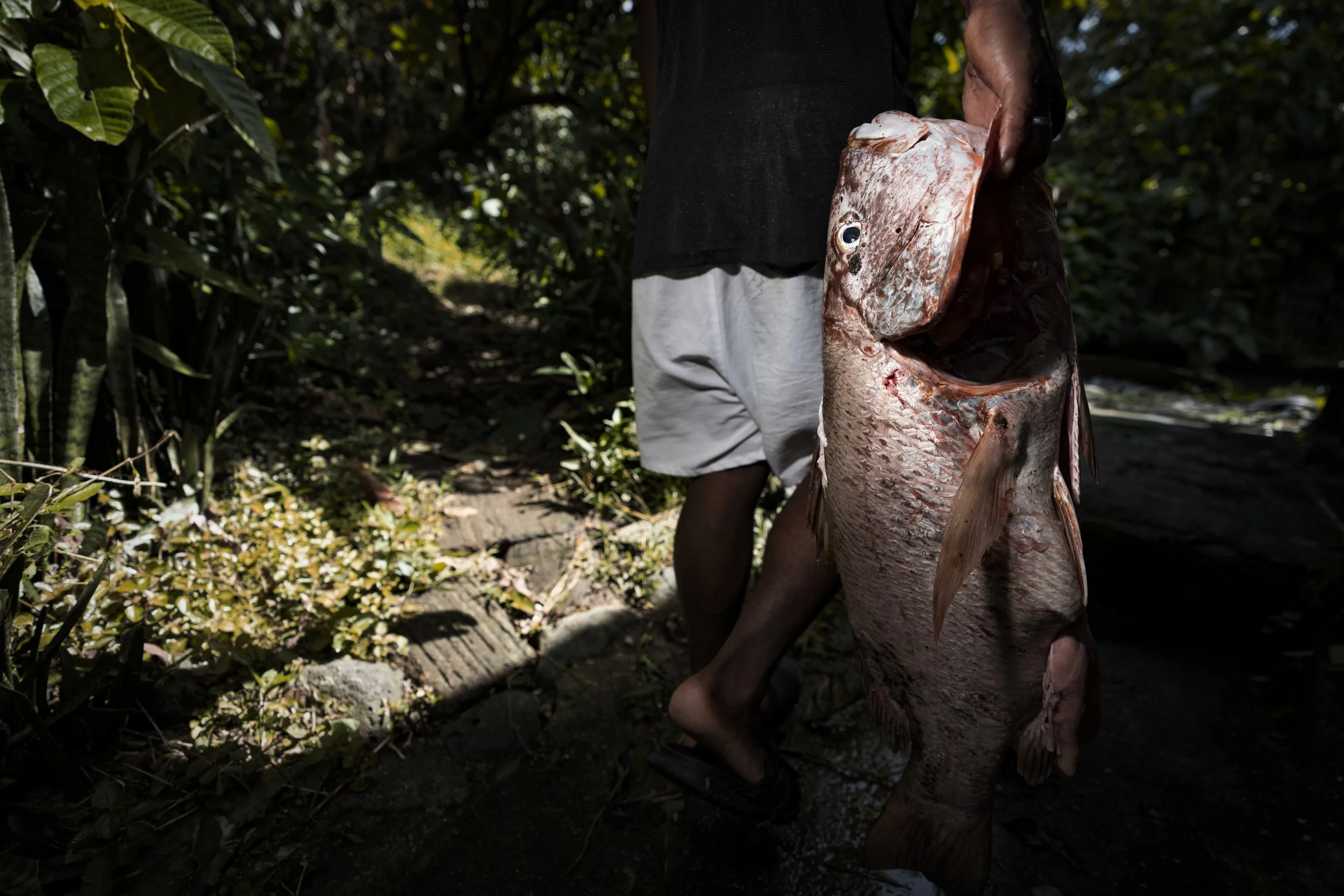
Guardianes Del Mar has dedicated more than 800 hours to removing ghost nets from beneath the surface and has spent countless additional hours engaging in community outreach and education. The organization has removed ghost gear and discarded fishing equipment from 21 hectares of ocean habitat spanning 11 different sites, safeguarding everything from rock reefs and coral gardens to critical mangrove forests. Yet the scale and impact of their work are constrained by the resources they can access. Without sustained support, their capacity to restore habitats and protect marine life will always fall short of what these ecosystems truly need.
“Everything we’ve done up to now has been volunteer,” explains Benajamín González. “Our hope is to make these positions sustainable and paid one day. The reality is, our impact is limited by our resources.”
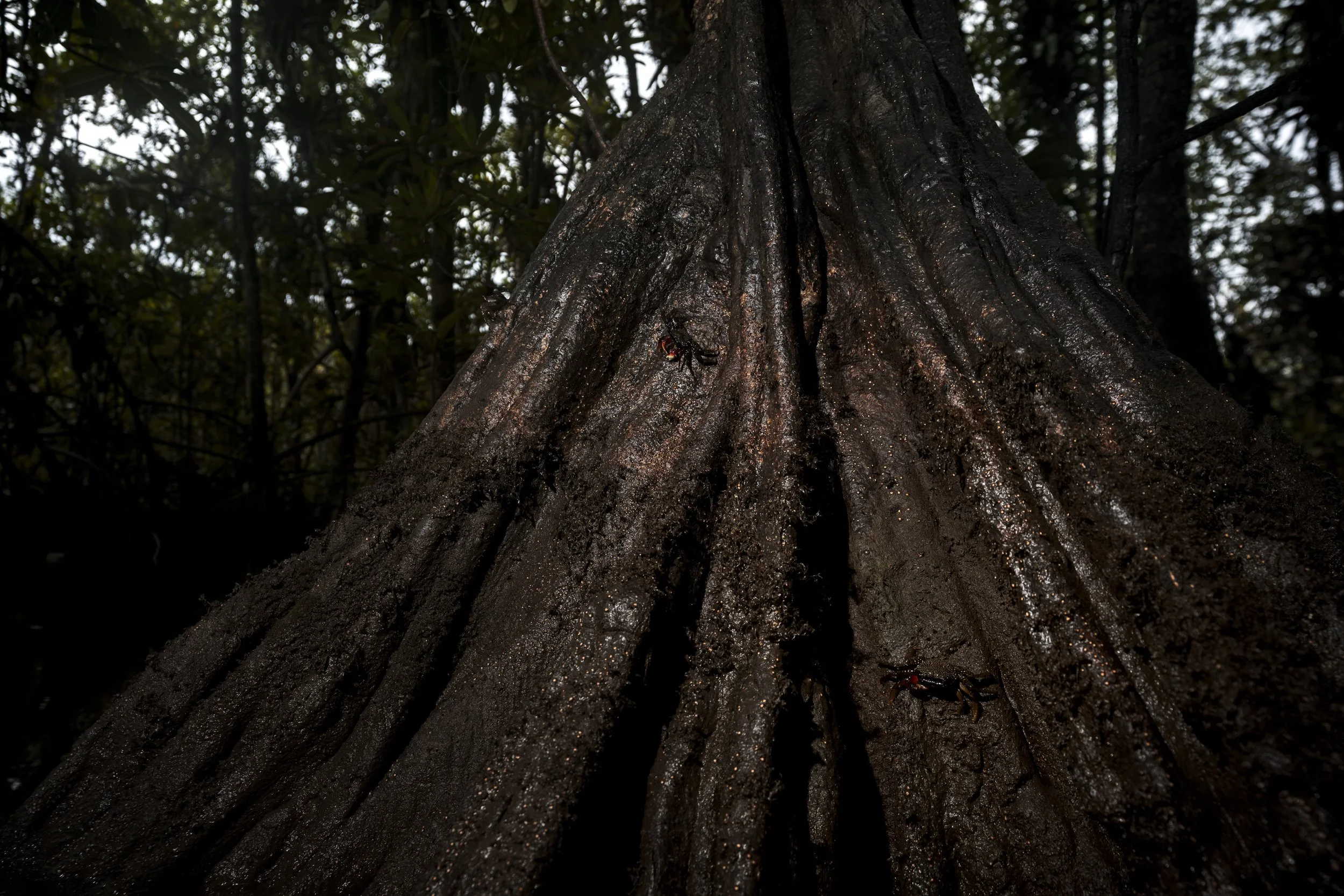
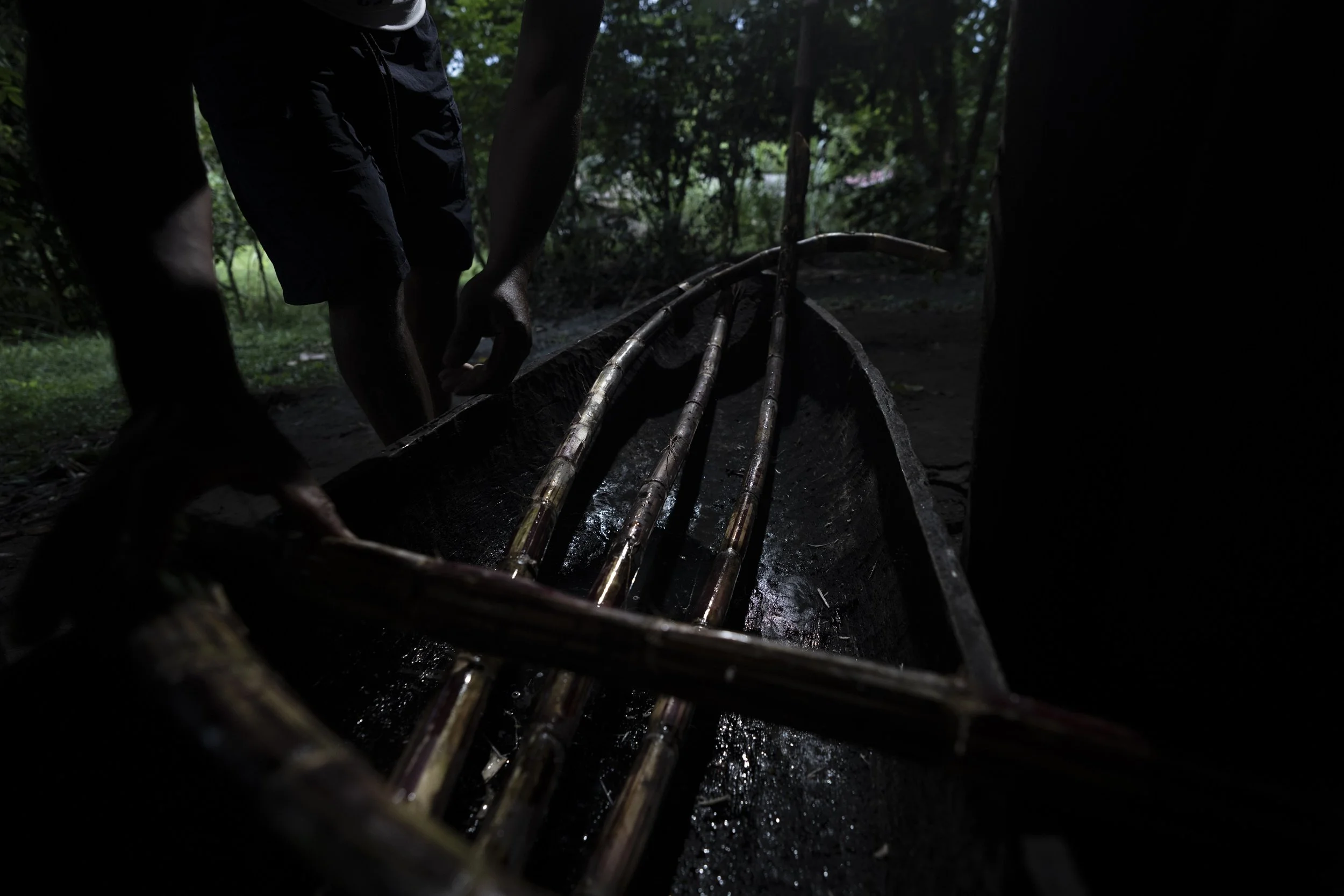
The group is in the water weekly, removing nets from reefs and wildlife, hauling ghost gear ashore, and building direct relationships with local fishermen to report and retrieve lost gear before it can do more harm. By exposing the disconnect between sidelined international mandates and the urgent realities on Colombia’s Pacific coast, the organization shows that tangible, local action is the foundation of any global solution.
“‘The ocean begins at home,’ a friend recently reminded me,” shares Camilo. “If we don’t care for this territory, with all the love and knowledge it gives us, we can’t expect outsiders to either.” For Guardianes Del Mar, true conservation, and lasting protection of the region, starts within their own community.
In line with this commitment, and with support from NaturaTech, an initiative focused on biodiversity conservation and capacity building for Indigenous communities across Latin America and the Caribbean, Guardianes Del Mar will welcome six additional women to the organization in September. Their role will focus on marine monitoring, strengthening a holistic approach to the oversight and protection of the region’s waters. Training will be provided by Reef Check, a nonprofit organization dedicated to promoting sustainable reef stewardship worldwide.
“Not only are we expanding our reach, but we also want to help change the landscape for women in marine conservation,” says Liliana Arango. “Women here have long been confined to traditional roles, and we are committed to breaking down those barriers.”
“‘The sea refuses no river,’ Camilo said in a final interview. It was a phrase he had connected to his ancestors’ story earlier in the trip. The words emphasized acceptance and recognized that all paths, no matter how winding, ultimately find their home in something larger.
Just as their ancestors once did, Guardianes Del Mar follows the rivers that lead to the Gulf of Tribugá, drawing purpose from the waters that shape their community. For the group, conservation is inseparable from culture and identity; protecting the Gulf means safeguarding their way of life from the advancing tide of industry and pollution. The threats are many–from ghost nets to industrial expansion–but so too is the resolve to meet them, one river, one reef, one recovered net at a time.
Alex Joseph Hansen created this story during Storytelling School Colombia.