Images and words by Jill Broussard
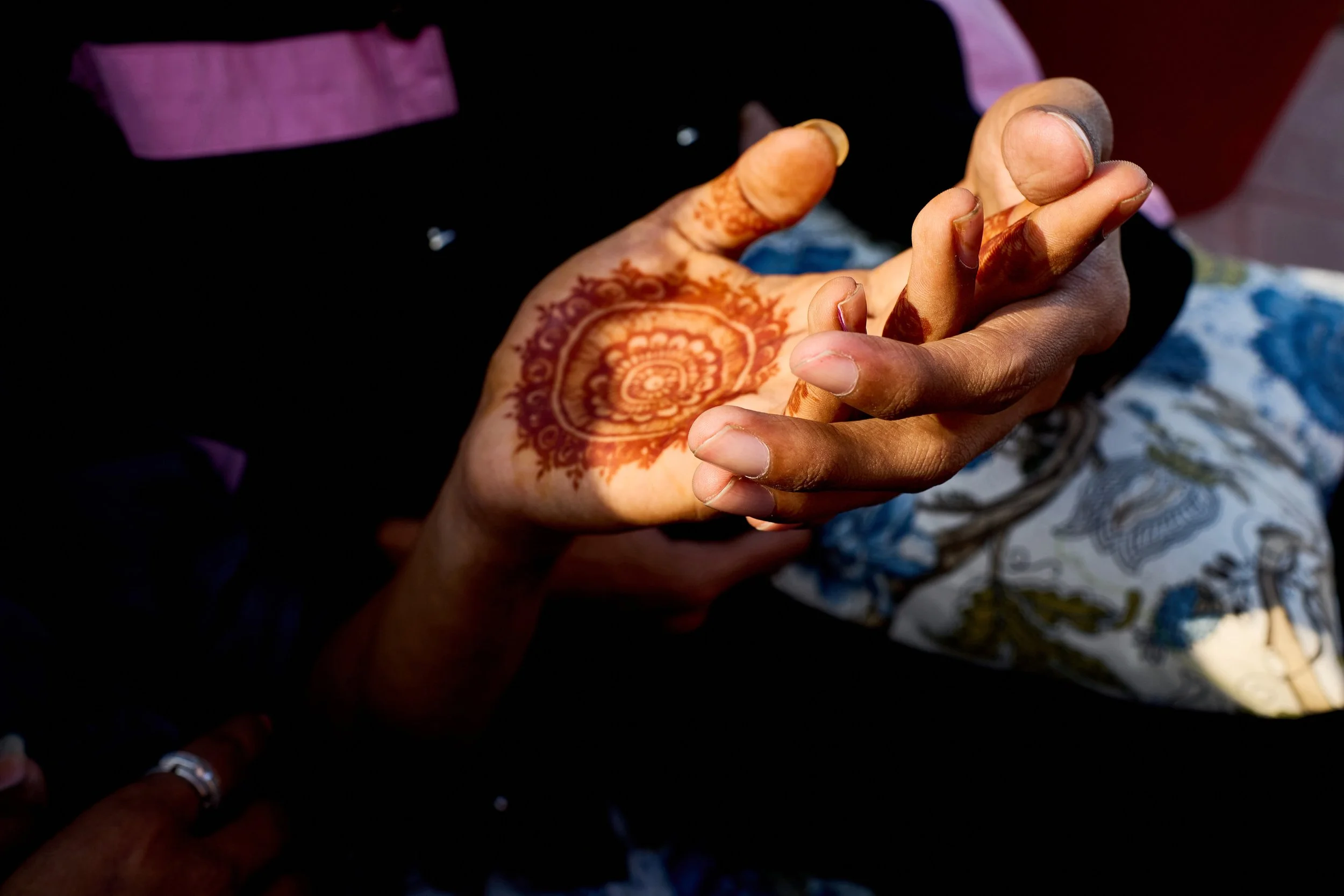
We sit down in a cool dark room with pink yellow stone and green shutters open letting in the filtered light. I can see pigeons perched at eye level outside the wide-open windows of the second floor of the Sambhali Trust building. Many young people are gathered around us, laying on cushions or sprawled out on chairs, texting on their phones, halfway listening to us.
Tushar has agreed to translate while I ask Sufia questions, her English limited to a few sentences. Tushar listens to my questions, goes back and forth with Sufia, then responds to me while I jot down notes.
Sufia is 19 years old. She was born in Jodhpur and has always lived there with her parents and brother. Sufia has always known she was a girl. At village fairs, she saw her brother wanting to buy boy things, but she was always drawn to the girls play things. Sufia says, “I feel like a girl- not a transgender… [but] a man with a girl’s soul”. She means that she doesn’t identify with a group of people in India who identify themselves as “transgenders” and exclusively prefer to spend Nme together to the exclusion of other LGBTQIA-identifying people.
At 14 years old, Sufia said to her mother “I feel different”. While many families in India use threats and punishments and even violence to deter their children from living as LGBTQIA, Sufia’s parents were accepting right away. Her brother, she says, “he is calling me sister”. In traditional Hindi culture, a daughter takes care of her parents as they age. Now that her parents recognize her as a daughter, they won’t force Sufia to get married. Instead, she will take care of them.
In 2022, Sufia was introduced to the Garima Project through friends. It was the first time she had the chance to get to know people who were LGBTQIA. The Garima Project is dedicated to serving all LGBTQIA people of Jodhpur, creatinng events and partnering with other groups to celebrate their idenities and find a sense of place in Jodhpur. Garima is a place where people can find their community; Garima means “proud”. Sufia now has a community who love and accept her. She spends her free time like any other 19 year old teenage girl, gossiping, laughing, playing and enjoying her youth.
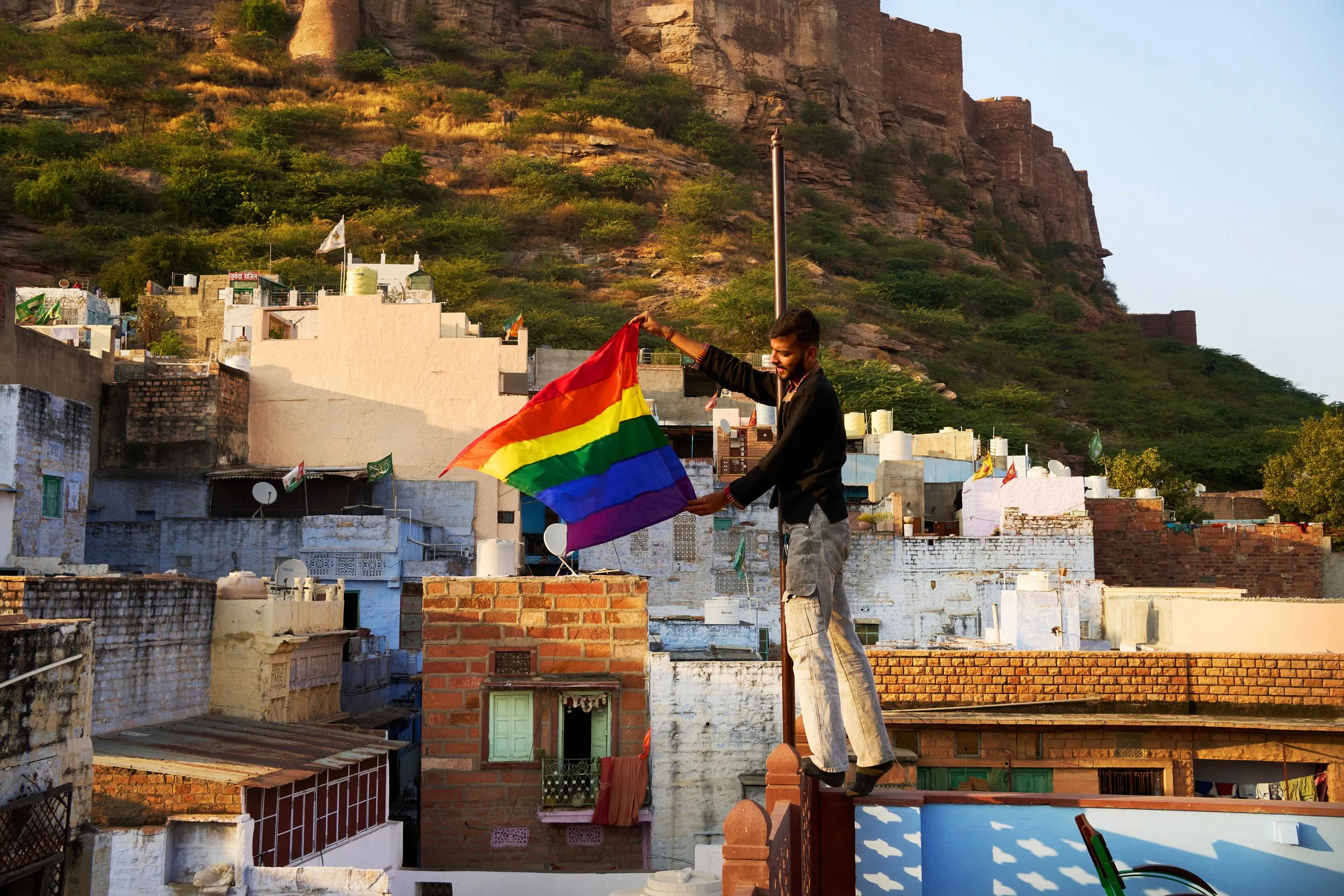
The 3-story Sambhali Trust building is hidden down several quiet streets. A rainbow sign directs guests through the door. In 2024, the Sambhali Trust purchased the building in downtown Jodhpur. Renovatinng it over a period of a few months, it now houses several burgeoning programs. The first floor is a boutique for the women’s empowerment center. The second floor, and most accepted by the citizens of Jodhpur, is the women’s empowerment center. Here women gather to do art projects, learn math and languages, and create textiles they can sell.
The queen jewel is the third-floor roodop, which houses the Jodhpur Cafe. It’s the first LGBTQIA coffeeshop in the state of Rajesthan.
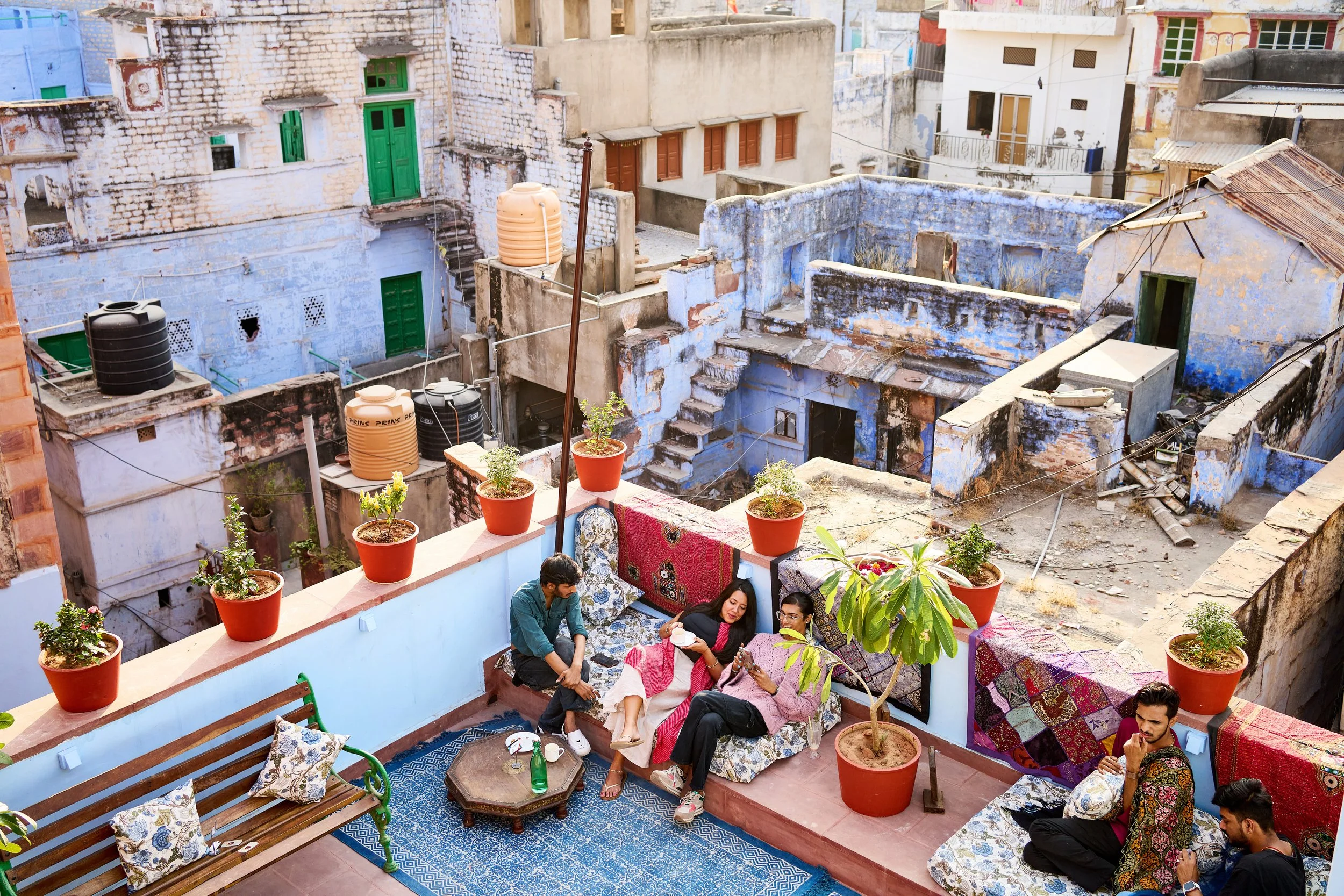
Run by both the LGBTQIA community and volunteers from Sambhali, the cafe caters mainly to tourists. Relying on volunteers (many Europeans) to pass out fliers to others western tourists at local hub points in Jodhpur is the best way to get word out at present. Tourism allows the LGBTQIA Jodhpur community a way to leverage western support, and puts them in contact with people who can bring a sense of their belonging, which so oden lacks in smaller, more conservative ciNes. The café is one of few places in Jodhpur that LGBTQIA people can show up open about their idenities.
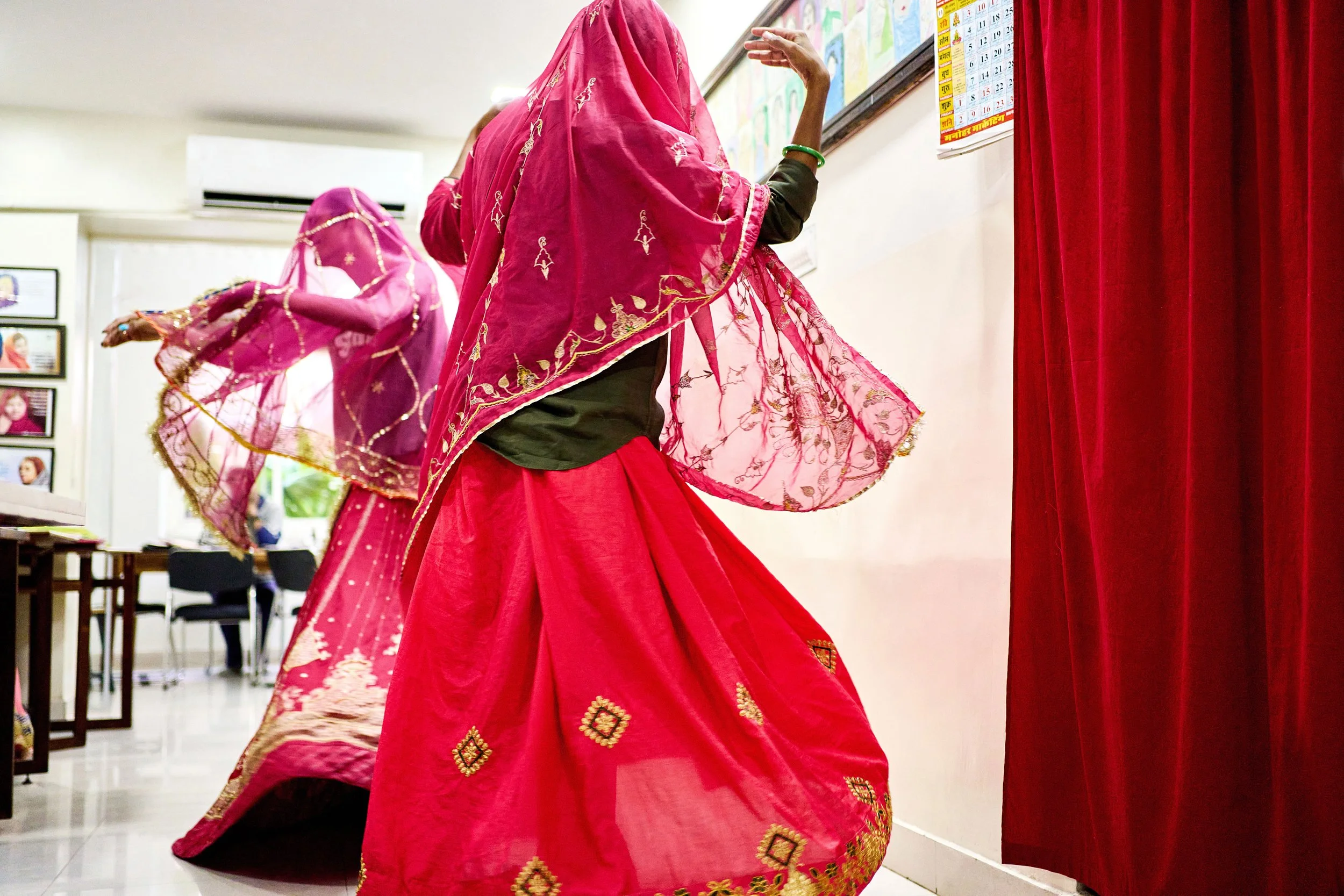
Sufia has another passion she shares with her friends. On Sundays, she joins several boys from the Garima Project who crowd together in a room the size of a hallway. They spend a few hours dancing traditional Indian dance, music bouncing off of the walls, with several of the boys wearing sarees. Sufia joins in her saree, twirles and raises her arms in chorus with other dancers. She says “dancing is my passion, only then do I feel relaxed and comfortable.”
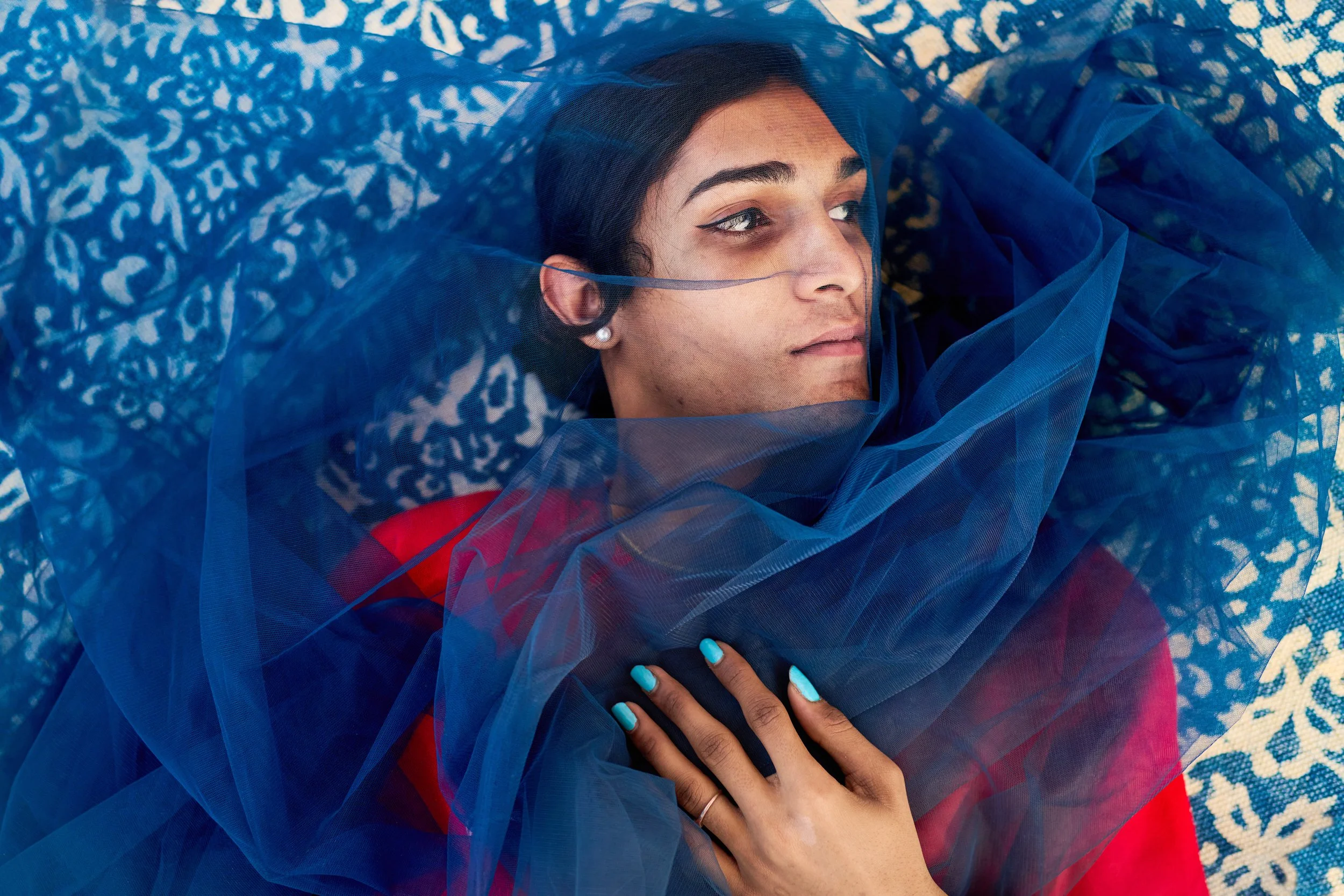
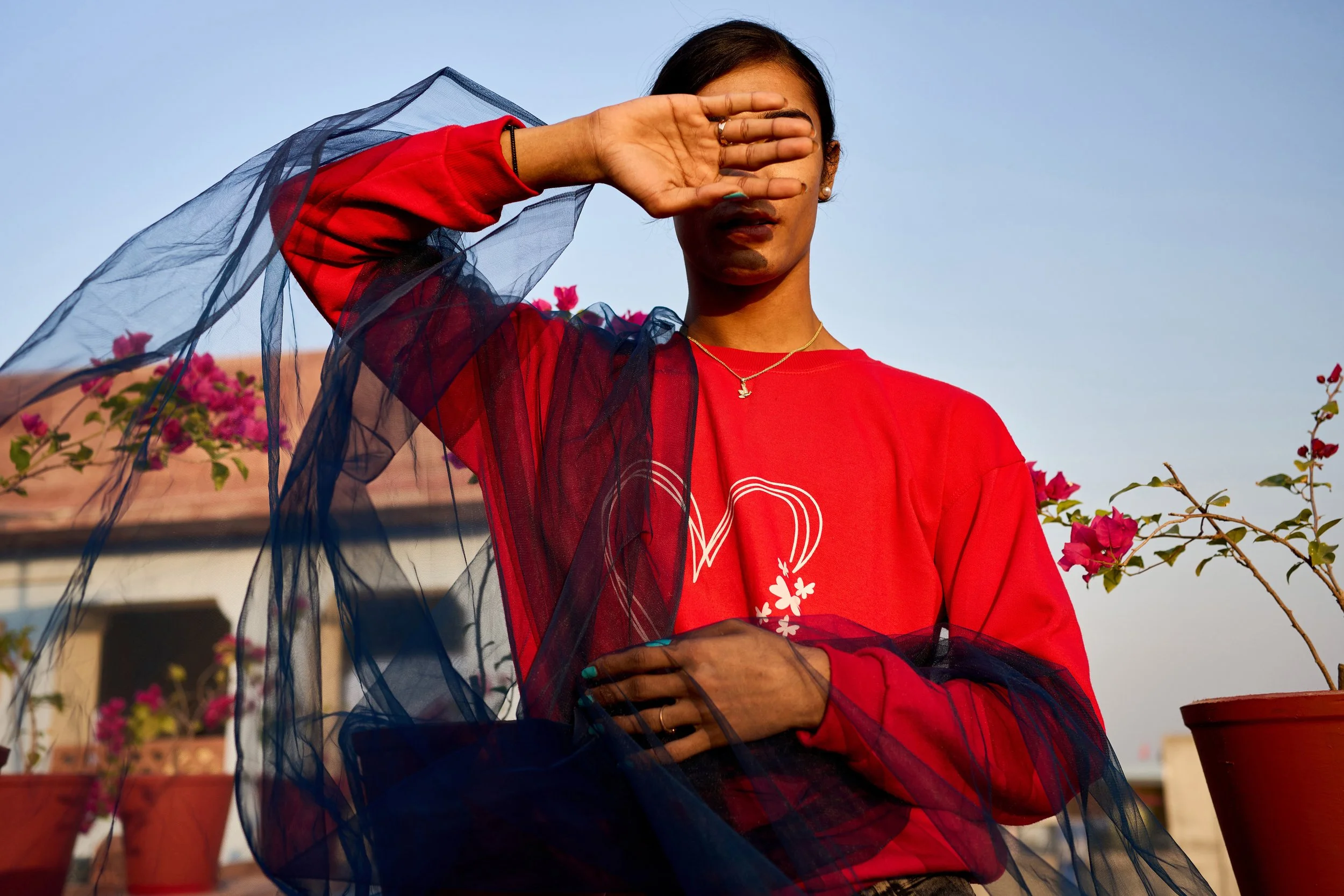
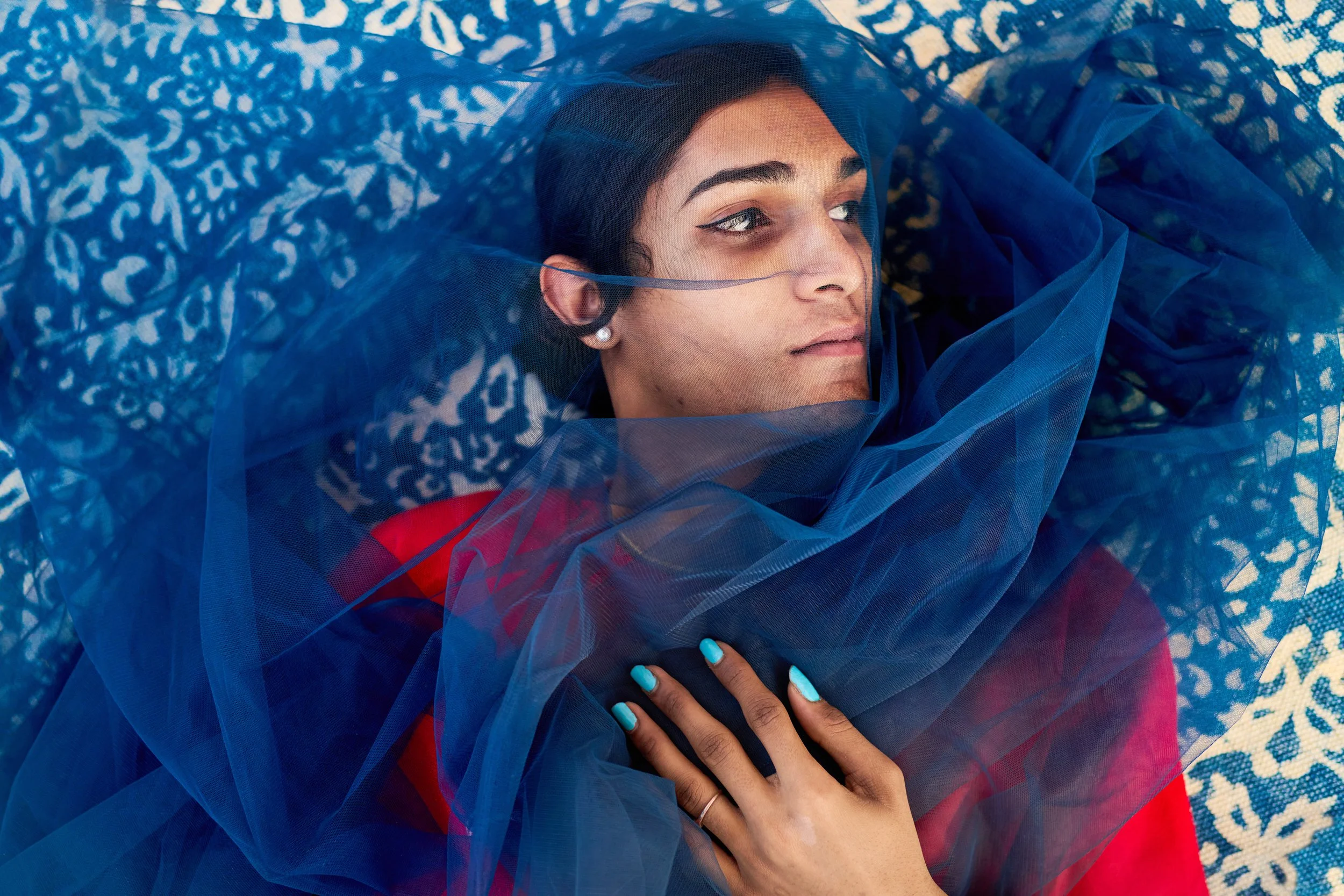
Sufia also likes to design fashion and would like to do some modeling. She uses some discarded blue tulle to make a dupatta for herself, one of many adornments she has used in our time together. She says she dreams of traveling somewhere cold and snowy. She wants to go to Mumbai; many queer people dream of leaving small towns for larger ones where they can find more safety and community and adventure. “But it is expensive” she says.
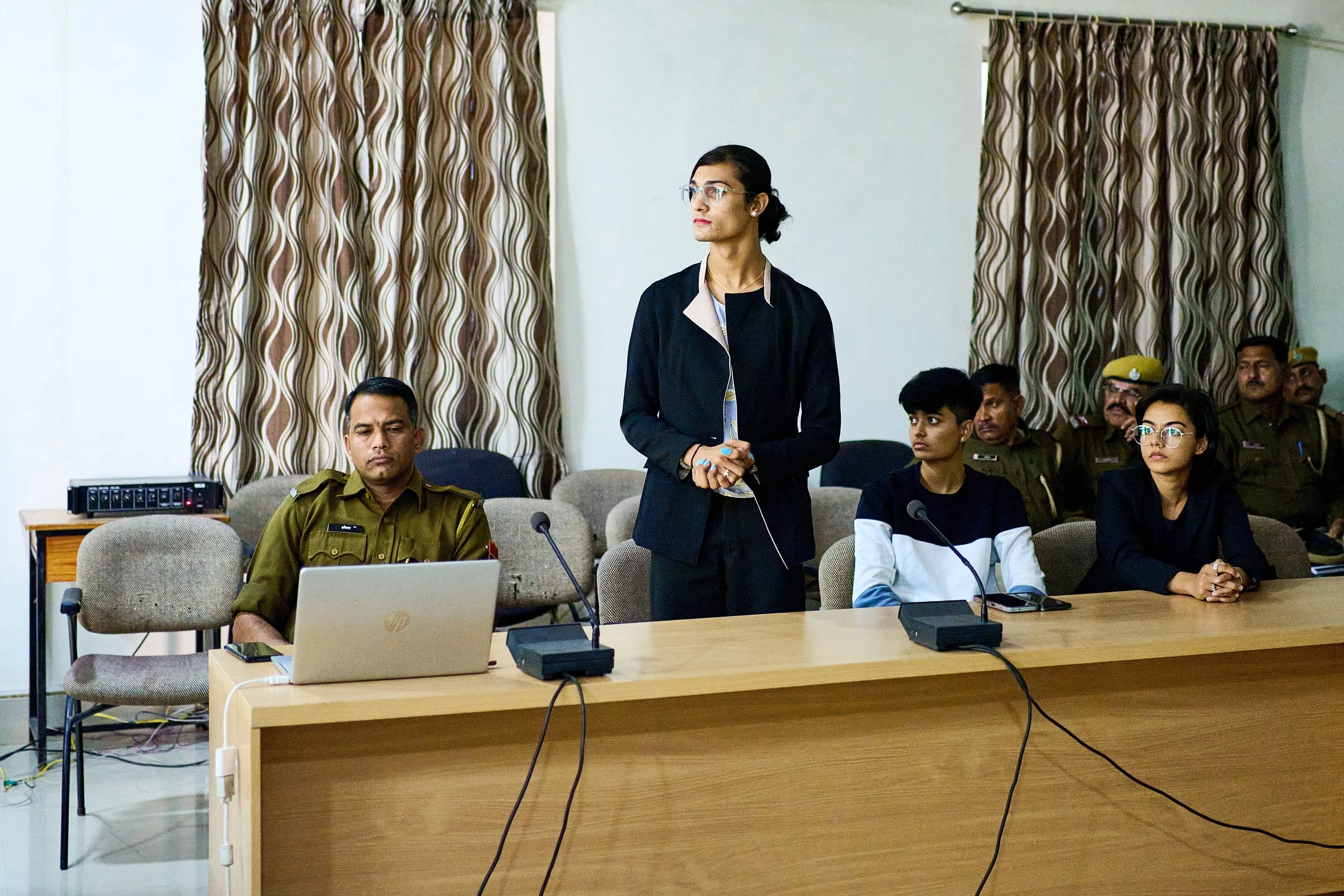
Many members in the community have experienced violence from community members, and they must be careful at all times. Rajesthan is a conservative state, and though technically LGBTQIA people are a protected class in India, they can’t be assured of protection by local police. In November 2024, Sufia joined the Garima Project to speak at a sensitivity training for the Jodhpur police. Members of the group, including Sufia, introduced themselves, graciously reliving traumatic parts of their lives in hopes of personalizing LGBTQIA experiences to reduce friction between themselves and the community.
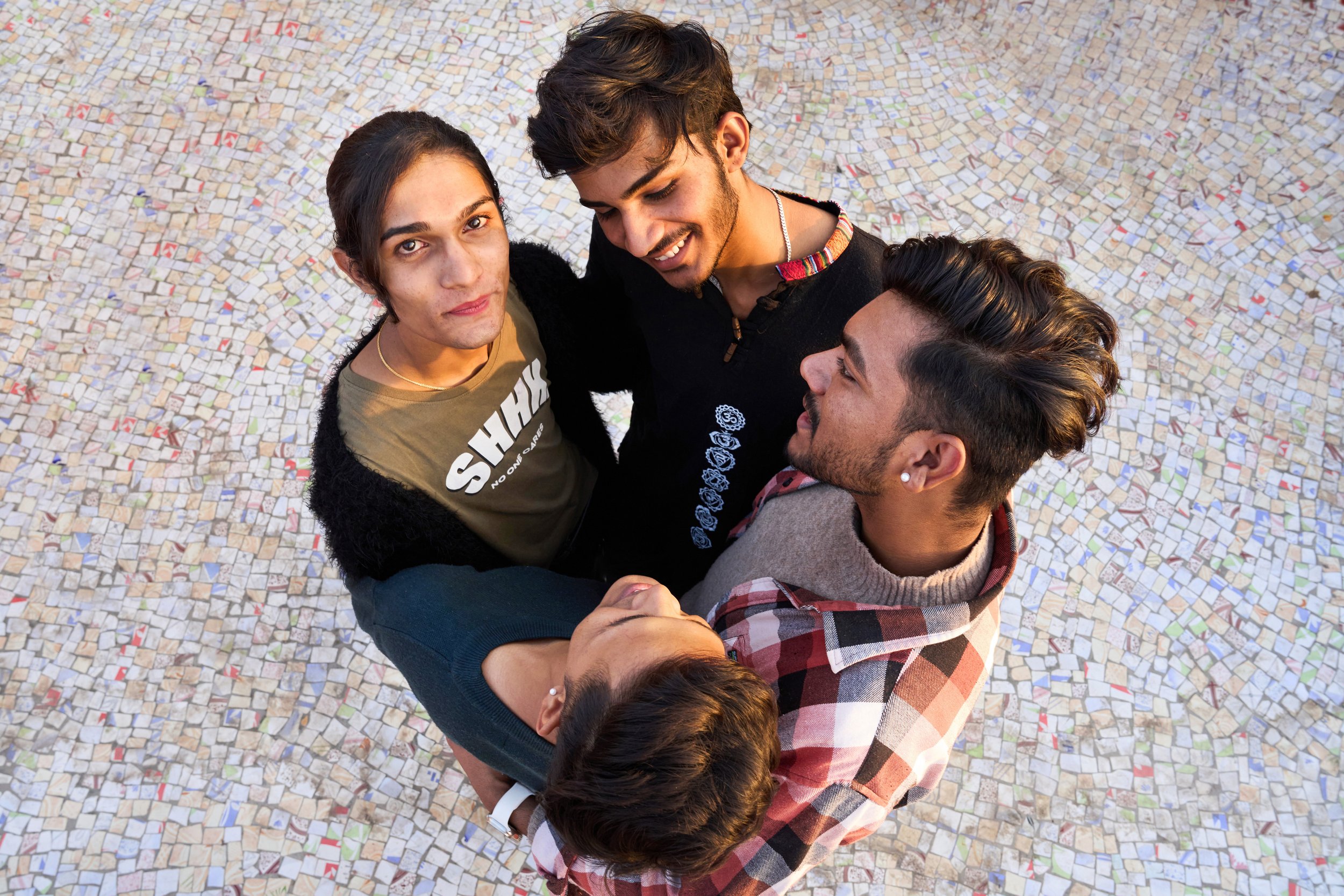
Even with concerns of safety, Sufia feels a freedom, being loved in this safe subset of Jodhpur. Her friends care for her, obvious in the way they wrap their arms around her protectively, smiling with their heads against hers for a photo I make. Sufia says “being trans is spiritual, like the gods… [we] are a myth for the Indian people.” Asked if she could imagine a life where her idenitiy is accepted by everyone, she says in three words, “respect, loyalty, and love”.
Jill Broussard created this work on PWB”s Rajasthan Expedition.